
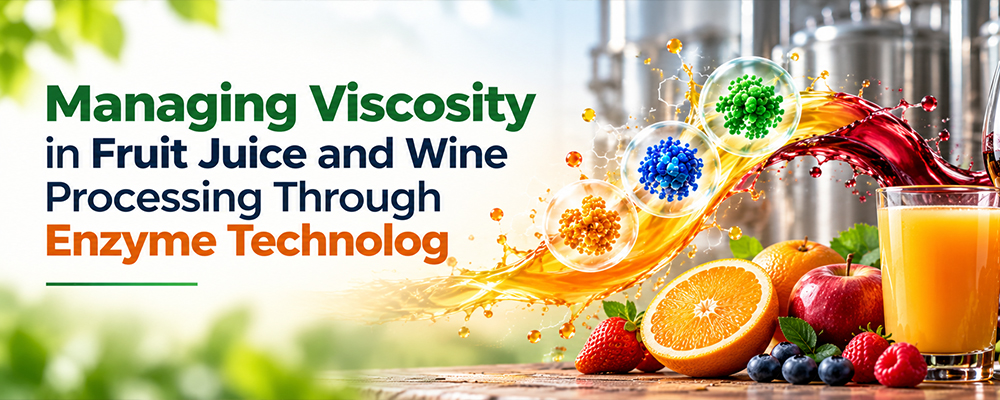
Viscosity is an important processing consideration in both fruit juice and wine production. When fruit based liquids become excessively viscous, movement through processing equipment can become more difficult. High viscosity can also affect pressing, clarification, filtration and the recovery of liquid from fruit material.
Much of this behaviour is linked to pectin and other structural polysaccharides naturally present in fruits. These substances contribute to the structure of fruit tissues and can remain in the juice during processing. Enzyme technology provides a targeted way to break down these compounds and improve the flow and handling characteristics of fruit based liquids.
By managing pectin and related components at the appropriate processing stage, manufacturers can improve juice extraction, clarification and filtration while maintaining the desired characteristics of the finished product.
Why Viscosity Becomes a Challenge in Fruit Processing
Fruit tissue contains pectin, cellulose, hemicellulose and other structural materials. These components help maintain the firmness and integrity of the fruit before processing.
Once fruit is crushed or pressed, some of these substances enter the juice. Pectin can increase the viscosity of the liquid and contribute to a more complex suspension.
This can create several processing difficulties.
A viscous juice may move less easily through pipelines and processing equipment. It can also be more difficult to separate suspended particles during clarification. Filtration may become slower when the liquid contains high levels of colloidal material.
The problem is therefore not limited to the final appearance of the juice. Viscosity can influence several connected stages of production.
How Enzyme Technology Helps Control Viscosity
Enzyme technology addresses the problem by breaking down specific components responsible for the structure and viscosity of fruit based liquids.
Pectinases are particularly important in this application. They hydrolyse pectic substances, reducing the structural material that contributes to high viscosity and cloud stability.
Other enzyme activities may also be used depending on the fruit and processing objective. For example, cellulase and hemicellulase activities can assist in breaking down other components of the plant cell wall.
The objective is controlled degradation rather than complete breakdown of the fruit material.
Once the structural polysaccharides have been sufficiently modified, the juice can become easier to handle during subsequent processing.
Viscosity Management During Fruit Juice Extraction
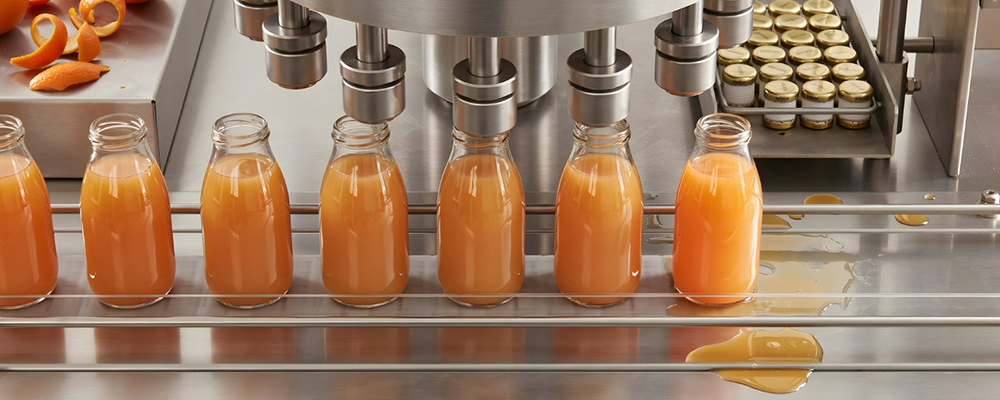
Extraction is one of the first stages where viscosity can affect processing efficiency.
After crushing, fruit pulp contains a combination of juice, cell fragments, pectin and other plant materials. A thick pulp can make it more difficult to release and separate the liquid fraction.
Pectinase treatment can help weaken the plant matrix by breaking down pectic substances. This can make the fruit pulp easier to process and allow more liquid to be released during pressing.
The effectiveness of treatment depends on the fruit variety and the composition of the raw material. Apples, grapes, berries and tropical fruits can behave differently during processing.
For this reason, enzyme treatment should be selected according to the specific extraction challenge rather than using identical conditions across all fruit juices.
Improving Juice Clarification Through Pectin Breakdown
After extraction, fruit juice often contains suspended particles and colloidal material that need to be removed or reduced.
Pectin can stabilise these particles and make clarification more difficult. It may also contribute to haze formation in certain juice systems.
When pectin is broken down, suspended material can become easier to separate from the liquid phase.
This can support clarification methods such as settling, centrifugation and filtration.
The result is not simply a clearer juice. Better clarification can also make downstream processing more manageable by reducing the load placed on filtration equipment.
The Role of Enzymes in Juice Filtration
Filtration performance is closely connected to the physical properties of the juice entering the filtration stage.
High viscosity can slow the movement of liquid through the filter medium. Pectic material and colloids can also contribute to filter fouling.
Enzymatic treatment before filtration can reduce some of these challenges by breaking down pectin and modifying the structure of suspended material.
A properly treated juice can therefore be easier to filter and may provide more predictable filtration performance.
The treatment needs to be carefully controlled. Excessive enzyme activity is not necessarily beneficial, particularly when the finished juice requires specific body, mouthfeel or other sensory characteristics.
Managing Viscosity in Wine Processing
Grapes contain pectin and other structural materials that can influence juice extraction and wine processing.
During grape crushing and pressing, these components can enter the must and affect its physical behaviour. High levels of pectic material may make clarification and filtration more difficult.
Pectinase based enzyme technology can help break down these compounds during suitable stages of wine processing.
This can improve the separation of liquid from grape solids and support clarification before fermentation. Enzyme treatment may also assist later filtration by reducing the amount of colloidal material that contributes to processing resistance.
The exact treatment depends on the grape variety, processing method and style of wine being produced.
Enzymes for Better Grape Juice Recovery
Efficient recovery of juice from grapes is important because valuable liquid remains associated with the crushed fruit material.
Pectin can hold water within the plant matrix and contribute to the structure of the pulp. When pectic substances are hydrolysed, the tissue can become easier to break down and press.
This can support improved juice release from the grapes.
Better juice recovery can have a direct effect on raw material utilisation. However, pressing conditions and enzyme treatment need to be balanced carefully to avoid unwanted changes in the composition of the must.
Supporting Faster Clarification
Clarification is a major step in both fruit juice and wine processing.
A juice or must containing large quantities of pectin can remain cloudy because suspended particles and colloids are stabilised within the liquid. This can increase the time or processing effort required to obtain the desired clarity.
Enzyme technology can help by reducing the pectic material that holds these particles in suspension.
Once the structure is disrupted, solids can become easier to separate. Depending on the production system, this can support more effective settling, centrifugation or filtration.
This makes viscosity control closely connected to clarification efficiency.
The Connection Between Viscosity and Processing Efficiency
Managing viscosity can improve more than the physical flow of juice.
Lower viscosity can support:
- Easier movement through processing equipment
- More effective juice pressing
- Better separation of liquid and solids
- Improved clarification
- More efficient filtration
- Reduced filtration resistance
- Better handling of fruit based raw materials
- More consistent processing between batches
The extent of each benefit depends on the fruit, enzyme formulation and process conditions.
The purpose of enzyme treatment is therefore to create the right processing environment rather than simply achieve the lowest possible viscosity.
Factors That Affect Enzyme Performance
Enzyme treatment needs to be matched to the processing environment.
Fruit composition: Different fruits contain different levels of pectin and structural polysaccharides. This affects the amount and type of enzyme activity required.
Temperature: Enzyme activity depends strongly on temperature. The treatment should be carried out within the suitable operating range of the selected enzyme.
pH: Fruit juices and wine must have naturally acidic conditions, but the exact pH varies. Enzyme selection should take this environment into account.
Dosage: The amount of enzyme required depends on the raw material, viscosity level and processing objective.
Treatment time: Sufficient contact time is necessary for effective pectin breakdown. The optimum duration varies according to the production process.
Processing stage: Enzymes can be used at different stages, including fruit preparation, juice extraction, clarification and wine processing. Selecting the right point of application is important for achieving the intended result.
Finding the Right Balance in Juice and Wine Processing
The goal of viscosity management is not to remove every structural component from the juice.
Fruit juice and wine have their own sensory characteristics. Excessive breakdown can influence body, mouthfeel and other product properties.
Manufacturers therefore need to determine the appropriate level of enzymatic treatment for the final product specification.
Small scale trials can compare different enzyme dosages and treatment times while measuring viscosity, extraction yield, clarification performance and filtration behaviour.
This allows the processing team to identify a practical treatment level before moving to full scale production.
Enzyme Technology and Better Raw Material Utilisation
Efficient processing begins with making good use of the available fruit.
When high viscosity limits extraction, part of the available liquid may remain within the fruit pulp or become difficult to recover efficiently. Enzymatic treatment can help make the plant matrix more accessible and improve liquid release.
This is particularly relevant for fruits that produce thick pulps or juices with high pectin content.
By addressing the structural cause of the processing difficulty, enzyme technology can support better utilisation of fruit raw materials without relying solely on more intensive mechanical treatment.
Conclusion
Managing viscosity is an important part of efficient fruit juice and wine processing. Pectin and other plant cell wall components can affect juice extraction, clarification, filtration and the movement of fruit based liquids through processing systems.
Enzyme technology provides a targeted approach to this challenge. Pectinase can break down pectic substances, helping reduce structural resistance, improve juice release and support more efficient clarification and filtration. In wine processing, similar enzymatic action can assist grape juice recovery and the handling of must before and after fermentation.
Biolaxi Enzymes provides enzyme solutions for fruit juice and wine processing applications, supporting manufacturers in managing pectin related processing challenges. With appropriate enzyme selection and control of dosage, temperature, pH and treatment time, enzyme technology can contribute to efficient processing while maintaining the desired quality and characteristics of the final product.