
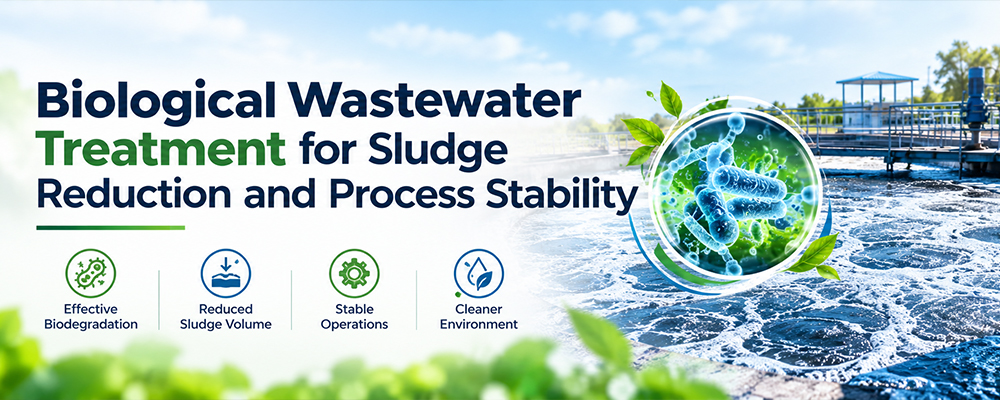
Wastewater treatment is not only about removing contaminants before water is discharged or reused. For industrial treatment plants, maintaining a stable process is equally important. Changes in organic loading, microbial activity, pH, temperature and dissolved oxygen can affect treatment efficiency and lead to fluctuations in sludge generation.
Sludge is a natural outcome of biological wastewater treatment because microorganisms convert biodegradable organic matter into new cells and other products. However, excessive or poorly managed sludge can increase handling requirements, treatment costs and operational pressure. This makes effective biological control an important part of wastewater management.
Managing Organic Matter Before It Becomes a Sludge Problem
The relationship between organic matter and sludge generation is central to biological wastewater treatment. Wastewater containing high levels of biodegradable material provides food for microorganisms in the treatment system. As microbial populations grow and process the available organic matter, more biological solids can be produced.
This does not mean that biological treatment itself should be avoided. Instead, the process needs to maintain the right balance between organic loading, microbial activity and solids management. When these factors are controlled, microorganisms can break down organic pollutants more efficiently without creating unnecessary instability within the treatment system.
Parameters such as BOD and COD therefore provide useful information about the wastewater entering and leaving the treatment process. Tracking these values helps operators understand the organic load and identify changes that may affect biological performance.
How Biological Treatment Supports Wastewater Breakdown
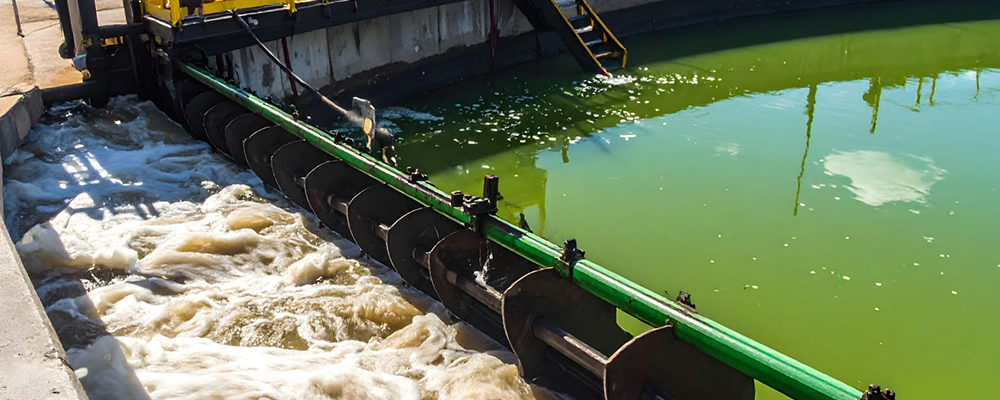
Biological wastewater treatment relies on microorganisms to break down biodegradable substances present in wastewater. Depending on the treatment system, different microbial populations may contribute to the degradation of organic compounds.
In aerobic systems, microorganisms use oxygen while metabolising biodegradable organic matter. Their activity helps reduce the organic load in wastewater before the treated water moves to the next stage.
The effectiveness of this process depends on maintaining conditions that allow microorganisms to remain active. If oxygen availability, pH, temperature or organic loading moves outside the suitable operating range, microbial activity can become less effective.
This is why biological wastewater treatment should be viewed as a controlled process rather than simply the addition of microorganisms. The treatment environment must support the biological population throughout the operation.
The Link Between Biological Activity and Sludge Reduction
Sludge reduction begins with better control of the material entering and accumulating within the treatment system. When biodegradable organic matter is efficiently broken down, the overall organic burden on downstream treatment stages can be better managed.
A balanced microbial population can also help prevent sudden changes in treatment performance. If the biological community is exposed to excessive loading or unsuitable operating conditions, treatment efficiency may decline. This can result in higher residual organic matter and changes in sludge characteristics.
For this reason, sludge management should not be considered separately from biological treatment. The two are closely connected. Improving the efficiency and stability of biological degradation can support better control over the amount and characteristics of biological solids produced.
Why Process Stability Matters
A wastewater treatment plant may achieve acceptable results under normal conditions but struggle when wastewater characteristics change. Industrial facilities can experience variations in production schedules, raw materials, cleaning operations and wastewater composition.
These changes can alter BOD, COD, pH and other characteristics of the incoming wastewater. A sudden increase in organic loading, for example, can place additional pressure on the microbial population.
A stable biological process provides greater resilience against such variations. Consistent microbial activity allows the treatment system to respond more effectively to changes rather than experiencing major fluctuations in performance.
Process stability also makes routine monitoring more meaningful. When operating conditions remain reasonably consistent, unusual changes in treatment results can be identified more easily.
Conditions That Influence Biological Wastewater Treatment
Several operating conditions determine how effectively microorganisms perform inside a wastewater treatment system.
Dissolved oxygen:
Aerobic microorganisms require sufficient oxygen for effective biological degradation. Insufficient oxygen can restrict microbial activity and reduce treatment efficiency.
pH:
Microbial populations generally perform within specific pH conditions. Significant changes can affect their activity and the overall balance of the treatment system.
Temperature:
Temperature influences biological reaction rates. Sudden or prolonged temperature changes can affect microbial performance.
Organic loading:
The amount and type of biodegradable material entering the system directly influence microbial activity. Sudden loading increases may disturb the biological balance.
Solids retention and management:
The amount of biological solids retained in the system needs to be controlled. Poor solids management can affect treatment capacity and sludge handling.
These factors work together. Adjusting one parameter without considering the others may not resolve the underlying treatment issue.
Handling Variable Industrial Wastewater
Industrial wastewater rarely remains completely uniform. Production changes can introduce different organic compounds, suspended solids and chemical characteristics into the treatment stream.
This creates a need for biological systems that can maintain activity despite reasonable variations in wastewater quality. Regular monitoring can help operators recognise changes before they develop into larger process problems.
For example, a gradual increase in COD may indicate a change in organic loading. A corresponding change in sludge production or dissolved oxygen demand can provide additional information about how the microbial population is responding.
Instead of treating each change as an isolated problem, operators can use these parameters together to understand the condition of the treatment process.
Monitoring Sludge and Treatment Performance
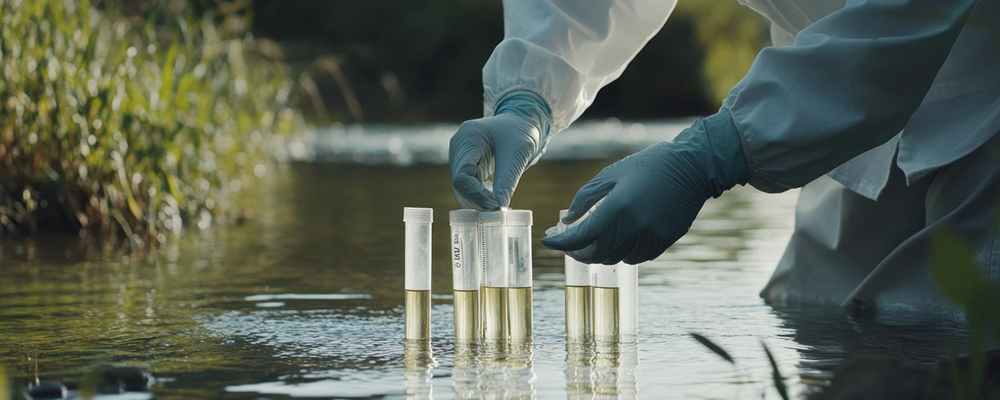
Sludge reduction should always be supported by measurement. Simply observing a reduction in sludge volume does not provide enough information about whether the overall wastewater treatment process has improved.
Useful parameters may include:
- BOD and COD reduction
- Suspended solids
- Sludge volume and characteristics
- Dissolved oxygen
- pH
- Temperature
- Organic loading
- Biological process performance
Monitoring these factors over time helps establish operating trends. It can also highlight sudden changes that require investigation.
The objective is not necessarily to achieve the lowest possible sludge production. Biological solids are part of many treatment systems. The more practical goal is to maintain effective pollutant removal while keeping sludge generation and handling within manageable limits.
Biological Solutions for Wastewater Treatment
Biological treatment solutions can be incorporated into wastewater management programmes where additional support for microbial activity is required. Their application needs to be matched with the characteristics of the wastewater and the conditions of the treatment system.
Biolaxi Enzymes’ wastewater treatment range includes BL Aerobic Culture (Biocultural) and BL Methane Rise, listed under its wastewater treatment applications.
The selection and use of a biological solution should form part of a broader treatment strategy. Feed characteristics, process conditions, dosing requirements and treatment objectives all need to be considered rather than relying on a single intervention.
Building a More Stable Treatment Process
Effective wastewater treatment is ultimately about maintaining balance. Organic matter needs to be degraded efficiently, microbial populations need suitable conditions, and biological solids need to be managed properly.
A practical approach begins with understanding the wastewater entering the treatment plant. From there, operators can monitor organic loading, maintain suitable biological conditions and track changes in sludge production and treatment performance.
When these steps are connected, biological treatment becomes more predictable. The system can respond more effectively to variations while reducing the risk of sudden process instability.
This approach also supports better long term operation. Instead of focusing only on end point discharge quality, wastewater plants can work towards consistent biological performance throughout the treatment process.
Conclusion
Biological wastewater treatment can play an important role in managing sludge generation and maintaining stable treatment performance. By promoting the controlled microbial breakdown of biodegradable organic matter, biological processes can help reduce organic loading and improve the overall balance of a wastewater treatment system.
Effective results depend on maintaining suitable conditions for microbial activity, including adequate oxygen, appropriate pH, temperature, organic loading and solids management. Regular monitoring of BOD, COD, suspended solids and other operating parameters is equally important for maintaining consistency.
Biolaxi Enzymes provides biological solutions for wastewater treatment applications, supporting industries in managing organic loads and maintaining effective microbial activity. When integrated with appropriate process monitoring and sludge management practices, biological treatment can contribute to more stable wastewater operations and better control of sludge generation.