

Denim washing is an important stage in garment manufacturing because it determines much of the fabric’s final appearance, softness and feel. Unlike ordinary laundry, denim washing is often carried out to achieve specific effects such as controlled fading, surface cleanliness, softness and a worn-in appearance. Detergent enzymes can help manufacturers achieve these results through targeted biological action. Depending on the formulation, enzymes can break down starch, proteins, fats and surface fibres that affect denim appearance and cleanliness. This makes enzyme based washing a useful approach for combining effective cleaning with controlled fabric care.
Why Denim Washing Requires Specialised Treatment
Denim is commonly made from cotton and is often dyed with indigo. During garment production, the fabric can retain sizing agents, processing residues, loose fibres, dirt and other substances that need to be removed during washing.
At the same time, manufacturers may want to change the original appearance of the denim. A newly dyed garment can be too rigid or uniform for the intended design. Washing helps develop the desired shade, handle and surface character.
A typical denim washing process may involve:
- Desizing to remove starch based sizing materials
- Scouring to remove impurities and processing residues
- Enzymatic treatment for controlled surface modification
- Rinsing and neutralisation
- Softening and final finishing
The exact sequence varies according to the garment and the required finish. Enzymes can be introduced at specific stages to address particular processing requirements.
How Detergent Enzymes Work on Denim
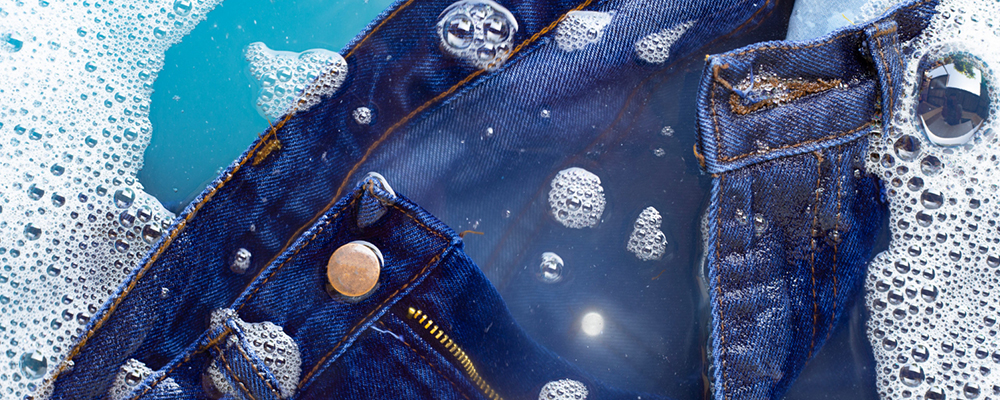
Detergent enzymes are selected according to the type of material they are required to break down. This targeted action is one of their main advantages in textile washing.
Different enzyme groups can address different substances:
- Amylases break down starch based residues and can assist with desizing.
- Proteases act on protein based soils and organic residues.
- Lipases help break down fats and oily substances.
- Cellulases act on cellulose fibres and are particularly relevant to cotton based denim.
This means a denim washing formulation can be designed around the required cleaning or finishing objective rather than relying on one treatment for every problem.
Cellulase for Denim Washing and Surface Effects
Cellulase is particularly associated with denim washing because cotton fibres are primarily composed of cellulose. When applied under controlled conditions, cellulase can act on loose fibres present on the surface of denim.
This action can produce several desirable effects.
It can remove surface fuzz and help create a cleaner fabric appearance. It may also contribute to a softer handle by reducing protruding fibres. In indigo dyed denim, controlled surface fibre removal can release some of the dye associated with the surface and create a faded or worn appearance.
This is why cellulase based denim washing is often used as an alternative or complement to conventional abrasive treatments.
The treatment must be controlled carefully. Excessive activity can result in unwanted colour loss or fabric strength reduction. Dosage, pH, temperature and treatment time therefore need to match the fabric and the desired finish.
Enzymes for Removing Starch Based Sizing
Sizing agents are applied to yarns during weaving to provide strength and reduce breakage. Starch based materials may therefore remain on the fabric after weaving and need to be removed before subsequent finishing operations.
Amylase can hydrolyse starch into smaller compounds that are easier to remove during washing.
Effective desizing helps prepare denim for later treatments. It can also create a more uniform fabric surface, allowing subsequent washing and finishing processes to work more consistently.
This is especially relevant when manufacturers need reliable colour and handle results across large garment batches.
Tackling Oils, Grease and Organic Soils
Denim garments can also carry oily residues from manufacturing equipment, handling and other processing stages. Conventional washing can remove some of these materials, but specific enzyme activity may provide additional support.
Lipases act on fats and oils by breaking them down into smaller components. This can assist with the removal of certain greasy residues during washing.
Proteases have a different function. They act on protein-based materials and can be useful where organic soils are present.
The benefit comes from selecting the appropriate activity for the actual contamination rather than treating all residues in the same way.
Creating a Softer Denim Handle
Softness is a major consideration in denim garment finishing. Untreated denim can feel comparatively stiff, while excessive mechanical processing may damage the fabric or create inconsistent results.
Controlled enzymatic treatment can help modify the surface of cotton fibres. In particular, cellulase treatment can reduce loose fibres and surface fuzz, resulting in a smoother handle.
The final softness of denim still depends on several factors. Fabric construction, washing conditions, mechanical action, softener selection and drying all contribute to the finished feel.
Enzymes should therefore be considered as one part of the overall fabric care process.
Achieving Controlled Denim Fading
Denim fading is often required to create different fashion effects, from lightly washed garments to heavily worn vintage styles.
Enzymatic washing can contribute to this effect by acting on surface cellulose fibres. As some of these fibres are removed, indigo associated with the surface can also be released.
The result is a more washed appearance without depending entirely on aggressive abrasion.
The degree of fading depends on the enzyme dosage and processing conditions. Treatment time and mechanical action also influence the final shade.
This gives manufacturers an opportunity to adjust the washing recipe according to the required colour effect.
Enzyme Washing Compared with Abrasive Processing

Stone washing has traditionally been used to create faded and worn denim effects. It relies on physical abrasion between the garments, washing liquor and abrasive materials such as pumice stones.
While effective, intensive mechanical treatment can create challenges. It may contribute to fabric wear, equipment abrasion and variation between batches.
Enzyme-based processing provides another approach. Cellulase can create surface modification through controlled biological action rather than relying solely on physical abrasion.
In some production systems, enzymatic treatment may reduce the intensity of mechanical processing required. The exact approach depends on the desired garment appearance and fabric specifications.
Benefits of Enzyme-Based Denim Washing
When properly selected and controlled, detergent enzymes can offer several practical benefits in denim processing.
These include:
- Targeted breakdown of specific residues
- Controlled surface fibre removal
- Improved fabric softness
- More consistent denim fading
- Effective removal of starch-based sizing
- Better control over surface appearance
- Reduced dependence on intensive mechanical abrasion in selected processes
- Greater flexibility when developing different washing effects
The actual results depend on the enzyme formulation and the process conditions used by the manufacturer.
Factors That Influence Enzyme Performance
Enzyme performance is strongly influenced by the washing environment. Simply adding an enzyme to a wash cycle does not guarantee the required result.
Important factors include:
- Temperature: Each enzyme performs within a particular temperature range. Excessive heat can reduce activity, while insufficient temperature may slow the reaction.
- pH: Enzyme activity is also affected by the acidity or alkalinity of the wash bath. Maintaining a suitable pH helps achieve consistent treatment.
- Dosage: Higher dosage does not necessarily mean better results. The amount should correspond to the fabric, contamination level and intended finish.
- Treatment time: Longer exposure can increase the degree of enzymatic action, but excessive treatment may affect fabric properties.
- Mechanical action: Agitation influences how evenly the treatment reaches the garments and can affect the final washing effect.
These variables need to be considered together when developing an industrial denim washing recipe.
Choosing the Right Enzyme for Denim Care
The choice of detergent enzyme should begin with the specific processing objective.
For starch removal, amylase may be appropriate. Where surface fibre modification and controlled denim fading are required, cellulase is more relevant. Protease and lipase can address particular organic and oily residues.
A combination of activities may also be considered when a garment requires both cleaning and finishing.
The fabric itself must also be evaluated. Cotton-rich denim, stretch denim and blended fabrics can respond differently to washing. The treatment should therefore be tested against both appearance and physical performance before being introduced at production scale.
Conclusion
Detergent enzymes provide denim manufacturers with a targeted approach to cleaning and garment finishing. Amylase can assist with starch-based sizing removal, while protease and lipase can address specific organic and oily residues. Cellulase has a particularly important role in cotton-based denim, where controlled surface fibre modification can contribute to softness, fuzz reduction and the characteristic faded appearance associated with washed jeans.
Biolaxi Enzymes offers enzyme solutions for industrial textile and detergent applications, helping manufacturers select suitable biological treatment approaches according to their processing requirements. When combined with appropriate control of dosage, temperature, pH, treatment time and mechanical action, these solutions can form part of an efficient denim washing process that balances cleaning performance, desired appearance and fabric care.