
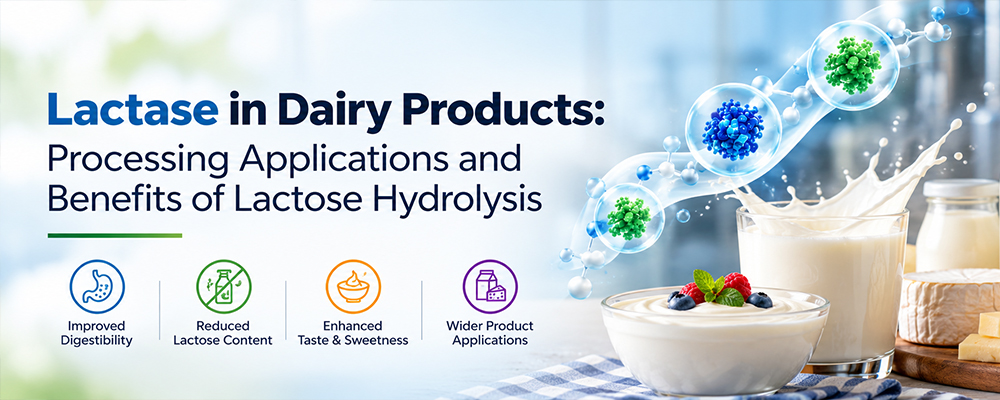
Lactose is the natural sugar present in milk and dairy products. Although it is an important component of milk, some consumers have difficulty digesting lactose because their bodies do not produce enough lactase. This has created a growing need for lactose reduced and lactose free dairy products.
For dairy manufacturers, lactase offers a practical way to address this requirement. The enzyme hydrolyses lactose into glucose and galactose, changing the composition of the milk sugar without removing the other major components of dairy products. Lactase can therefore be incorporated into several dairy processing applications, including milk, yoghurt, flavoured milk, ice cream and other lactose reduced products.
Understanding how lactase works, where it is used and how lactose hydrolysis affects dairy products helps manufacturers develop consistent formulations and processing methods.
What Is Lactase in Dairy Processing?
Lactase, also known as beta galactosidase, is an enzyme used to break down lactose. Lactose is a disaccharide made up of glucose and galactose. During enzymatic hydrolysis, lactase breaks the bond between these two sugars.
The basic reaction is:
Lactose + water → glucose + galactose
In dairy processing, lactase is added to milk or a dairy formulation under controlled conditions. The enzyme then acts on the lactose during a defined treatment period.
The degree of lactose hydrolysis depends on factors such as enzyme dosage, temperature, pH, treatment time and lactose concentration. These conditions need to be controlled according to the dairy product being processed.
Why Is Lactose Hydrolysis Important in Dairy Products?
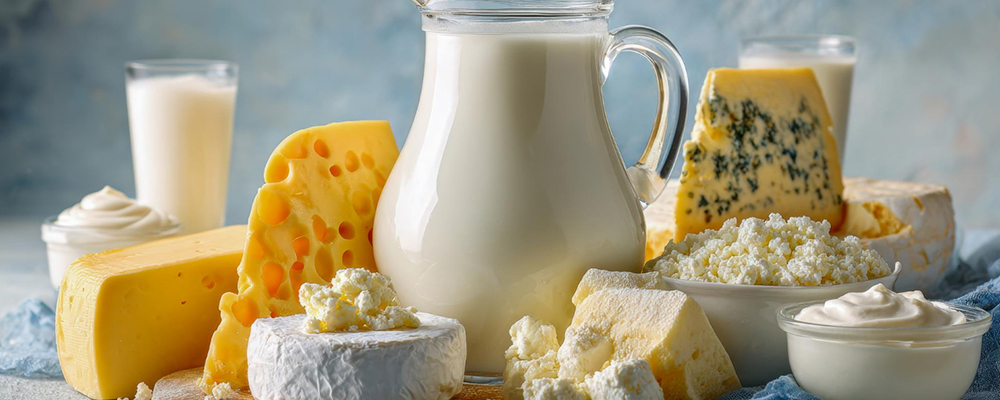
Lactose hydrolysis has become an important part of dairy processing because it allows manufacturers to produce products with reduced lactose content.
When lactose is hydrolysed, it is converted into glucose and galactose. These simpler sugars can be more easily digested by people who have difficulty breaking down lactose.
This makes lactase particularly useful for producing:
- Lactose free milk
- Lactose reduced milk
- Lactose free yoghurt
- Lactose reduced flavoured milk
- Lactose free dairy beverages
- Lactose reduced ice cream
- Other specialised dairy formulations
Lactase treatment can also affect sweetness and lactose crystallisation, making lactose hydrolysis relevant to product formulation as well as lactose reduction.
Lactase Application in Milk Processing
Milk is one of the most established applications of lactase.
In conventional milk, lactose is naturally present at a significant level. During lactase treatment, the enzyme hydrolyses part or most of this lactose into glucose and galactose.
The treatment can be carried out under controlled processing or storage conditions, depending on the production system and enzyme preparation. Manufacturers need to establish the appropriate dosage and reaction time based on the required lactose reduction.
For lactose free milk, achieving consistent hydrolysis is particularly important. The process must be carefully monitored so that the finished product meets the required specification for its intended market.
Lactase treatment can therefore be integrated into milk processing without fundamentally changing the basic composition of the product.
Lactase in Lactose Free Milk Production
The production of lactose free milk is one of the key commercial applications of lactase.
The objective is to reduce the amount of intact lactose remaining in the finished product. Lactase converts lactose into glucose and galactose, reducing the concentration of lactose available in the milk.
Processing conditions have a direct effect on the efficiency of this conversion. Enzyme dosage, temperature and treatment time need to be selected according to the milk composition and required level of hydrolysis.
Quality testing is also important. Manufacturers need to verify the residual lactose level while monitoring taste, texture and other product characteristics.
This makes process control an essential part of lactose free milk production.
Lactase Application in Yoghurt Processing
Yoghurt is another important dairy product where lactase can be used for lactose reduction.
During conventional yoghurt production, starter cultures ferment part of the lactose and produce lactic acid. However, some lactose remains in the finished yoghurt.
Lactase can be introduced to hydrolyse additional lactose. Depending on the manufacturing process, treatment can be carried out before fermentation or at another suitable stage.
Lactose hydrolysis can also influence yoghurt sweetness because glucose and galactose are sweeter than lactose. Manufacturers therefore need to consider the effect of lactase treatment on the final flavour profile.
For lactose reduced yoghurt, the enzyme treatment should be optimised alongside fermentation conditions to achieve the required lactose level without negatively affecting product quality.
Lactase in Flavoured Milk and Dairy Beverages
Flavoured milk and dairy beverages can also be developed using lactase treatment.
Products containing cocoa, fruit flavours, vanilla or other ingredients may be formulated as lactose reduced alternatives. Lactase can hydrolyse lactose in the dairy base before the product undergoes final processing.
The presence of additional ingredients can affect the processing environment, so enzyme activity needs to be evaluated within the complete formulation.
The change in sweetness is particularly relevant in flavoured dairy beverages. Because glucose and galactose are sweeter than lactose, hydrolysis can alter the overall taste of the product.
Manufacturers may therefore need to adjust the formulation after determining the degree of lactose hydrolysis required.
Lactase in Ice Cream Processing
Ice cream is another application where lactose hydrolysis can provide processing benefits.
Milk solids used in ice cream contain lactose. When lactose concentration becomes high, particularly in concentrated formulations, lactose crystals can develop and contribute to a gritty texture.
Lactase can hydrolyse lactose into glucose and galactose, reducing the amount of lactose available for crystallisation.
This can be particularly relevant when developing lactose reduced ice cream. However, hydrolysis also increases sweetness because the resulting sugars are sweeter than lactose.
Manufacturers therefore need to consider both texture and sweetness when determining the appropriate level of lactase treatment.
Lactose Hydrolysis and Product Sweetness
One of the important effects of lactase treatment is its influence on sweetness.
Lactose has a relatively low sweetness compared with glucose and galactose. When lactase converts lactose into these simpler sugars, the dairy product can develop a noticeably sweeter taste.
This characteristic can be useful during formulation. In some applications, the increased sweetness may reduce the need for additional sweetening ingredients.
However, excessive hydrolysis may produce a sweetness level that is unsuitable for the intended product. Manufacturers should therefore establish the required degree of lactose hydrolysis before finalising the recipe.
Sensory evaluation should form part of product development alongside laboratory measurement of lactose reduction.
Lactose Hydrolysis and Dairy Product Texture
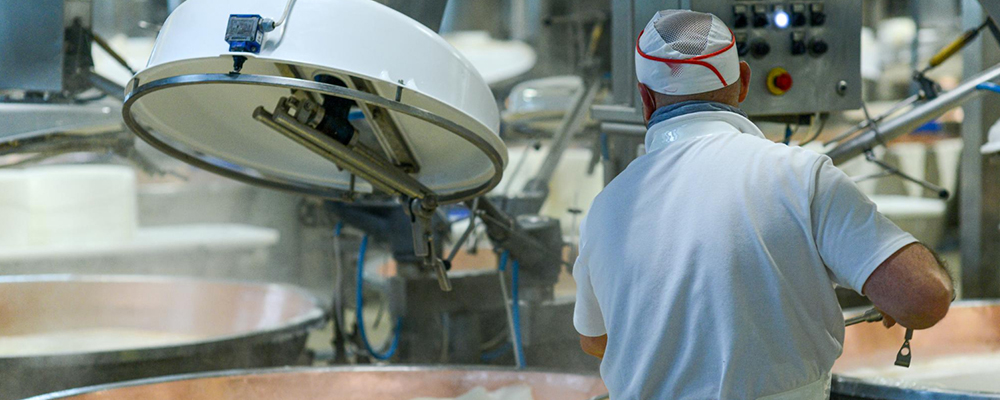
Lactose hydrolysis can also influence the physical properties of certain dairy products.
This is particularly important in concentrated products where lactose crystallisation can affect texture. Large lactose crystals can produce a sandy or gritty mouthfeel.
By converting lactose into glucose and galactose, lactase can reduce the quantity of lactose available to form crystals.
The effect varies according to the product composition and processing conditions. Lactase should therefore be selected and applied based on the specific formulation rather than using the same treatment across every dairy product.
Factors Affecting Lactase Activity in Dairy Processing
Successful lactose hydrolysis requires careful control of processing conditions.
- Temperature
Lactase activity is affected by temperature. The treatment temperature should be selected according to the operating range of the enzyme and the processing method being used.
- pH
Different dairy products have different pH conditions. Milk and fermented dairy products may therefore require different approaches to lactase treatment.
- Enzyme Dosage
The required dosage depends on the lactose concentration, treatment time and target level of hydrolysis. Using more enzyme does not automatically produce a better result.
- Treatment Time
The enzyme needs sufficient contact time with the lactose to achieve the desired conversion. Longer treatment may increase hydrolysis, but the optimum time depends on the complete processing conditions.
- Dairy Composition
Fat, protein, milk solids and other ingredients can influence the processing environment. These factors should be considered when establishing an industrial lactase treatment.
Benefits of Lactase in Dairy Product Processing
The use of lactase provides several processing and formulation benefits.
- Lactose reduction: Lactase enables manufacturers to reduce lactose levels in milk and other dairy products.
- Lactose free product development: Controlled hydrolysis supports the production of specialised dairy products designed for consumers who need to limit lactose.
- Improved digestibility: Breaking lactose into glucose and galactose makes the resulting sugars easier to digest for individuals with lactose intolerance.
- Sweetness control: Lactose hydrolysis changes the sugar profile and can increase sweetness, which may be useful in certain formulations.
- Reduced lactose crystallisation: Lower levels of intact lactose can help manage crystallisation related texture problems in suitable dairy products.
- Product diversification: Lactase allows conventional dairy manufacturers to develop lactose reduced versions of established products.
Selecting Lactase for Dairy Applications
The choice of lactase should be based on the dairy product and the intended processing conditions.
Milk, yoghurt, flavoured beverages and ice cream do not have identical processing environments. Their pH, solids content, temperature and treatment times can vary considerably.
Manufacturers should evaluate:
- Target lactose reduction
- Dairy product composition
- Processing temperature
- Product pH
- Required treatment time
- Enzyme dosage
- Desired sweetness
- Texture requirements
- Production scale
Pilot trials can help determine the appropriate processing conditions before commercial production. Monitoring lactose levels and evaluating the final sensory properties are equally important for maintaining consistency.
Conclusion
Lactase plays a specific and valuable role in dairy processing by converting lactose into glucose and galactose through enzymatic hydrolysis. Its application extends beyond lactose free milk to yoghurt, flavoured milk, dairy beverages and ice cream, where lactose reduction can be combined with changes in sweetness and texture.
The effectiveness of lactose hydrolysis depends on appropriate control of enzyme dosage, temperature, pH and treatment time. Product composition must also be considered because each dairy application presents different processing requirements.
Biolaxi Enzymes provides enzyme solutions for dairy processing applications, including lactase for controlled lactose hydrolysis. With appropriate enzyme selection and process optimisation, dairy manufacturers can develop consistent lactose reduced and lactose free products while managing important characteristics such as sweetness, texture and overall product quality.