
The global dairy industry is undergoing a significant transformation as consumer preferences evolve and demand for specialised nutritional products continues to increase. Among the fastest-growing segments is lactose-free dairy, driven by rising awareness of lactose intolerance, changing dietary habits, and increasing expectations for products that combine nutrition, taste, and convenience. As manufacturers respond to these market dynamics, the ability to produce high-quality lactose-free milk and dairy products efficiently has become an important competitive advantage.
Meeting these expectations requires more than simply removing lactose. Dairy processors must preserve the natural flavour, texture, nutritional value and shelf life of products while maintaining operational efficiency and controlling production costs. This balance has been made possible through advances in industrial enzyme technology, particularly the use of lactase enzymes, which enable controlled lactose hydrolysis without compromising product quality.
Modern enzyme technology has transformed dairy processing by offering manufacturers greater precision, process flexibility and consistency. Similar innovations have also reshaped manufacturing across industries including tea processing, baking, textiles, detergents, animal nutrition, water treatment and sugar production, demonstrating the growing importance of industrial biotechnology in sustainable manufacturing.
This article explores the science behind lactose-free dairy production, the role of advanced enzyme technology, the operational benefits for manufacturers, and the wider contribution of industrial enzymes across multiple industries.
Understanding Lactose and Its Role in Dairy Products
Lactose is the naturally occurring carbohydrate found in milk and most dairy products. It consists of two simple sugars:
- Glucose
- Galactose
These sugars are linked together by a chemical bond that requires the enzyme lactase for digestion within the human digestive system.
For individuals with reduced lactase activity, lactose may not be fully digested, resulting in digestive discomfort after consuming conventional dairy products. As awareness of lactose intolerance has increased worldwide, demand for lactose-free alternatives has grown across retail, foodservice and industrial food manufacturing.
The Science Behind Lactose Hydrolysis
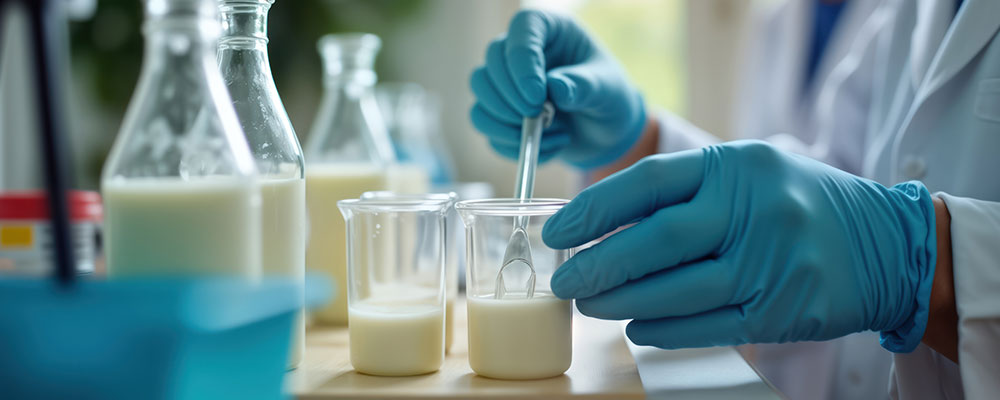
Rather than removing lactose physically, modern dairy manufacturers use enzymes to convert lactose into its naturally occurring components.
This process, known as enzymatic hydrolysis, involves the addition of lactase enzymes that break the bond between glucose and galactose.
The reaction produces:
- Glucose
- Galactose
Because these sugars are more readily digestible, the resulting dairy product becomes suitable for individuals with lactose intolerance while retaining the nutritional profile of milk.
An additional benefit is that glucose and galactose are naturally sweeter than lactose, often allowing manufacturers to reduce the need for added sugars in certain product formulations.
What Are Lactase Enzymes
Lactase is a specialised enzyme belonging to the β-galactosidase family.
Its primary function is to catalyse the hydrolysis of lactose into simpler sugars.
Commercial lactase enzymes are carefully developed for industrial dairy applications and are available for use in products such as:
- Milk
- Flavoured milk
- Cream
- Ice cream
- Yoghurt
- Dairy beverages
- Whey products
- Dairy ingredients
These enzymes enable processors to achieve consistent lactose conversion while maintaining product quality throughout production.
Stages of Enzyme-Assisted Lactose-Free Dairy Production
Industrial lactose hydrolysis is a carefully controlled process involving multiple stages.
1. Milk Preparation
Raw milk undergoes standard quality control procedures including:
- Filtration
- Standardisation
- Pasteurisation
- Composition adjustment
These steps ensure consistent raw material quality before enzyme treatment.
2. Enzyme Addition
Lactase is introduced under carefully controlled processing conditions.
Key variables include:
- Temperature
- pH
- Enzyme concentration
- Holding time
- Product composition
Each parameter influences enzyme activity and overall conversion efficiency.
3. Lactose Hydrolysis
Once activated, lactase begins breaking lactose into glucose and galactose.
The reaction continues until the desired level of lactose conversion is achieved.
The degree of hydrolysis depends on:
- Product requirements
- Processing method
- Enzyme formulation
- Manufacturing objectives
4. Quality Verification
Manufacturers routinely verify lactose reduction through laboratory testing.
Quality assurance typically evaluates:
- Residual lactose
- Product flavour
- Sweetness profile
- Microbiological quality
- Shelf life
- Nutritional consistency
This ensures products consistently meet regulatory and consumer expectations.
Benefits of Advanced Enzyme Technology in Dairy Manufacturing
Modern enzyme systems offer numerous operational and commercial advantages.
1. Consistent Product Quality
Controlled enzymatic hydrolysis helps maintain:
- Natural flavour
- Smooth texture
- Uniform sweetness
- Stable product performance
Consistency is particularly important for large-scale commercial production.
2. Improved Processing Flexibility
Enzyme technology can be integrated into various manufacturing processes, allowing processors to develop a wide portfolio of lactose-free dairy products.
This flexibility supports innovation across multiple dairy categories.
3. Enhanced Consumer Experience
The conversion of lactose into glucose and galactose often creates a naturally sweeter taste profile without significantly altering the nutritional composition.
Consumers benefit from products that closely resemble conventional dairy in taste and functionality.
4. Efficient Manufacturing
Modern enzyme formulations support:
- Reliable processing
- Predictable performance
- Reduced product variability
- Improved production efficiency
These characteristics contribute to more streamlined manufacturing operations.
Critical Factors Influencing Enzyme Performance
Successful lactose hydrolysis depends upon careful management of process conditions.
1. Temperature
Each lactase preparation performs within a specific temperature range.
Maintaining optimum temperatures maximises enzyme activity while protecting milk quality.
2. pH
Enzyme efficiency is influenced by product acidity.
Accurate pH control ensures reliable lactose conversion throughout production.
3. Enzyme Dosage
Selecting the appropriate enzyme concentration is essential for balancing process efficiency with production economics.
4. Reaction Time
Adequate processing time ensures the required level of lactose hydrolysis while maintaining efficient production schedules.
Expanding Opportunities in Lactose-Free Dairy
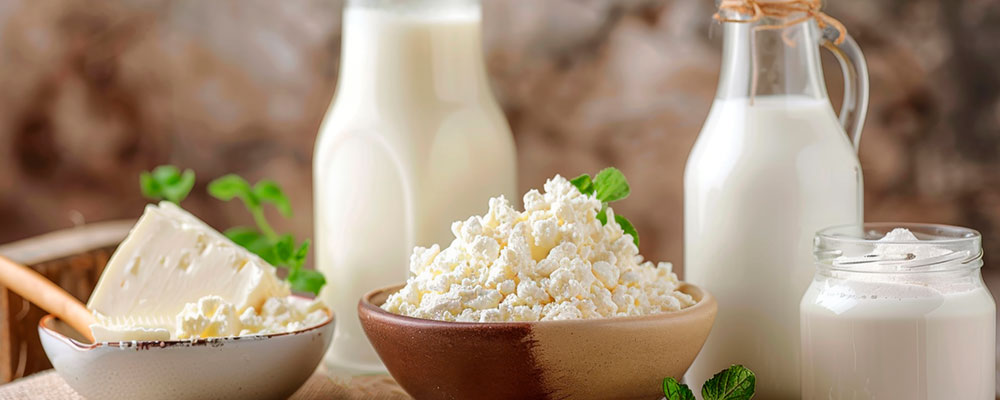
Demand for lactose-free products continues to grow across numerous dairy categories.
Applications include:
- Drinking milk
- Yoghurt
- Cheese
- Ice cream
- Cream
- Dairy desserts
- Protein beverages
- Functional nutrition products
Enzyme technology enables manufacturers to expand product portfolios while meeting evolving market expectations.
Sustainability Benefits of Enzyme-Based Dairy Processing
Sustainability has become an important consideration across the dairy sector.
Enzyme-assisted manufacturing contributes through:
- Improved process efficiency
- Reduced resource consumption
- Better raw material utilisation
- Lower production waste
- Greater manufacturing consistency
- Support for cleaner processing technologies
These improvements align with broader corporate sustainability initiatives and operational excellence programmes.
Industrial Enzymes Beyond Dairy Processing
The success of lactase technology demonstrates the broader value of industrial enzymes across modern manufacturing industries.
Specialised enzymes continue to improve production efficiency and product quality in numerous sectors.
1. Enzymes for Tea Processing
Tea manufacturing relies on controlled biochemical transformations that influence flavour, colour and aroma.
Industrial enzymes assist with:
- Controlled oxidation
- Flavour enhancement
- Colour development
- Improved processing consistency
- Better product uniformity
These improvements support premium-quality tea production.
2. Enzymes for Baking
Commercial bakeries depend on enzyme technology to improve manufacturing efficiency and product performance.
Applications include:
- Dough conditioning
- Increased loaf volume
- Enhanced crumb texture
- Improved dough handling
- Extended freshness
- Better processing consistency
Enzymes help manufacturers produce high-quality baked goods while reducing reliance on chemical improvers.
3. Enzymes for the Detergent Industry
Modern detergents incorporate enzyme blends to improve stain removal.
Common enzyme classes include:
- Proteases
- Lipases
- Amylases
- Cellulases
Together they effectively remove:
- Protein stains
- Food residues
- Oils
- Starch deposits
- Dairy residues
These formulations deliver effective cleaning performance at lower washing temperatures, reducing household energy consumption.
4. Enzymes for the Textile Industry
The textile sector increasingly uses enzyme technology to improve both product quality and sustainability.
Applications include:
- Desizing
- Bio-polishing
- Denim finishing
- Fabric softening
- Fibre preparation
Compared with conventional chemical treatments, enzyme-based processes often reduce water use and chemical consumption while preserving fabric quality.
5. Enzymes for the Feed Industry
Feed enzymes improve the digestibility of plant-based feed ingredients by breaking down complex compounds.
Benefits include:
- Better nutrient absorption
- Improved feed conversion efficiency
- Reduced nutrient waste
- Enhanced livestock productivity
- Improved feed utilisation
These advantages contribute to more efficient and sustainable animal production systems.
6. Enzymes for Water Treatment
Industrial and municipal water treatment facilities increasingly incorporate biological enzyme solutions.
Applications include:
- Organic matter degradation
- Sludge reduction
- Biofilm control
- Wastewater treatment
- Odour management
Enzymes support environmentally responsible water management while improving treatment efficiency.
7. Enzymes for Sugar Mills
Sugar processing also benefits from specialised enzyme technologies.
Applications include:
- Juice clarification
- Reduced viscosity
- Improved filtration
- Enhanced sugar recovery
- Increased extraction efficiency
- Better process stability
These improvements contribute to higher productivity and improved operational performance.
Emerging Trends in Industrial Enzyme Technology
Advances in biotechnology continue to expand the capabilities of industrial enzymes.
Future developments are expected to focus on:
- Improved enzyme stability
- Higher catalytic efficiency
- Tailored enzyme formulations
- Wider operating conditions
- Greater automation compatibility
- Enhanced sustainability performance
These innovations will continue to strengthen the role of enzymes across food, agriculture and industrial manufacturing.
The Strategic Importance of Enzymes in Modern Manufacturing
Across industries, enzyme technology has become a key driver of process innovation. Unlike conventional chemical methods, enzymes offer highly specific catalytic activity that enables manufacturers to optimise production while reducing unnecessary resource consumption.
Enterprise manufacturers increasingly view enzyme technology as a strategic investment because it supports:
- Greater operational efficiency
- Improved product consistency
- Reduced environmental impact
- Enhanced regulatory compliance
- Better utilisation of raw materials
- Long-term process optimisation
As sustainability targets and quality expectations continue to evolve, biological processing technologies will remain central to the future of industrial manufacturing.
Conclusion
Advanced enzyme technology has transformed lactose-free dairy production by enabling efficient and controlled lactose hydrolysis while preserving the flavour, texture and nutritional quality that consumers expect. Through the use of carefully selected lactase enzymes, dairy manufacturers can produce consistent, high-quality lactose-free products across a wide range of applications while improving manufacturing efficiency and maintaining rigorous quality standards.
The value of industrial enzymes extends well beyond dairy processing. Similar technologies are driving innovation in tea processing, commercial baking, detergent formulation, textile finishing, animal nutrition, water treatment and sugar manufacturing by improving operational performance, reducing reliance on conventional chemical treatments and supporting more sustainable industrial processes.
Biolaxi Enzymes supports these evolving manufacturing requirements through a portfolio of specialised enzyme solutions designed for diverse industrial applications. With a strong focus on product quality, technical expertise and process optimisation, Biolaxi Enzymes helps manufacturers address complex production challenges, improve operational efficiency and advance sustainable manufacturing practices across multiple industries.