Molasses remains one of the most important feedstocks in industrial alcohol production. As a by-product of sugar processing, it offers significant fermentable potential while supporting cost efficiency in distillery operations. Yet despite its widespread use, molasses based alcohol production presents multiple technical challenges. Variable sugar composition, non fermentable compounds, viscosity issues and microbial instability can all limit fermentation efficiency and final alcohol recovery.
For modern distilleries, profitability depends not simply on processing molasses, but on extracting maximum fermentable value from it. Every percentage of sugar conversion matters. Every fermentation cycle influences output, cost and operational stability. This is why modern innovative enzyme technology is becoming increasingly important in molasses distillery operations.
Enzymes are helping distilleries improve sugar accessibility, optimise fermentation conditions and enhance alcohol yield through more precise biochemical conversion. By supporting better substrate breakdown and process efficiency, enzymes are transforming molasses from a variable raw material into a more consistent and productive alcohol source.
Why Molasses Efficiency Matters in Alcohol Production
Molasses contains residual sugars, minerals and organic compounds that make it suitable for fermentation. However, not all available material is easily converted into alcohol with maximum efficiency.
Distilleries often face challenges such as:
- Incomplete sugar utilisation
- High viscosity affecting flow and fermentation
- Presence of complex carbohydrates
- Variable substrate quality
- Increased fermentation losses
- Reduced alcohol recovery potential
These limitations can directly impact yield, fermentation time and overall production economics.
In a competitive industry, improving conversion efficiency is essential.
Understanding the Role of Enzymes in Molasses Processing
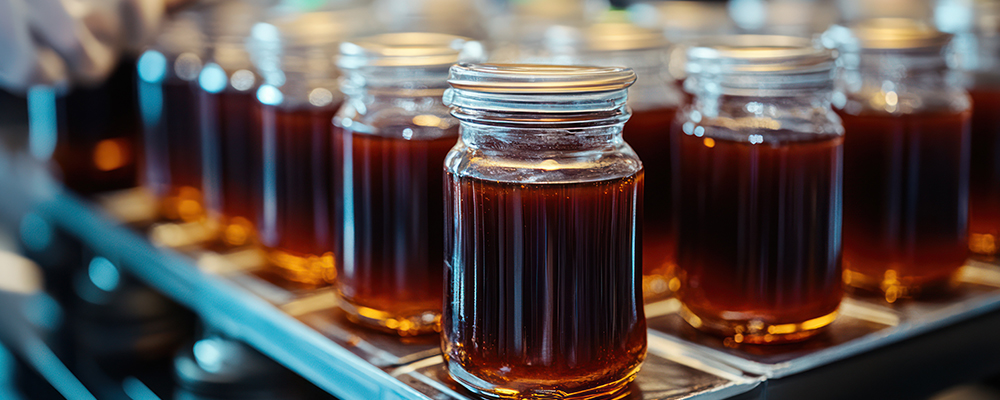
Enzymes are biological catalysts that accelerate specific biochemical reactions. In molasses based distillery systems, they support the breakdown of complex carbohydrates and improve access to fermentable sugars.
Depending on formulation and process design, enzymes can assist in:
- Breaking down residual starches or polysaccharides
- Reducing viscosity challenges
- Improving substrate accessibility for yeast
- Supporting cleaner fermentation pathways
- Enhancing conversion of sugars into alcohol
Rather than relying solely on standard fermentation conditions, enzyme integration allows distilleries to optimise the substrate before and during fermentation.
Improving Fermentable Sugar Availability
One of the most critical factors in alcohol production is the availability of fermentable sugars for yeast metabolism. While molasses contains valuable sugars, certain carbohydrate structures may not always be efficiently utilised under standard conditions.
Modern innovative enzyme systems help hydrolyse complex sugar chains into simpler fermentable forms. This creates a more accessible nutrient base for yeast activity.
The benefits can include:
- Better sugar release
- Improved substrate conversion
- Higher fermentation efficiency
- Enhanced alcohol generation potential
By unlocking more usable sugar, distilleries can often improve alcohol output from the same molasses volume.
Supporting Stronger Fermentation Performance
Fermentation efficiency depends heavily on yeast health and substrate quality. When molasses composition creates stress through viscosity or inconsistent nutrient accessibility, fermentation performance may decline.
Enzyme support can improve process conditions by reducing molecular complexity and improving fermentable balance. This often creates a more favourable environment for microbial activity.
Potential advantages include:
- Faster fermentation cycles
- Better yeast performance
- Improved sugar utilisation
- Reduced fermentation bottlenecks
- Greater batch consistency
For large scale distilleries, even small fermentation improvements can significantly influence annual output.
Reducing Viscosity and Improving Process Flow
Molasses can present operational difficulties due to its dense and viscous nature. High viscosity may affect pumping, mixing and substrate uniformity, creating inefficiencies throughout production stages.
Specific enzyme applications can help reduce viscosity by breaking down structural compounds that contribute to processing resistance.
This can support:
- Better material handling
- Improved mixing efficiency
- More consistent fermentation distribution
- Reduced mechanical stress on systems
Improved flow dynamics contribute not only to yield but also to smoother operational management.
Enhancing Yield While Reducing Waste
Every distillery aims to maximise alcohol recovery while minimising unutilised substrate. Poor sugar conversion means lost production potential and higher residual waste.
By improving substrate breakdown and fermentation precision, enzymes help reduce conversion losses and support more complete utilisation of available resources.
This contributes to:
- Higher alcohol recovery
- Reduced residual sugar losses
- Better raw material efficiency
- Improved economic return
In resource sensitive industries, this optimisation is particularly valuable.
Supporting Sustainability in Distillery Operations
Modern distilleries are under increasing pressure to improve both economic and environmental performance. Better substrate utilisation directly supports sustainability by reducing waste generation and improving resource productivity.
Enzyme supported systems can help:
- Improve feedstock efficiency
- Reduce processing losses
- Lower waste burden
- Support cleaner production outcomes
By enabling better extraction from existing molasses resources, enzymes contribute to more sustainable distillery practices.
Addressing Raw Material Variability
Molasses quality can vary depending on sugar source, season, storage and upstream processing conditions. This variability can create inconsistencies in fermentation performance.
Modern innovative enzyme solutions provide greater adaptability by helping stabilise substrate accessibility across changing feedstock profiles. This improves operational predictability.
Benefits may include:
- More consistent fermentation
- Greater process control
- Better flexibility with feedstock variability
- Improved production planning
Consistency is especially valuable for distilleries focused on scale and output reliability.
The Future of Enzyme Supported Distillery Performance
As distillery operations become more efficiency driven, enzyme systems are expected to play an even larger role in alcohol production strategies. Ongoing advancements are focusing on:
- Greater substrate specificity
- Improved process compatibility
- Enhanced fermentation support
- Tailored enzyme combinations for molasses systems
These developments are helping distilleries move towards smarter, more optimised alcohol production.
Conclusion
Molasses remains a valuable raw material for industrial alcohol production, but unlocking its full potential requires more than conventional fermentation alone. Modern innovative enzyme technology is helping distilleries improve sugar accessibility, strengthen fermentation efficiency, reduce process limitations and achieve better alcohol recovery. By transforming how molasses is converted, enzymes are enabling more productive, efficient and sustainable distillery performance.
Biolaxi Enzymes supports this advancement through carefully developed enzyme solutions designed to improve molasses processing, optimise fermentation efficiency and enhance alcohol production outcomes. With strong research capabilities, customised enzyme expertise and a focus on practical industrial performance, Biolaxi Enzymes helps distilleries address modern production challenges with greater precision. Through Modern innovative enzyme support, Biolaxi continues to contribute to smarter alcohol production and improved distillery efficiency.