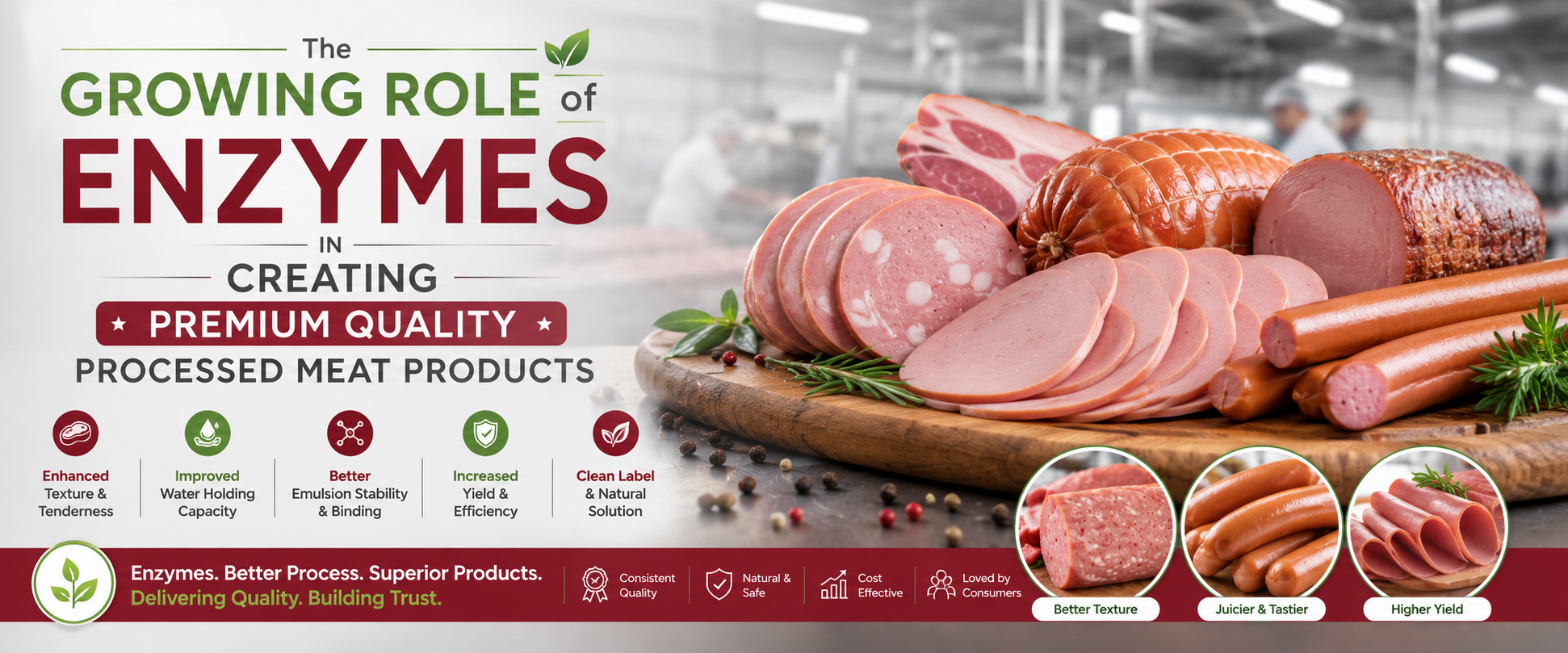
Consumer expectations for processed meat products have changed a lot in recent years. Taste still matters, of course. But it is no longer the only factor driving purchase decisions.
Today’s consumers look for consistent texture, clean bite, juicy mouthfeel, stable structure, and reliable quality every single time. Sausages, nuggets, deli slices, salami, meat patties, and ready to cook products are all judged on these parameters. Premium quality has quietly become the baseline expectation.
This shift has increased pressure on meat processors. Production systems are expected to deliver uniform results at scale, even when raw material quality varies. That is not always easy in a biological system like meat.
And this is exactly where enzymes are making a noticeable difference.
Industrial enzymes help control texture development, improve protein functionality, enhance flavour balance, and stabilise product structure. Instead of forcing results through heavy mechanical action or excessive additives, they work at a molecular level. Quietly. Precisely. And consistently.
Why Texture Decides Product Quality
Texture is often the first thing a consumer notices. Even before flavour, the bite tells a story.
A sausage that feels rubbery immediately feels lower quality. A meat patty that falls apart loses appeal. And a deli slice without firmness feels incomplete.
These reactions happen instantly.
Behind the scenes, texture depends on several factors working together:
- Protein structure and stability
- Water retention during cooking
- Fat distribution inside the matrix
- Binding strength between particles
- Heat and processing conditions
Traditional processing tries to manage these with phosphates, binders, or mechanical mixing. Sometimes it works well. Other times, results fluctuate between batches.
Enzymes introduce a more controlled approach. They adjust the internal behaviour of proteins instead of relying only on external force.
How Enzymes Function in Meat Systems
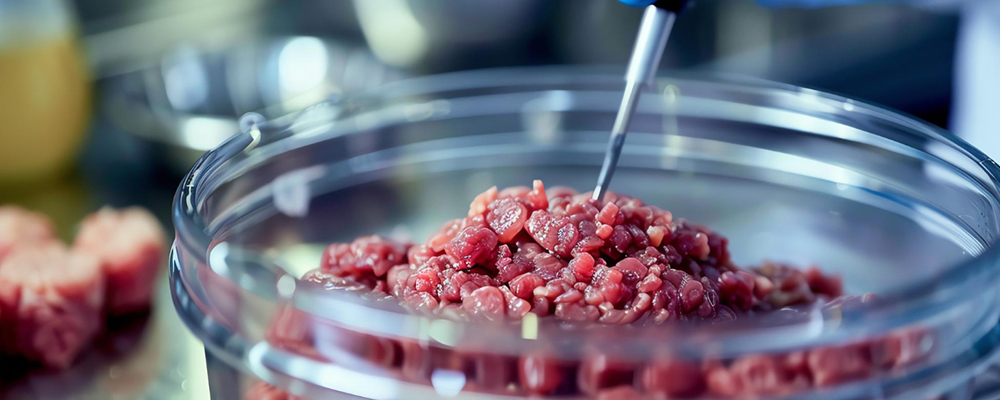
Enzymes are biological catalysts. They accelerate specific biochemical reactions without being consumed in the process. In meat processing, they primarily act on proteins and connective tissues.
The effect is subtle at first, then transformative.
Proteases help modify protein chains. This supports tenderness and improves flavour precursor release. Transglutaminase strengthens protein bonding, which improves structure and cohesion. Lipases, used selectively, contribute to flavour development by modifying fats in controlled ways.
Each enzyme has a specific role. Together, they help shape the final product experience.
The key advantage is selectivity. Enzymes do not affect everything at once. They target specific molecules and leave the rest of the system intact. That precision is difficult to achieve with conventional methods.
Improving Protein Functionality and Structure
Proteins determine how processed meat behaves during mixing, heating, and cooking. When protein networks are strong and well organised, products hold together better. They also retain water more effectively.
When they are weak, problems begin. Texture becomes inconsistent. Moisture leaks out. Products lose shape during cooking.
Enzyme systems help stabilise these protein interactions.
Transglutaminase, for example, creates stronger bonds between protein molecules. This leads to a more unified internal structure. Not rigid, but cohesive.
The improvements are easy to notice:
- Better firmness without hardness
- Improved slice integrity
- More stable bite structure
- Reduced crumbling during handling
- More uniform product appearance
This matters especially in sausages, meatballs, restructured cuts, and deli meats where consistency defines quality.
Moisture Retention and Juiciness Control
Juiciness is one of the strongest indicators of premium meat quality. Dry texture is usually associated with over-processing or poor formulation control.
Moisture loss can occur at multiple stages. During mixing. During cooking. Even during storage.
Once water leaves the protein matrix, it is difficult to recover.
Enzymes help by strengthening the internal network that holds water inside the product. Instead of leaking out, moisture remains trapped within the structure.
The impact shows up clearly:
- Higher cooking yield
- Reduced drip loss
- Better mouthfeel
- Softer yet structured bite
- Improved eating satisfaction
Sometimes the difference is subtle. But consumers notice it immediately.
Consistency Across Production Batches
Large scale meat processing depends on repeatability. Every batch must match the previous one. That is easier said than done when raw materials vary naturally.
Enzymes help reduce this variability.
By guiding protein behaviour in a controlled way, they stabilise how the product forms during processing. This leads to more predictable outcomes even when inputs change.
The benefits include fewer defects, more uniform texture, and improved slicing performance. In commercial production, that stability is extremely valuable.
Flavour Development Through Enzymatic Activity
Texture may define structure, but flavour defines memory. Both matter.
Enzymes contribute to flavour development in indirect but important ways. Proteolytic enzymes break proteins into smaller peptides and amino acids. These compounds enhance savoury notes during cooking.
In cured and fermented meats, this becomes even more important. Enzymatic reactions support gradual flavour maturation over time, creating deeper taste profiles.
The result is a richer sensory experience. Not overpowering, just more balanced and layered.
Reducing Processing Intensity
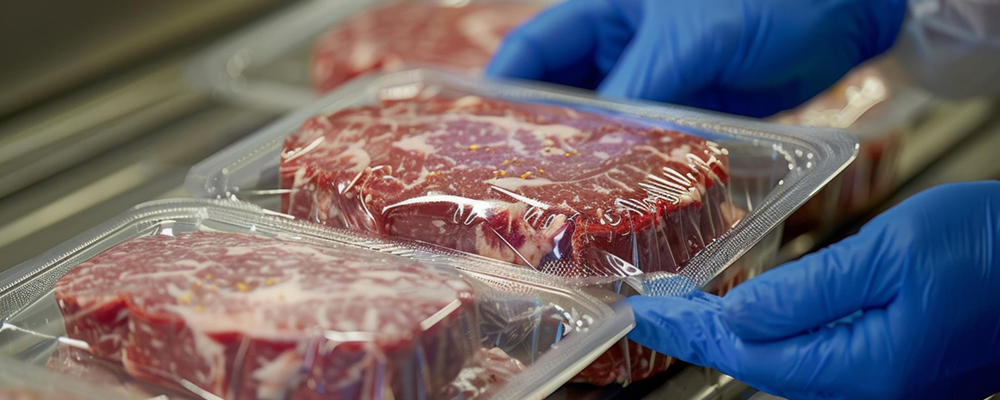
Traditional meat processing often relies on mechanical force or high salt levels to achieve structure. That can introduce stress into the system.
Too much force can damage texture. Too much salt can affect flavour balance.
Enzymes reduce the need for such intensity. They work internally, adjusting molecular behaviour rather than forcing physical change.
This allows gentler processing conditions. Less stress on equipment. Less stress on proteins. And often, better final quality.
Supporting Efficiency and Sustainability
Modern meat production is expected to be efficient and responsible at the same time. Waste reduction is a key focus.
Enzymes support this by improving raw material utilisation. More of the meat becomes usable product. Less is lost due to poor structure or shrinkage.
That translates into practical benefits:
- Better yield from the same input
- Reduced processing waste
- Lower rework requirements
- Improved resource efficiency
- More stable production flow
It is not just about performance. It is also about smarter use of materials.
The Evolving Future of Enzyme Technology
Enzyme systems are still evolving. Research is focused on improving precision, stability, and adaptability across different meat types and processing conditions.
Future solutions are expected to deliver even more targeted control over texture and flavour. Some will focus on ultra-specific protein interactions. Others will combine multiple functions in a single system.
The direction is clear. More control. Less variability. Better quality outcomes.
Conclusion
Premium processed meat is defined by more than taste alone. Texture, juiciness, structure, and consistency all work together to create the final experience.
Enzymes help bring these elements into balance. They improve protein functionality, support moisture retention, enhance flavour development, and stabilise product structure in a precise and controlled way.
The result is simple. Better quality. More consistency. And improved efficiency in production.
Biolaxi Enzymes develops specialised enzyme solutions designed for modern meat processing needs. With a focus on performance, stability, and application driven design, Biolaxi Enzymes supports processors in creating high quality meat products that meet today’s demanding market expectations.