
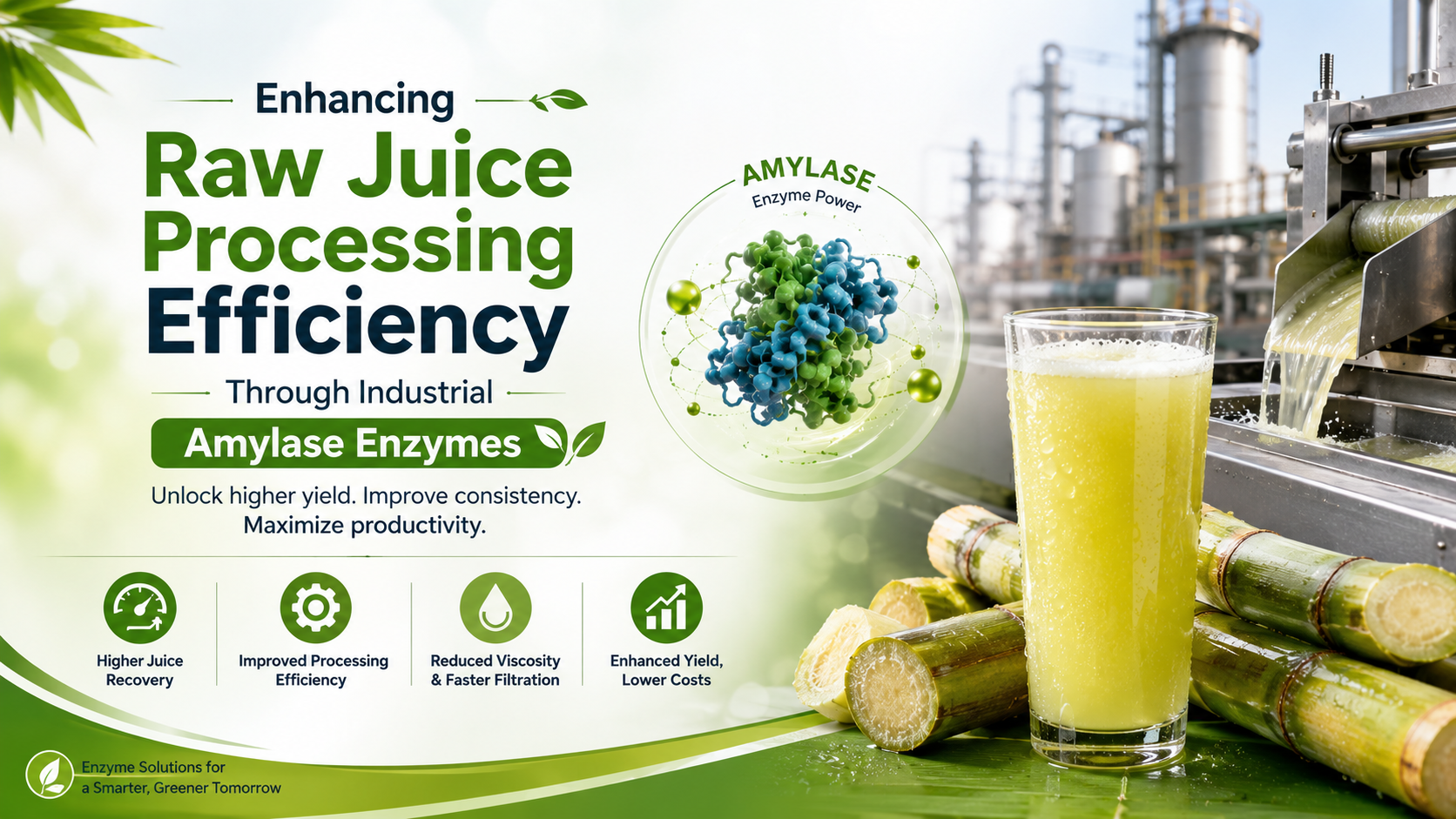
Raw juice processing is one of the most critical stages in sugar manufacturing. Once sugarcane is crushed, the extracted juice contains starch, fibres, colloidal particles, and other naturally occurring impurities that can interfere with downstream operations. If these components are not managed effectively, they can reduce processing efficiency, affect juice quality, and ultimately influence sugar recovery.
Among these impurities, starch presents one of the biggest operational challenges. It increases juice viscosity, slows clarification and filtration, contributes to equipment fouling, and can even affect crystallisation during later stages of production. To overcome these issues, sugar mills are increasingly incorporating industrial amylase enzymes into their processing systems. By breaking down starch into smaller soluble sugars, amylase improves juice flow, simplifies processing, and supports more efficient sugar production from crushing through to clarification.
Why Starch Creates Challenges in Sugar Mills
Sugarcane naturally contains varying amounts of starch, with levels often influenced by cane variety, maturity, harvesting conditions, and storage before crushing. During juice extraction, this starch dissolves into the raw juice and begins affecting several downstream operations.
Excess starch increases the viscosity of the juice, making it more difficult to pump, heat, clarify, and filter. It can also interfere with impurity removal by preventing suspended particles from settling efficiently during clarification.
As starch levels rise, processors may experience:
- Increased juice viscosity
- Slower clarification and settling
- Reduced filtration efficiency
- Greater mud generation
- Equipment fouling and scaling
- Lower sugar recovery during processing
Managing starch early in production therefore becomes essential for maintaining consistent factory performance.
How Industrial Amylase Improves Raw Juice Processing
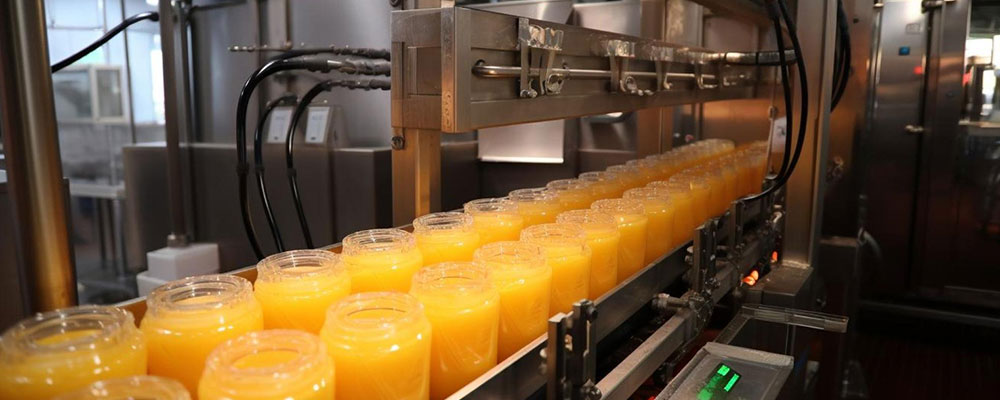
Amylase is a hydrolytic enzyme that breaks down starch molecules into smaller carbohydrates such as dextrins, maltose, and glucose. Instead of relying solely on mechanical or chemical treatments, this enzymatic reaction occurs under relatively mild processing conditions while targeting starch with remarkable precision.
As starch molecules become smaller, the juice flows more freely throughout the factory. Lower viscosity improves handling, reduces resistance during pumping, and prepares the juice for more efficient clarification and filtration.
This targeted action helps optimise the entire production process without altering the natural characteristics of the sugarcane juice.
Reducing Viscosity for Better Juice Flow
High viscosity is one of the first challenges created by excess starch. Thick juice moves more slowly through pipelines and processing equipment, increasing energy consumption while reducing overall plant efficiency.
Amylase addresses this issue by converting long starch chains into smaller soluble sugars. As viscosity decreases, raw juice becomes easier to transport through heaters, clarifiers, filtration systems, and evaporators.
The benefits extend throughout the factory. Pumps operate more efficiently, heat transfer improves, and processing becomes smoother from one stage to the next.
Even small improvements in juice flow can have a significant impact during peak crushing seasons when mills process thousands of tonnes of sugarcane every day.
Supporting Efficient Clarification
Clarification plays a vital role in sugar manufacturing because impurities must be removed before evaporation and crystallisation.
When starch remains in the juice, suspended particles stay dispersed for longer periods, slowing settling and reducing clarification efficiency. This increases the load on downstream equipment and may affect final sugar quality.
Industrial amylase helps overcome this challenge by breaking down starch into smaller soluble molecules. Cleaner juice is produced, settling improves, and clarification becomes more consistent across production batches.
Better clarification also reduces mud formation, helping mills recover more valuable juice while simplifying waste handling.
Improving Juice Recovery and Sugar Yield
Every tonne of harvested sugarcane represents valuable sucrose that processors aim to recover as efficiently as possible. Inefficient juice extraction or processing losses directly affect factory profitability.
By reducing starch related resistance during processing, amylase improves the movement of juice through extraction and clarification systems. This enables greater recovery of liquid from the same quantity of sugarcane while reducing losses throughout the production line.
Improved processing efficiency contributes to:
- Higher juice recovery
- Better sugar recovery
- Reduced processing losses
- Improved utilisation of harvested sugarcane
- Greater production efficiency
For high capacity sugar mills, even modest improvements in recovery can generate substantial economic benefits over an entire crushing season.
Faster Filtration and Smoother Downstream Processing
Filtration becomes increasingly difficult when starch remains suspended within the juice. Filters clog more quickly, filtration cycles become longer, and production throughput declines.
Amylase reduces these limitations by converting suspended starch into smaller soluble components that pass more easily through filtration systems.
The result is faster filtration, improved juice clarity, and fewer interruptions during production.
Cleaner juice entering evaporation also helps reduce fouling on heat exchange surfaces, allowing equipment to operate more efficiently and consistently.
Improving Overall Factory Performance
Modern sugar mills depend on continuous operation throughout the harvesting season. Unexpected downtime caused by poor juice quality or equipment fouling can significantly reduce production efficiency.
Industrial amylase supports reliable plant performance by improving several interconnected processes.
Key operational advantages include:
- Improved juice transfer between crushing and clarification
- Lower pumping resistance
- Better heat transfer efficiency
- Reduced fouling in process equipment
- More efficient evaporation
- Consistent processing across production batches
Together, these improvements allow factories to maintain stable production while reducing operational interruptions.
Supporting Sustainable Sugar Processing
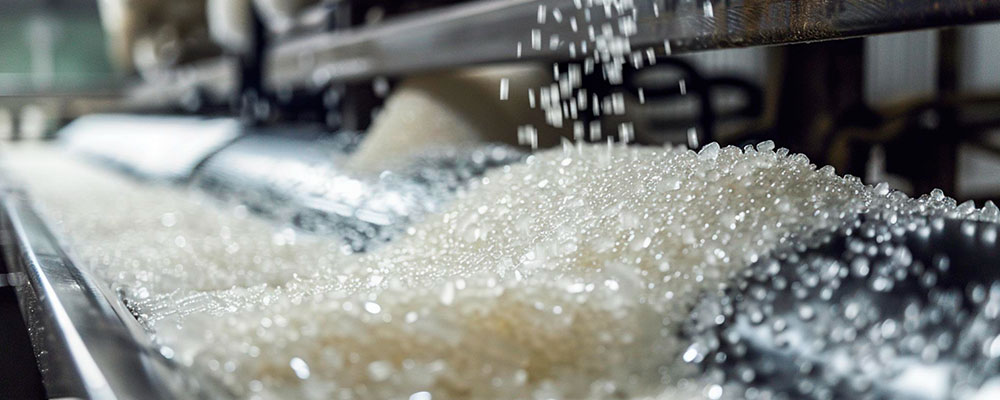
Sustainability has become an important focus across the sugar industry. Mills are looking for technologies that improve resource utilisation while reducing energy consumption and processing waste.
Enzyme technology supports these objectives naturally.
By improving juice recovery and reducing viscosity, amylase helps maximise the value obtained from every tonne of harvested sugarcane. Lower pumping resistance and improved equipment efficiency can also contribute to reduced energy consumption across the production process.
Because enzymes function under relatively mild operating conditions, they provide an environmentally responsible alternative to more intensive processing methods while supporting efficient factory operations.
Applications in Sugar Manufacturing
Industrial amylase plays an important role throughout modern sugar processing, including:
- Raw sugarcane juice processing
- Starch reduction after juice extraction
- Improved clarification efficiency
- Faster filtration
- Reduced juice viscosity
- Better evaporation performance
- Enhanced sugar recovery
- Improved factory throughput during crushing season
Its ability to improve multiple processing stages makes it an essential tool for modern sugar mills seeking greater operational efficiency.
The Future of Enzyme Assisted Sugar Processing
As sugar manufacturers continue to optimise production, enzyme technology is becoming increasingly important. Advances in biotechnology have led to more stable and efficient amylase formulations that perform effectively under a wide range of industrial processing conditions.
Future developments are expected to further improve starch degradation, increase sugar recovery, and enhance process consistency while supporting more sustainable manufacturing practices. As mills continue investing in operational efficiency, enzyme based solutions will remain a valuable part of modern sugar processing strategies.
Conclusion
Efficient raw juice processing is fundamental to successful sugar manufacturing. Excess starch can affect viscosity, clarification, filtration, and sugar recovery, creating challenges throughout the production process. Industrial amylase enzymes provide an effective solution by breaking down starch, improving juice flow, supporting faster clarification, enhancing filtration efficiency, and increasing overall factory performance.
At Biolaxi Enzymes Pvt. Ltd., we develop advanced industrial amylase enzyme solutions designed specifically for sugar processing applications. Our scientifically engineered formulations help sugar mills improve raw juice processing, maximise sugar recovery, enhance operational efficiency, and achieve consistent production performance throughout the crushing season.