
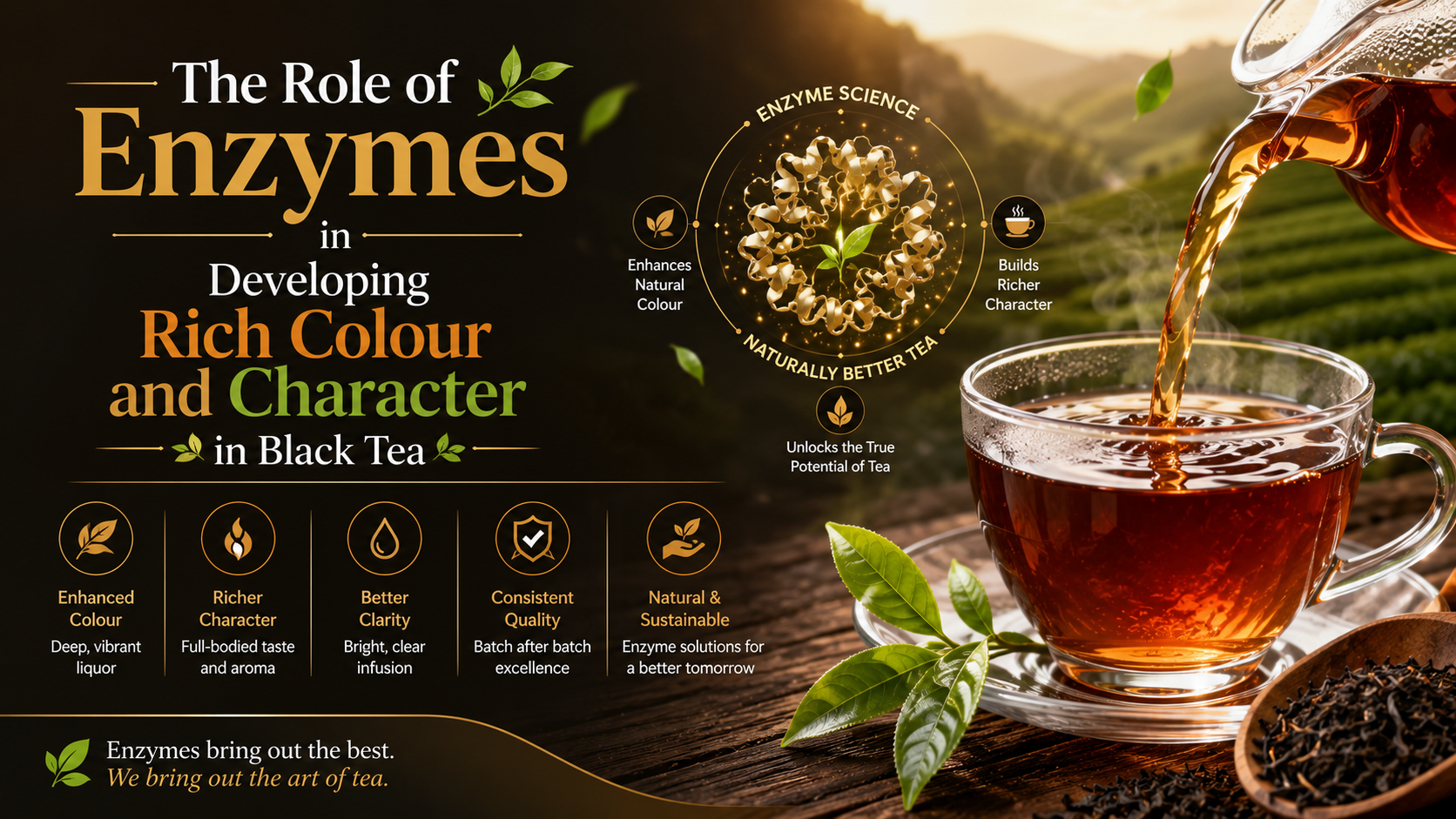
Black tea is appreciated across the world for its deep amber liquor, brisk taste, rich aroma, and full bodied character. While climate, cultivation, and harvesting influence the quality of tea leaves, the transformation that takes place during processing ultimately determines the colour and flavour found in every cup. Among all the stages involved, oxidation is the defining step that gives black tea its distinctive identity.
This transformation is driven by enzymes. Naturally present within fresh tea leaves, these biological catalysts initiate a series of biochemical reactions that convert simple plant compounds into the pigments, flavours, and aromas associated with premium black tea. Modern enzyme technology builds upon these natural processes by helping tea processors improve consistency, enhance extraction, and optimise production without compromising the authentic qualities consumers expect.
Why Colour and Character Matter in Black Tea
Consumers often judge black tea long before taking the first sip. A bright reddish brown infusion suggests careful processing, while the aroma creates expectations about flavour and quality. Once brewed, balance becomes equally important. The liquor should deliver briskness, body, smoothness, and a lingering finish without excessive bitterness.
Achieving these characteristics consistently is not always straightforward. The chemical composition of tea leaves changes with growing conditions, rainfall, harvest timing, and leaf maturity. Even when processing follows the same method, different batches can develop noticeable variations in colour and flavour. For commercial tea producers, maintaining uniform quality throughout changing harvest seasons remains one of the industry’s greatest challenges.
Enzyme based processing helps reduce these variations by supporting controlled biochemical reactions that shape the final sensory profile.
The Science Behind Black Tea Processing
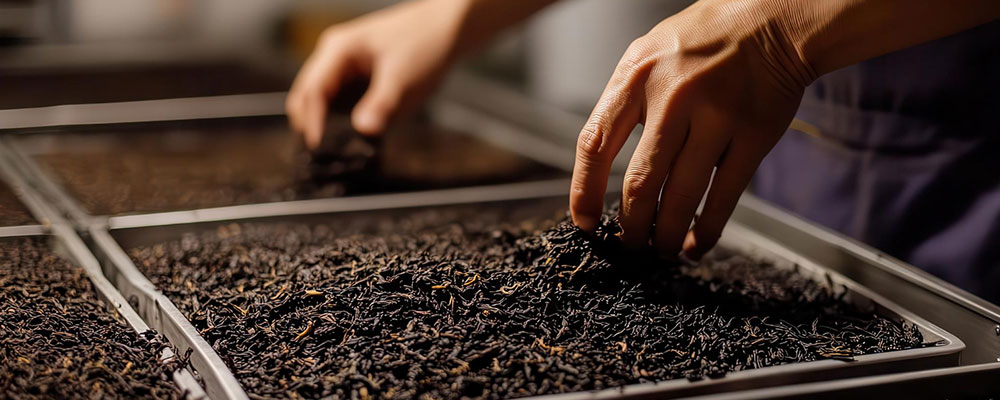
Unlike green or white tea, black tea undergoes full oxidation after the leaves are harvested. The processing sequence is carefully designed to encourage natural enzymatic activity while preserving the valuable compounds that contribute to quality.
The primary processing stages include:
- Withering to reduce moisture and prepare the leaves.
- Rolling or crushing to rupture plant cells and expose their contents.
- Oxidation, where enzymes interact with oxygen and polyphenols.
- Drying to stop enzymatic activity and stabilise the finished tea.
During rolling, cell walls break open, allowing enzymes and polyphenols that were previously separated within the leaf to come into contact. Oxygen enters the damaged tissue, triggering a chain of reactions that gradually transform the leaf from green to coppery brown before drying locks in the desired characteristics.
This controlled oxidation is what gives black tea its distinctive appearance, flavour, and aroma.
How Enzymes Create Rich Colour
Colour development begins when natural enzymes such as polyphenol oxidase and peroxidase interact with catechins, the major polyphenols present in fresh tea leaves. These reactions convert colourless compounds into larger pigment molecules that define black tea.
Two groups of compounds play particularly important roles.
Theaflavins contribute brightness, briskness, and the attractive golden red appearance of the brewed liquor. They also provide freshness and a lively taste.
Thearubigins develop as oxidation continues. These larger molecules create deeper reddish brown colour, fuller body, and greater complexity while contributing to the smooth finish expected from premium black tea.
Maintaining the right balance between these compounds is essential. Too little oxidation produces pale liquor with limited flavour, while excessive oxidation may reduce brightness and create dull, flat tasting tea. Controlled enzyme activity helps processors achieve the optimum balance batch after batch.
Building Aroma and Flavour Complexity
Colour is only part of what defines exceptional black tea. Aroma plays an equally important role in shaping consumer perception.
As oxidation progresses, enzymes transform proteins, carbohydrates, lipids, and other naturally occurring compounds into numerous volatile molecules. These substances create the floral, fruity, malty, woody, or honey like notes that distinguish one tea from another.
Several enzyme groups contribute to aroma formation:
- Glycosidases release aromatic compounds that remain bound within fresh leaves.
- Proteases break proteins into amino acids that later form flavour precursors.
- Lipases generate fatty acid derivatives that contribute fresh and fruity aromatic notes.
- Cell wall degrading enzymes improve the release of flavour compounds trapped within leaf tissues.
Together, these reactions produce the layered aroma and balanced flavour profile that consumers associate with high quality black tea.
Improving Processing Efficiency Through Enzyme Technology
Beyond sensory improvements, enzyme technology also supports more efficient tea production.
Breaking down structural components within the leaf allows valuable compounds to move more freely during oxidation. This encourages better extraction of pigments and flavour precursors while supporting more uniform biochemical reactions throughout the batch.
The benefits include:
- Improved release of colour compounds from tea leaves.
- More consistent oxidation across different leaf grades.
- Better extraction of flavour and aroma precursors.
- Reduced batch to batch variation.
- Greater control over processing conditions.
For large scale tea operations, these improvements translate into higher production consistency while helping maintain premium product quality.
Managing Natural Variability in Tea Leaves
No two harvests are exactly alike.
Temperature, rainfall, soil conditions, altitude, and harvesting schedules all influence the chemical composition of tea leaves before they even enter the factory. These natural differences can affect oxidation rates and ultimately change the appearance and taste of the finished product.
Controlled enzyme assisted processing provides an additional level of precision by supporting stable biochemical reactions even when raw material quality varies. Rather than replacing traditional expertise, it complements established processing methods and helps producers achieve dependable results across changing harvest conditions.
This consistency strengthens product quality while improving consumer confidence in every pack.
Supporting Sustainable Tea Production
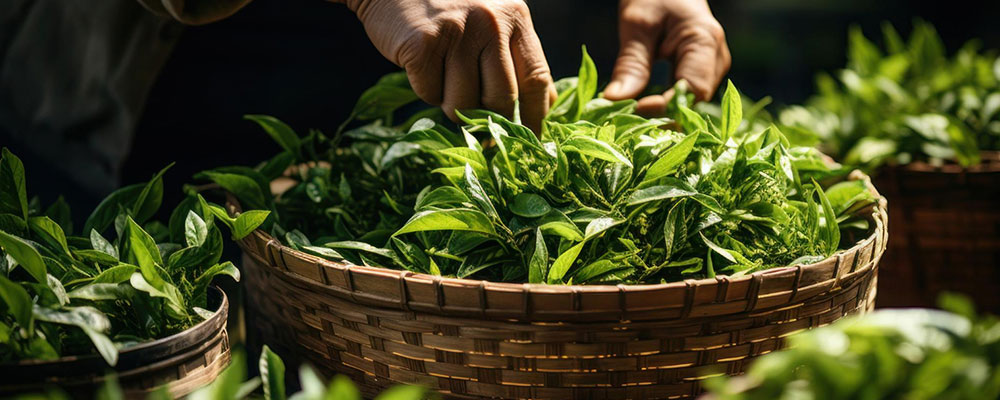
Sustainability has become increasingly important throughout the global tea industry. Manufacturers are seeking processing methods that improve efficiency while reducing environmental impact.
Enzymes contribute to these objectives because they function under relatively mild conditions and carry out highly specific reactions without the need for harsh chemical treatments. Improved extraction efficiency also allows processors to obtain greater value from harvested leaves, reducing unnecessary losses during production.
More efficient processing supports responsible resource use while helping manufacturers maintain the premium quality expected in today’s competitive tea market.
The Future of Enzyme Innovation in Black Tea
Advances in biotechnology continue to expand the possibilities for enzyme assisted tea processing.
Researchers are developing specialised enzyme formulations capable of improving oxidation control, enhancing aroma development, and delivering even greater production consistency. Future innovations may allow processors to fine tune specific flavour characteristics, develop distinctive regional profiles, and improve efficiency without altering traditional manufacturing practices.
As consumer expectations continue to evolve, enzyme technology will play an increasingly important role in helping tea producers balance craftsmanship with scientific precision.
Conclusion
The distinctive colour, aroma, and character of black tea are the result of carefully managed enzymatic reactions that occur throughout processing. From transforming catechins into theaflavins and thearubigins to releasing complex flavour compounds, enzymes shape every aspect of the finished beverage. Modern enzyme technology enhances these natural processes by improving consistency, supporting efficient production, and helping processors achieve reliable quality across varying harvest conditions.
At Biolaxi Enzymes Pvt. Ltd., we develop advanced enzyme solutions that support modern tea processing through scientifically engineered formulations tailored to industry requirements. By combining research, innovation, and technical expertise, our enzyme technologies help tea producers optimise colour development, strengthen flavour consistency, improve processing efficiency, and deliver premium black tea that meets the highest quality standards.