
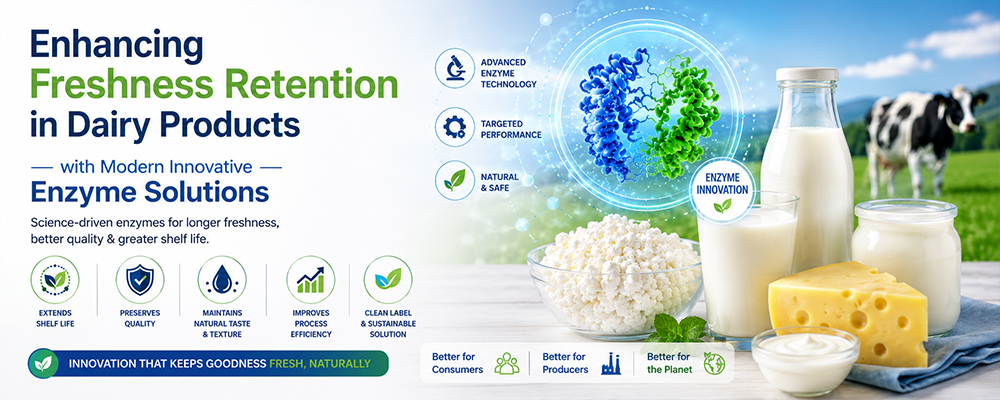
Freshness is one of the most important quality indicators in dairy products. Whether consumers purchase milk, yoghurt, cheese, cream or flavoured dairy beverages, they expect products to maintain desirable taste, texture, aroma and appearance throughout shelf life. Even minor deterioration in freshness can influence consumer perception, reduce product acceptance and create commercial losses across dairy operations.
Maintaining freshness, however, is increasingly complex. Modern dairy supply chains involve extended transportation, varying storage conditions and growing demand for minimally processed products with cleaner formulations. At the same time, dairy processing facilities must preserve product quality while improving efficiency and reducing waste.
This has led the dairy sector to adopt more precise process optimisation strategies. Among the most important developments is the use of modern innovative enzyme solutions. Enzymes are helping dairy processing operations improve product stability, support texture consistency and optimise biochemical balance in ways that contribute to better freshness retention across a wide range of dairy applications.
Why Freshness Retention Matters in Dairy Processing
Freshness affects nearly every aspect of dairy quality. Consumers often associate freshness with flavour purity, smooth texture and overall product reliability. When dairy products lose freshness prematurely, common issues can emerge.
These may include:
- Flavour imbalance
- Texture instability
- Excess whey separation
- Inconsistent viscosity
- Reduced sensory quality
- Shortened shelf life perception
For dairy operations, these challenges can result in higher product returns, increased waste and reduced customer confidence.
In highly competitive dairy markets, maintaining freshness consistency has become essential.
The Science Behind Enzymes in Dairy Applications
Enzymes are biological catalysts that support highly specific biochemical reactions. In dairy processing, they help modify proteins, fats and carbohydrates in controlled ways that improve product functionality and quality stability.
Different enzymes perform different roles depending on the dairy application. Commonly used dairy enzymes include:
- Lactase for lactose hydrolysis
- Proteases for controlled protein modification
- Lipases for flavour development in selected products
- Catalase for managing residual peroxide systems
Their targeted activity allows dairy processing facilities to optimise product behaviour without excessive reliance on harsh processing adjustments.
Improving Texture Stability in Dairy Products

Texture plays a major role in freshness perception. Consumers expect yoghurt to remain smooth, cheese to maintain structure and dairy beverages to preserve consistency throughout storage.
However, protein instability and moisture separation can gradually affect product quality over time. Modern innovative enzyme systems help improve protein interactions and structural balance within dairy matrices.
This can support:
- Better viscosity control
- Improved creaminess
- Reduced whey separation
- Enhanced texture consistency
- Greater product stability during storage
For products such as yoghurt and cultured dairy, texture retention is closely linked to perceived freshness.
Supporting Better Flavour Balance
Freshness is strongly connected to flavour integrity. Uncontrolled biochemical changes during storage may lead to off notes, bitterness or flavour inconsistency.
Enzymes help processing facilities manage flavour development more precisely. In certain dairy applications, targeted enzyme activity supports balanced maturation and controlled transformation of flavour compounds.
This contributes to:
- Cleaner flavour profiles
- Better taste consistency
- Reduced flavour deterioration
- Improved sensory stability
In premium dairy categories, maintaining flavour quality throughout shelf life is particularly important.
Lactose Management and Product Quality
Demand for lactose reduced and lactose free dairy products continues to grow globally. Lactase enzymes play a central role by breaking lactose into simpler sugars that are easier to digest.
Beyond digestibility benefits, controlled lactose hydrolysis can also influence product sweetness and mouthfeel. This allows dairy processing operations to improve sensory quality while meeting evolving consumer preferences.
Potential advantages include:
- Improved digestibility
- Enhanced sweetness balance
- Better flavour perception
- Greater formulation flexibility
This demonstrates how enzyme functionality can support both nutritional and sensory goals.
Reducing Processing Stress on Dairy Systems
Traditional methods used to improve stability or shelf life may sometimes require intensive thermal or mechanical processing. While effective, these approaches can occasionally affect product texture or flavour quality.
Enzymes offer a more controlled biological alternative. By supporting targeted reactions at milder processing conditions, they help improve functionality while preserving delicate product characteristics.
This can contribute to:
- Better product integrity
- Reduced processing stress
- Improved quality preservation
- Greater operational precision
Such control is increasingly valuable in modern dairy processing.
Supporting Shelf Life Consistency
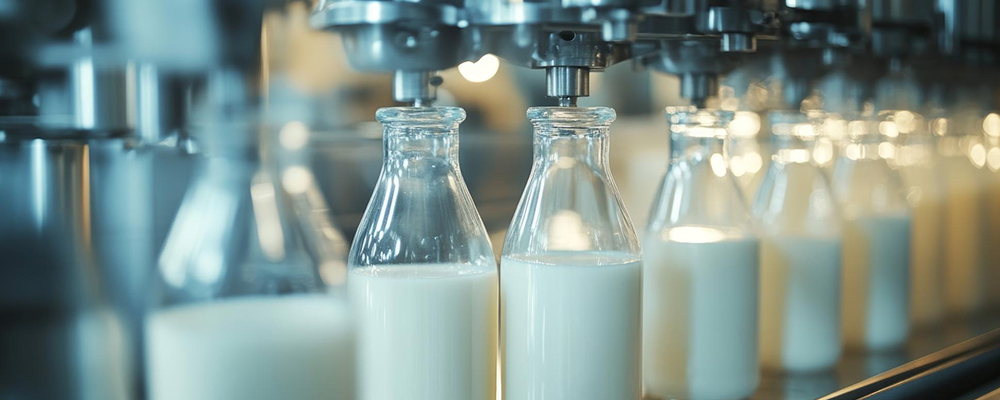
Freshness retention is closely tied to shelf life performance. Consumers expect dairy products to remain stable and appealing from production to final consumption.
Modern innovative enzyme support helps dairy processing facilities improve consistency across storage conditions by enhancing structural and biochemical stability within products. This may reduce quality fluctuations over time.
Benefits can include:
- More reliable shelf life performance
- Reduced product variability
- Better storage stability
- Improved consumer satisfaction
Consistency strengthens both product reputation and operational confidence.
Sustainability Through Better Dairy Efficiency
Reducing waste has become a major priority in dairy operations. Product spoilage, instability and rejected batches contribute to unnecessary resource loss across the supply chain.
By improving stability and freshness retention, enzyme supported systems help reduce avoidable waste while supporting more efficient resource utilisation.
This aligns with broader industry goals related to:
- Waste reduction
- Resource optimisation
- Improved processing efficiency
- Sustainable dairy practices
Better product stability ultimately supports both economic and environmental performance.
The Future of Enzyme Solutions in Dairy Processing
Dairy innovation continues to evolve rapidly. Modern innovative enzyme technologies are becoming more specialised, allowing processing facilities to achieve greater control over texture, flavour and freshness retention.
Future developments are expected to focus on:
- Greater formulation precision
- Improved product specific enzyme systems
- Enhanced shelf life optimisation
- Better compatibility with modern dairy trends
As consumer expectations continue to rise, enzymes will play an increasingly important role in delivering premium dairy quality.
Conclusion
Freshness retention has become a defining requirement in modern dairy processing. Consumers expect dairy products to maintain texture, flavour and quality consistency throughout their shelf life, while dairy operations must balance efficiency, stability and sustainability. Modern innovative enzyme solutions help address these challenges by supporting controlled biochemical processes that improve product performance, texture stability and freshness preservation.
Biolaxi Enzymes supports dairy processing facilities with carefully developed enzyme solutions designed to improve product quality, optimise freshness retention and enhance processing efficiency across diverse dairy applications. With strong research capabilities, customised enzyme expertise and a focus on practical industrial performance, Biolaxi Enzymes helps the dairy industry meet evolving market expectations with greater precision and consistency.