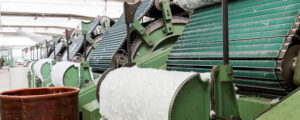

The textile industry is undergoing a significant transition toward sustainable and efficient production methods. As part of this shift, enzymes are used in textile processing as valuable biocatalysts capable of replacing or enhancing conventional chemical processes. Their ability to work under milder conditions, reduce resource consumption, and preserve fabric quality makes them a vital component in modern textile manufacturing.
What Problems Does the Industry Face, and How Do Enzymes Help?
The textile industry struggles with high water and energy consumption, fiber damage from harsh chemicals, and the need for consistent product quality. Traditional processes often harm delicate fibers and generate large volumes of wastewater.
Enzymes help overcome these challenges by enabling targeted reactions under mild conditions. They reduce water and energy usage, minimize chemical input, and preserve fabric integrity. Enzymes also simplify processing by combining or shortening production steps, improving efficiency and product consistency.
Types of Enzymes Used in Textile Industry
Enzymes like amylases, cellulases, pectinases, lipases, proteases, catalases, and laccases are used in textile processing for a wide range of applications, from fiber preparation to finishing:
- Amylases: Used in desizing to remove starch-based sizing agents
- Cellulases: Applied in bio-polishing and denim finishing to improve surface quality
- Pectinases: Utilized in scouring to remove pectins and non-cellulosic materials
- Lipases: Employed for removing natural oils, waxes, and fats
- Proteases: Used in wool and silk processing to treat protein-based impurities
- Catalases: Assist in breaking down residual hydrogen peroxide after bleaching
- Laccases: Support bleaching by targeting color-causing compounds in fibers
How Enzymes Are Used in Textile Processing
Enzymes are integrated into textile processing as targeted biocatalysts that replace or complement conventional chemical steps. They are introduced during specific stages using methods such as immersion baths, padding applications, or inline dosing systems, depending on the type of fabric and the process requirements.
Each enzyme works under specific conditions, usually at moderate temperatures (30 to 60°C) and slightly acidic to neutral pH levels. These conditions allow the enzymes to catalyze reactions on precise substrates such as starch, pectin, cellulose, protein, or dye molecules. Below is an explanation of how enzymes are applied and function in key stages of textile processing:
-
Desizing
Enzymes like amylases are used for textile desizing by hydrolyzing starch-based sizing agents applied during weaving. Amylases are added to warm water-based solutions or applied through padding machines to break starch into smaller, soluble sugars that can be easily rinsed out. This enzymatic desizing method protects fabric integrity, uses less water, and reduces the need for harsh chemicals.
-
Scouring
Enzymatic scouring uses a combination of enzymes such as pectinases, lipases, and cellulases in textile processing to remove natural impurities from fibers. These enzymes are applied in aqueous solutions and allowed to act for a controlled period under moderate heat. Unlike alkaline scouring, this method retains cellulose strength, reduces energy and water use, and results in softer fabric feel.
-
Bleaching
Enzymes like laccases are used in textile pre-treatment processes to break down chromophores responsible for natural coloration. When used with hydrogen peroxide, laccases support bleaching by achieving the required whiteness while minimizing chemical usage and reducing effluent toxicity.
-
Bio-Polishing
Textile bio-polishing relies on cellulases to remove surface fuzz and microfibrils from cotton fabrics. These enzymes are used in textile processing to enhance smoothness and brightness. Applied through exhaust or padding methods, cellulases act selectively on fiber surfaces to improve fabric appearance and reduce pilling without weakening the core structure.
-
Denim Finishing and Stone Washing
Neutral or acid cellulases are used in denim finishing for achieving a worn or faded look. These enzymes partially break down surface fibers and indigo dye, providing a natural stone-washed effect without the need for abrasive pumice stones. This results in lower mechanical stress, less water usage, and improved fabric softness.
-
Wool and Silk Processing
Enzymes like proteases and lipases are used in wool and silk processing to clean, soften, and enhance delicate protein-based fibers. Proteases digest surface-bound proteins, while lipases remove fatty impurities, enabling smoother finishes and processes like anti-felting or silk degumming, all without compromising fiber strength.
-
Dyeing and Post-Dyeing
Catalases are used in textile dyeing operations to remove residual hydrogen peroxide after bleaching. By converting peroxide into water and oxygen, they prevent interference with dye absorption and reduce rinsing cycles. In some cases, other enzymes may be used to fix dyes more effectively or remove unfixed molecules for improved color fastness.
Conclusion
Enzymes play a crucial role in modern textile manufacturing by offering sustainable, precise, and efficient alternatives to conventional methods. From fiber preparation to finishing processes, enzymes are used in textile processing to improve fabric quality, lower resource usage, and help manufacturers meet environmental standards. With ongoing advancements in biotechnology, enzymes will continue to shape the future of textile processing by supporting cleaner, smarter, and more responsible production practices.