Wine quality begins long before fermentation is complete. Every stage, from grape crushing to clarification, shapes the final colour, flavour, aroma, and mouthfeel. While grape variety and vineyard management remain essential, modern wineries increasingly rely on enzyme technology to maximise the potential of every harvest. These naturally occurring biological catalysts help unlock more juice, improve colour extraction, and streamline processing without altering the character of the wine itself.
For producers, the benefits are significant. Better extraction means higher yields from the same quantity of grapes, more consistent product quality, and greater operational efficiency during the busiest weeks of the harvest season.
Why Grape Structure Influences Wine Quality
Grapes contain a complex network of plant cell walls that provide firmness during growth. These walls are rich in pectin, a natural polysaccharide that holds plant cells together.
During winemaking, however, this protective structure becomes a barrier. It traps juice within the fruit, slows pressing, increases viscosity, and limits the release of valuable pigments and flavour compounds. As a result, wineries may recover less juice while requiring longer clarification and filtration times.
Breaking down these structural barriers allows processing to become both faster and more efficient.
How Enzyme Technology Improves Wine Processing
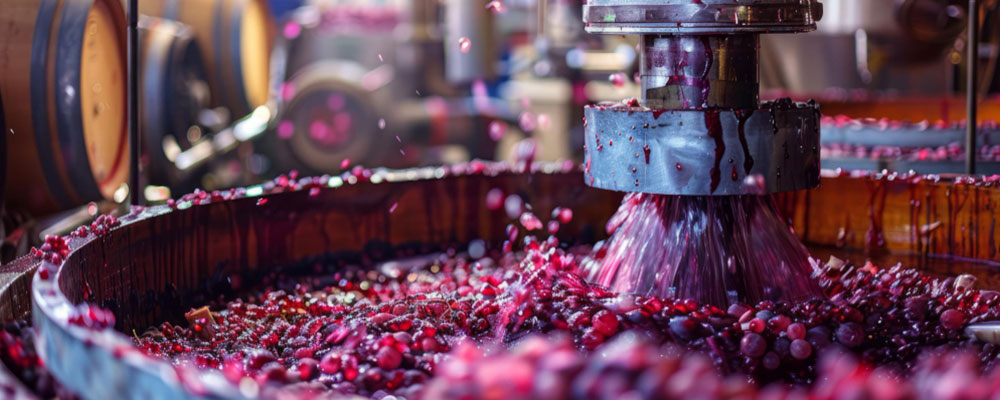
Specialised enzymes act on the pectin present in grape skins and pulp, gently breaking it into smaller soluble components. As the fruit tissue softens, juice is released more easily and the movement of important compounds into the fermenting must improves naturally.
This creates several advantages throughout production:
- Higher juice recovery from crushed grapes
- Improved release of anthocyanins and tannins
- Lower juice viscosity for easier handling
- Faster clarification and filtration
- Better utilisation of harvested fruit
Instead of depending solely on mechanical extraction, wineries achieve greater efficiency through targeted biochemical action.
Building Richer Colour Naturally
Appearance plays a powerful role in consumer perception. Before tasting a wine, buyers often judge its quality by colour intensity and brilliance.
The rich red and purple shades found in premium wines come primarily from anthocyanins located inside grape skins. These pigments must be released during maceration if deep, stable colour is to develop. Tannins, which contribute to body, structure, and ageing potential, are extracted from the same tissues.
When cell walls are broken down more effectively, these valuable compounds move into the juice more readily. The result is wine with stronger colour intensity, improved mouthfeel, and greater colour stability throughout maturation.
Higher Juice Recovery Means Better Resource Utilisation
Recovering as much juice as possible from every tonne of grapes has both commercial and environmental value.
Improved extraction reduces the amount of juice left behind in the pomace after pressing. At the same time, less mechanical force is required, helping preserve delicate flavour compounds that can be affected by aggressive processing.
Even modest improvements in extraction efficiency can deliver meaningful gains across an entire production season. For wineries operating at scale, those gains quickly translate into improved productivity and reduced raw material losses.
Making Processing More Efficient
Harvest season leaves little room for delays. Large volumes of grapes must move quickly through crushing, pressing, fermentation, and clarification while quality remains consistent.
Lower viscosity allows juice to flow more freely through production equipment. Pumps operate more smoothly, filtration becomes faster, and clarification requires less time because fewer suspended pectin particles remain.
The result is a production process that is easier to manage, particularly during peak harvest periods when speed and consistency are equally important.
Supporting Consistency Across Every Vintage
No two harvests are identical. Weather conditions, grape maturity, and fruit composition naturally vary from year to year, creating challenges for maintaining consistent wine quality.
Modern enzyme technology helps reduce these seasonal variations by promoting more uniform extraction of juice, pigments, and flavour compounds. Wineries can therefore achieve greater consistency in colour, clarity, texture, and overall sensory performance, even when raw material characteristics change.
This reliability is especially valuable for producers supplying premium wines where consumers expect the same quality with every bottle.
Contributing to Sustainable Winemaking
Sustainability has become a key priority across the wine industry. Improving resource utilisation without compromising product quality is now central to modern production strategies.
Higher juice recovery ensures more of every harvested grape is converted into valuable product rather than remaining in the pomace. Faster clarification and more efficient filtration also reduce processing time, improving overall production efficiency during demanding harvest periods.
Because these biological catalysts work under relatively mild conditions, wineries can minimise excessive mechanical processing while making better use of raw materials. The outcome is a more sustainable production process that supports both environmental goals and long-term operational performance.
Conclusion
Producing premium wine requires far more than successful fermentation. It begins with extracting the greatest possible value from every grape while preserving the compounds that define colour, flavour, and texture. Enzyme technology helps wineries achieve exactly that by increasing juice recovery, improving pigment extraction, reducing viscosity, and streamlining production from crushing through clarification.
At Biolaxi Enzymes Pvt. Ltd., we develop advanced enzyme solutions that help wineries optimise processing efficiency while delivering consistent, high-quality wines. Backed by scientific expertise and customised formulations, our technologies enable producers to maximise every harvest through smarter, more efficient, and sustainable winemaking practices.