
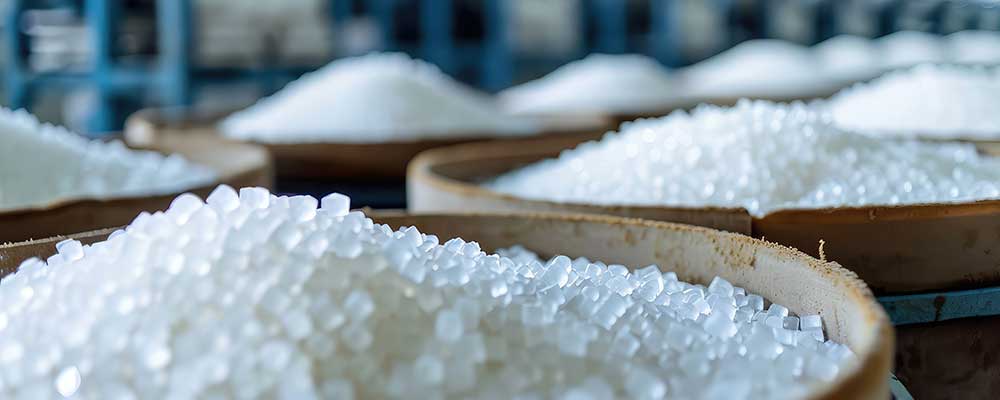
Sugar manufacturing is a tightly integrated process where efficiency at one stage directly influences outcomes at the next. From juice extraction to crystallisation, even minor inefficiencies can cascade into significant losses in sugar recovery, product quality, and operational stability. One of the most persistent challenges in this value chain is the presence of non-sugar components that interfere with processing at multiple stages.
Enzyme technology has become a critical intervention in addressing these challenges. Rather than treating symptoms through chemical correction, enzymes act at a molecular level to remove process barriers, enabling smoother operations and higher sugar recovery across the entire production cycle.
Why Conventional Processing Struggles with Efficiency
Raw sugarcane juice is not a simple sucrose solution. It contains a complex mixture of starch, pectins, proteins, fibres, and colloidal particles. These components create multiple inefficiencies:
- They increase viscosity, making juice handling and pumping difficult
- They interfere with clarification, leading to turbidity and poor settling
- They contribute to scaling and fouling in evaporators
- They disrupt crystallisation, reducing sugar recovery
Traditional processing methods rely heavily on lime, heat, and chemical clarification. While these approaches remove a portion of impurities, they do not fully eliminate the underlying biochemical constraints. As a result, mills often experience variability in recovery and increased operational load.
This is where enzymes introduce a more precise and process-aligned solution.
Enzymes as Process Enablers, Not Additives
Unlike conventional chemicals, enzymes function as highly specific biocatalysts. Each enzyme targets a particular substrate, breaking down complex molecules that otherwise resist processing.
In sugar mills, this targeted action allows enzymes to:
- Degrade non-sugar impurities at their source
- Improve process flow without altering sucrose integrity
- Create favourable conditions for downstream operations
Instead of acting at a single stage, enzymes influence the entire processing chain, making them strategic tools rather than isolated inputs.
Strengthening Sugar Release at the Extraction Stage
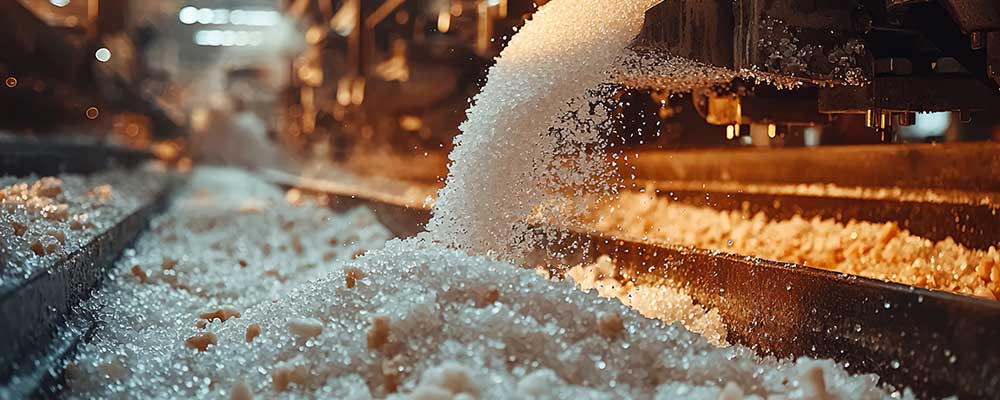
The efficiency of sugar recovery begins at extraction. A portion of sucrose remains trapped within plant cell structures, limiting overall yield.
Enzymes such as cellulases and hemicellulases act on these structural barriers by breaking down cell wall components. This leads to:
- Improved rupture of plant cells
- Greater release of entrapped sucrose
- Reduced residual sugar in bagasse
By improving the accessibility of sucrose at the earliest stage, enzymes set a stronger foundation for the entire process.
Transforming Clarification into a Controlled Process
Clarification is often the most sensitive stage in sugar manufacturing, where impurity removal directly impacts downstream efficiency.
Enzymatic intervention brings precision to this stage:
- Amylases break down starch, preventing gelatinisation and filtration issues
- Pectinases reduce viscosity by degrading pectic substances
- Proteases minimise protein-related colour formation and scaling
This coordinated breakdown of impurities results in:
- Faster settling of suspended particles
- Improved filtration rates
- Significantly clearer juice entering evaporation
Rather than relying solely on chemical reactions, clarification becomes a more predictable and controlled process.
Improving Evaporation Efficiency Through Cleaner Juice
Once juice is clarified, it enters the evaporation stage, where efficiency depends heavily on heat transfer and flow characteristics.
Residual impurities at this stage often lead to:
- Scaling on heat exchange surfaces
- Reduced thermal efficiency
- Frequent shutdowns for cleaning
Enzyme-treated juice behaves differently. With lower viscosity and reduced colloidal content, it enables:
- Better heat transfer efficiency
- Reduced fouling and scaling
- More stable and continuous operation
This not only improves throughput but also reduces energy consumption and maintenance requirements.
Creating Ideal Conditions for Crystallisation
Crystallisation is where process efficiency translates into final output. However, impurities that escape earlier stages can interfere with crystal formation.
Enzymatic treatment improves crystallisation outcomes by:
- Removing polysaccharides that hinder crystal growth
- Reducing colour-forming compounds
- Enhancing syrup purity
These improvements lead to:
- Better crystal size uniformity
- Higher sugar recovery
- Improved visual quality of final crystals
The impact is not isolated but cumulative, as upstream enzymatic actions directly influence crystallisation performance.
Operational Gains Across the Value Chain
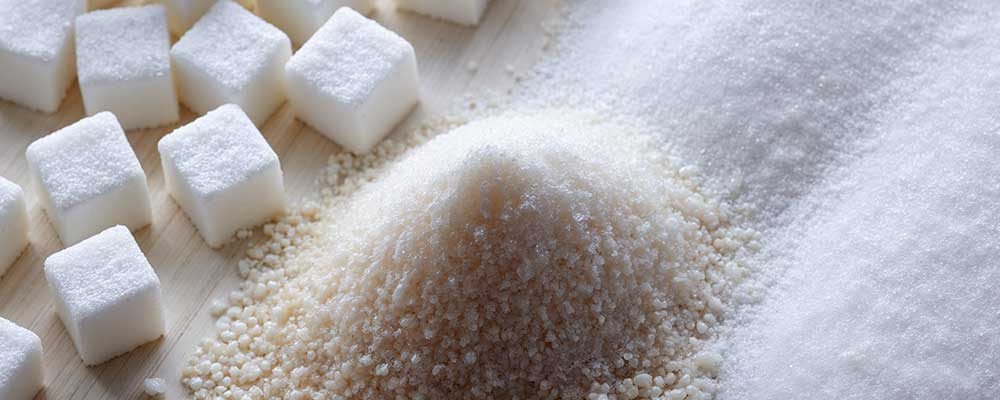
The benefits of enzyme integration extend beyond individual stages and reflect in overall plant performance:
- Reduced variability across batches
- Lower dependence on chemical treatments
- Improved process consistency under fluctuating raw material conditions
- Higher throughput without additional infrastructure
For large-scale operations, these gains contribute to both cost efficiency and production reliability.
Aligning Sugar Processing with Sustainability Goals
Modern sugar mills are under increasing pressure to improve environmental performance while maintaining profitability.
Enzymes support this transition by:
- Reducing chemical load in processing
- Lowering energy requirements through improved efficiency
- Minimising waste by maximising sugar extraction
- Supporting cleaner effluent streams
This makes enzyme technology not only a process improvement tool but also a sustainability enabler.
Adapting Enzyme Solutions to Mill-Specific Conditions
No two sugar mills operate under identical conditions. Variations in cane quality, climate, and process design require adaptable solutions.
Enzyme systems can be tailored based on:
- Substrate composition and impurity profile
- Process temperature and pH
- Desired recovery and quality targets
This adaptability ensures consistent performance even in dynamic production environments.
Conclusion
Sugar manufacturing efficiency is fundamentally linked to how effectively non-sugar components are managed throughout the process. Enzymes offer a targeted and integrated solution by addressing these challenges at their source, rather than relying on corrective measures later in the cycle.
By improving sugar release, enhancing clarification, stabilising evaporation, and supporting efficient crystallisation, enzyme technology enables a more streamlined and reliable production process. The result is higher recovery, improved product quality, and reduced operational complexity.
Biolaxi Enzymes has been consistently supporting sugar mills with specialised enzyme solutions that integrate seamlessly into existing processes. Through scientifically designed formulations and application expertise, enzymatic solutions continue to help producers achieve stable operations, improved recovery, and long-term process efficiency.