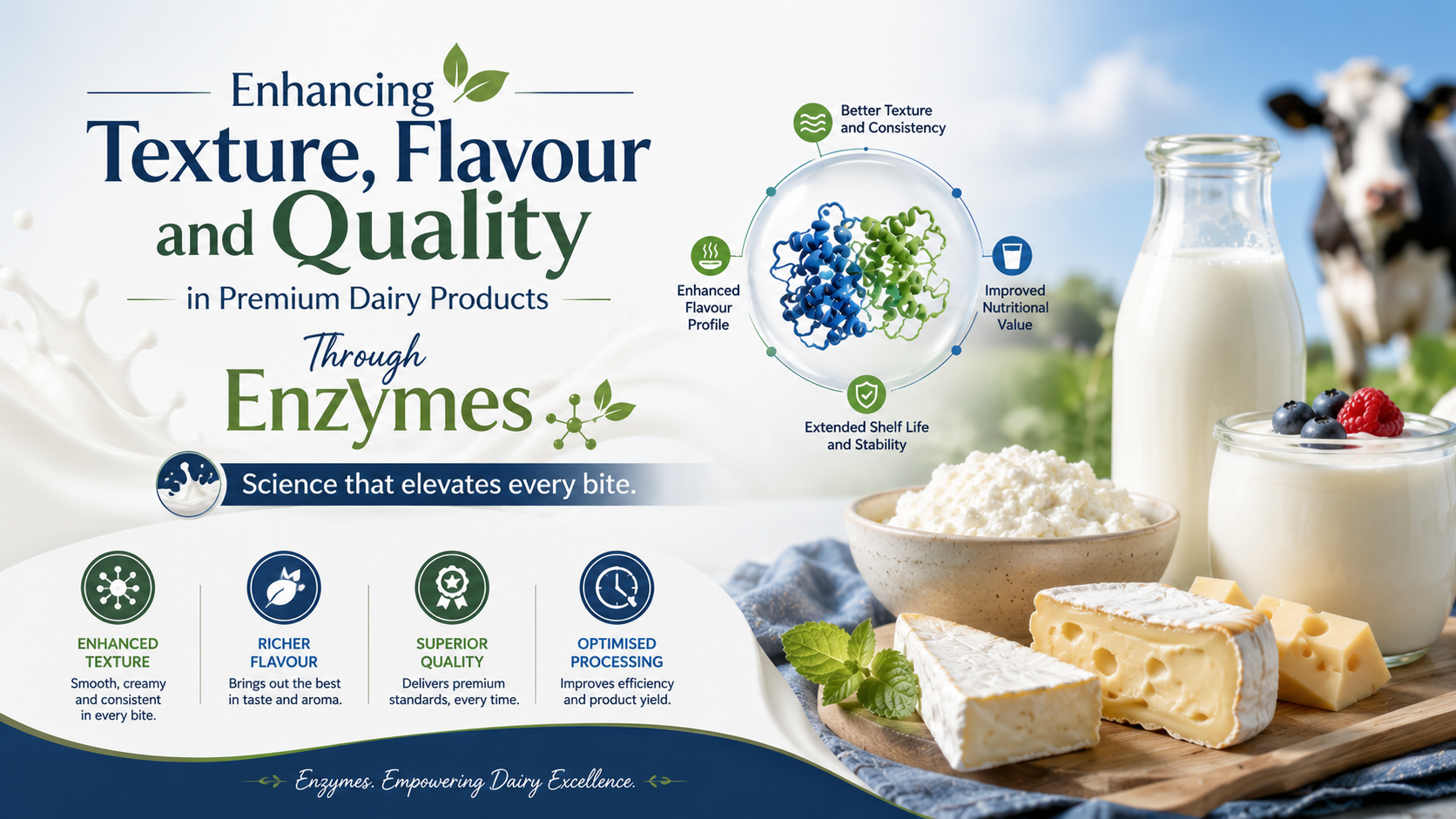
In today’s competitive dairy industry, creating premium products requires far more than using high quality milk. Consumers expect yoghurt with a smooth, creamy texture, cheese with rich and balanced flavour, cultured beverages that remain stable throughout their shelf life, and dairy desserts that deliver a consistently enjoyable mouthfeel. Just as importantly, they expect every purchase to offer the same experience.
Delivering this level of consistency is not always easy. Milk is a naturally variable raw material, and factors such as seasonal changes, animal nutrition, protein composition, fermentation behaviour, and processing conditions can all influence the final product. Even minor variations may affect texture, flavour, moisture retention, or product stability. To achieve consistent premium quality, enzyme technology has become an essential part of modern dairy processing.
Unlike conventional additives that simply compensate for processing challenges, enzymes work with the natural components of milk. They optimise biochemical reactions, improve protein functionality, and help create dairy products with superior texture, flavour, and overall quality.
What Defines a Premium Dairy Product?
Premium dairy products stand apart because of their complete sensory experience. Consumers immediately notice the smoothness of yoghurt, the creaminess of cheese, the body of dairy desserts, and the consistency of cultured beverages. These qualities strongly influence purchasing decisions and brand loyalty.
Achieving them requires careful control over the interactions between milk proteins, fats, moisture, and starter cultures throughout processing. When these natural processes are not properly balanced, products may develop grainy textures, whey separation, inconsistent viscosity, or uneven flavour development. Although such products may remain safe to consume, these quality defects reduce their premium appeal.
Enzymes help optimise these natural reactions from the beginning of production. Their precise action supports better texture formation, consistent product structure, and enhanced sensory characteristics while maintaining the natural integrity of the dairy ingredients.
Creating Smooth Texture Through Natural Protein Optimisation
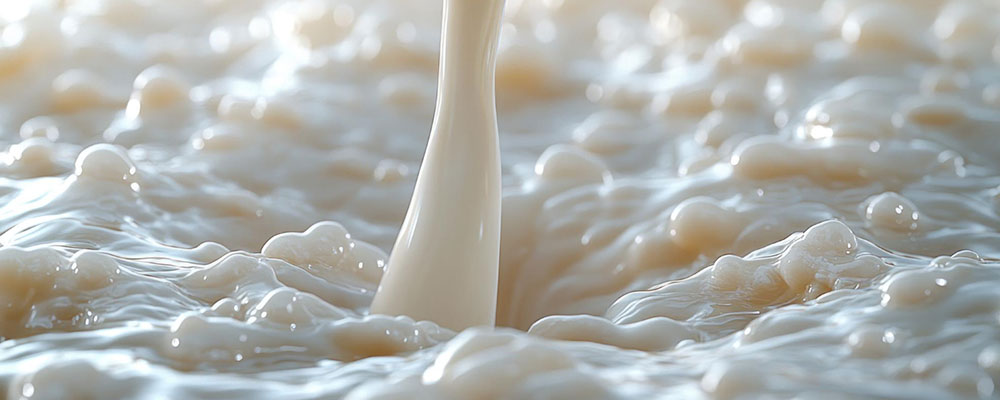
Texture is one of the most important characteristics of premium dairy products. Whether producing Greek yoghurt, stirred yoghurt, cream cheese, or cultured dairy beverages, the goal is always the same: a smooth, creamy, and stable structure that remains consistent throughout storage.
This depends largely on how milk proteins behave during processing and fermentation. Casein proteins naturally form the network that provides body, firmness, and viscosity. If this network develops unevenly, the product may lose water, become grainy, or develop an inconsistent texture.
Enzymes help strengthen these protein interactions at the molecular level. Rather than masking defects after production, they support the natural formation of stronger protein networks as the product develops. Improved protein functionality enhances water holding capacity, maintains viscosity, and produces the creamy mouthfeel associated with premium dairy products.
The result is a more stable product with consistent texture from production to consumption.
Building Richer and More Balanced Flavour
Flavour is equally important in defining premium quality. Consumers expect cheeses, cultured dairy products, and fermented foods to deliver rich, balanced flavours that remain consistent over time.
During fermentation and maturation, proteins gradually break down into smaller peptides and amino acids that contribute to flavour development. Carefully selected enzyme systems help regulate these natural biochemical reactions, allowing flavour compounds to develop in a controlled manner.
Instead of creating overpowering or inconsistent flavours, enzymes help achieve depth, complexity, and balance. This controlled flavour development is particularly valuable in cheese production, where consistent ripening directly influences product quality and consumer satisfaction.
Achieving Creaminess in Modern Dairy Formulations
Health conscious consumers increasingly prefer products that are lower in fat yet still deliver a rich and satisfying eating experience. While reduced fat formulations offer nutritional advantages, removing fat often reduces creaminess, body, and mouthfeel.
Enzymes help overcome this challenge by improving the functional behaviour of milk proteins. Better protein interactions create stronger structures that retain moisture more effectively and restore much of the creaminess normally provided by fat.
As a result, reduced fat and high protein dairy products can maintain the smooth texture and indulgent mouthfeel expected from premium products without relying heavily on additional stabilisers.
Delivering Consistent Quality Across Every Batch
Consistency is one of the defining characteristics of premium dairy products. Consumers expect identical texture, flavour, and appearance every time they purchase a product, regardless of when it was produced.
Natural variations in milk composition, fermentation performance, and processing conditions can make this difficult to achieve. Without proper process control, these fluctuations may result in variable viscosity, inconsistent texture, or reduced product stability.
Enzymes help minimise these variations by supporting more predictable biochemical reactions throughout production. Their targeted action contributes to uniform product structure, improved processing reliability, and greater consistency across multiple production batches.
This not only improves overall product quality but also helps reduce production losses associated with quality variations.
Supporting Clean Label Dairy Innovation
Clean label products continue to shape consumer preferences across the dairy sector. Shoppers increasingly look for familiar ingredients and simpler formulations while expecting premium performance from every product.
Enzymes support this trend by acting as natural processing aids during production. They perform their function during specific stages of processing and become inactive once their role is complete, allowing excellent product performance without increasing formulation complexity.
This makes enzyme technology an effective approach for developing premium dairy products that combine clean labels with outstanding texture, flavour, and consistency.
Applications Across Premium Dairy Products
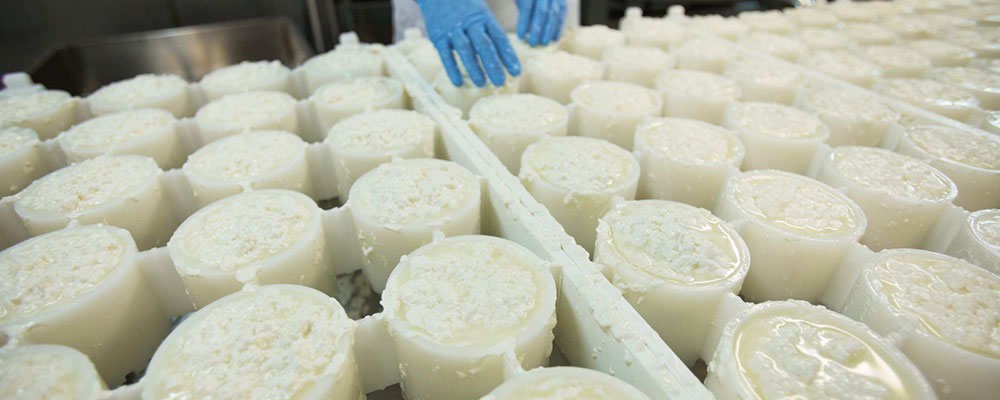
The versatility of enzyme technology makes it suitable for a wide variety of premium dairy applications, including:
- Greek yoghurt and stirred yoghurt requiring smooth texture and stable viscosity
- Drinking yoghurt with consistent body and mouthfeel
- Premium cheeses requiring controlled flavour development
- Cream cheese and soft cheese with improved spreadability
- High protein dairy products with enhanced structural stability
- Reduced fat dairy products with improved creaminess
- Dairy desserts requiring uniform texture and stability
- Lactose free dairy products designed for broader consumer appeal
Across these applications, enzymes contribute to reliable processing performance while helping achieve the sensory qualities associated with premium dairy products.
The Future of Premium Dairy Processing
Consumer expectations continue to evolve, creating greater demand for products that combine exceptional quality with clean labels, improved nutrition, and sustainable production practices. Enzyme technology is playing an increasingly important role in meeting these expectations.
Advances in biotechnology are enabling highly specialised enzyme formulations designed for specific dairy applications and processing conditions. These innovations offer greater process precision, improved product consistency, and enhanced production efficiency while preserving the natural qualities of milk.
By working with the natural chemistry of dairy ingredients, enzymes provide an effective and sustainable pathway towards premium product development.
Conclusion
Premium dairy products are defined by their texture, flavour, consistency, and overall eating experience. Enzyme technology helps optimise the natural biochemical processes responsible for these qualities, allowing dairy processing operations to achieve superior product performance while maintaining efficiency and product reliability.
At Biolaxi Enzymes Pvt. Ltd., our advanced enzyme solutions are designed to support evolving dairy processing requirements through scientifically developed formulations. Backed by more than 14 years of expertise in enzyme technology, we deliver customised solutions that help optimise texture, support flavour development, improve processing efficiency, and create premium dairy products that consistently meet the highest quality expectations.