Sugar production is far more than a simple extraction process. It is a highly controlled industrial system where efficiency, purity and yield determine profitability. Every stage matters. From cane preparation to juice extraction, clarification and crystallisation, even minor process inefficiencies can reduce sugar recovery and increase operational costs.
Among the many variables that influence performance, juice quality stands out as one of the most decisive. Raw juice contains valuable sucrose, but it also carries starch, dextran, pectin, fibre particles and other non sugar impurities. These unwanted compounds can create serious production challenges. They increase viscosity, slow filtration, disrupt clarification and ultimately reduce sugar output. For modern sugar mills focused on maximising recovery while maintaining sustainability, cleaner juice has become essential.
This is where enzyme technology is reshaping the industry. By targeting impurities with scientific precision, enzymes help mills improve juice quality, optimise processing and recover more sugar from every batch.
Why Juice Purity Is Critical to Sugar Recovery
The journey from harvested cane to refined sugar is heavily influenced by the purity of extracted juice. Poor quality juice creates obstacles across the entire production cycle. Clarification becomes less effective. Equipment efficiency declines. Crystallisation can become inconsistent.
These challenges often result in:
- Reduced sucrose recovery
- Increased molasses losses
- Higher chemical consumption
- Slower throughput
- Greater energy demand
In many mills, traditional processing methods rely heavily on heat and chemical clarification to address impurities. While these approaches remain important, they may not fully eliminate complex organic compounds such as starch or dextran. As a result, mills are increasingly turning to enzyme science for more targeted intervention.
Understanding the Science Behind Sugar Processing Enzymes
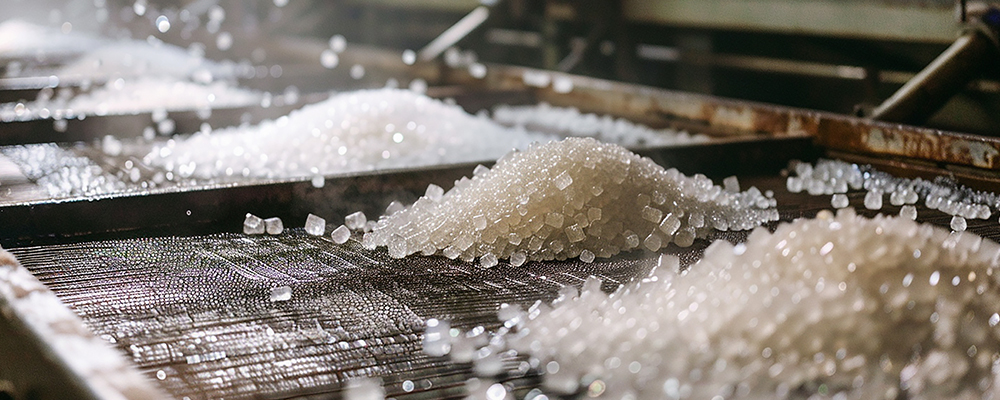
Enzymes are biological catalysts that accelerate the breakdown of specific molecules. Their strength lies in precision. Instead of broadly altering juice chemistry, they selectively target impurities that interfere with sugar processing.
Key enzymes used in sugar production include:
- Amylases for starch degradation
- Dextranases for dextran control
- Pectinases for pectin reduction
- Cellulases for structural fibre breakdown
Each enzyme performs a specialised role. Together, they help transform problematic raw juice into a cleaner, more process friendly stream.
Breaking Down Starch for Better Process Flow
Starch is a common impurity in sugar juice, and even small quantities can create substantial operational problems. It increases juice thickness, interferes with settling and complicates filtration.
Amylase enzymes solve this by breaking starch molecules into smaller, less disruptive components. The difference can be significant. Juice flows more efficiently. Clarification improves. Crystallisation becomes more stable.
This contributes to:
- Lower viscosity
- Faster filtration
- Improved settling
- Better evaporator performance
- Enhanced sugar crystal quality
For mills seeking smoother operations, starch control can directly influence profitability.
Dextran Control and the Fight Against Cane Deterioration
Dextran is particularly problematic when harvested cane is delayed before processing. Produced through microbial activity, it rapidly affects juice quality and can become a major barrier to efficient sugar recovery.
High dextran levels increase viscosity and reduce crystallisation performance. Left unmanaged, they can create serious losses.
Dextranase enzymes specifically break down dextran molecules, restoring process efficiency and improving recovery rates. This can be especially valuable during periods of inconsistent cane quality.
The benefits include:
- Reduced viscosity
- Better centrifugation
- Improved crystal formation
- Lower sugar losses
- More stable processing
Cleaner Juice Through Pectin Reduction
Pectin contributes to turbidity and colloidal instability, making juice clarification more difficult. When pectin levels remain high, settling slows and impurity removal becomes less effective.
Pectinase enzymes address this by breaking down pectin compounds before they create larger process complications. The result is cleaner juice entering downstream stages.
This means:
- Better juice clarity
- Reduced suspended solids
- Improved filtration
- Greater clarification efficiency
- More consistent product quality
Cleaner juice supports stronger performance throughout the production line.
Improving Extraction Efficiency from the Start
Higher sugar recovery begins with better extraction. Structural plant materials can trap sucrose, limiting release during milling.
Cellulase and related enzymes help break down these barriers. By improving cell wall degradation, they support greater juice release without excessive mechanical intervention.
This can lead to higher extraction rates, improved utilisation of raw material and lower sugar retention in bagasse. In competitive markets, these gains matter.
Supporting Sustainability Through Smarter Processing
Modern sugar production is not only about yield. Sustainability is increasingly central to operational strategy. Excessive chemical use, energy intensity and waste generation all influence long term viability.
Enzymes support cleaner processing because they work under milder conditions and often reduce the burden on chemical clarification systems. This can help mills lower resource intensity while maintaining performance.
Potential advantages include:
- Reduced chemical dependency
- Lower process stress
- Improved resource efficiency
- Better sustainability metrics
- Enhanced operational resilience
For mills balancing productivity with environmental responsibility, this creates meaningful value.
Biotechnology Is Driving the Next Generation of Sugar Mills
Enzyme innovation continues to evolve. Modern formulations are increasingly designed for industrial robustness, offering better thermal stability, faster activity and compatibility with diverse processing conditions.
This matters because sugar mills operate under fluctuating raw material quality, environmental factors and production pressures. More modern innovative enzymes provide flexibility, helping mills adapt without sacrificing output.
As biotechnology progresses, enzyme based optimisation is becoming less of an advantage and more of a necessity.
Conclusion
Cleaner juice is one of the most powerful drivers of better sugar yield. By reducing starch, controlling dextran, improving clarification and enhancing extraction, enzymes are transforming sugar production into a more precise and efficient science. They allow mills to improve sucrose recovery, strengthen process consistency and reduce operational inefficiencies without relying solely on conventional interventions.
Biolaxi Enzymes supports this transformation through research driven enzyme technologies developed for the practical demands of modern sugar manufacturing. With strong expertise in industrial biotechnology, customised enzyme development and advanced production infrastructure, Biolaxi Enzymes helps sugar mills address impurity challenges, improve juice quality and unlock higher processing efficiency. By combining scientific innovation with sector specific application knowledge, Biolaxi continues to help sugar producers achieve cleaner juice, better yield and more sustainable long term operational success.