In today’s rapidly evolving industrial landscape, sustainability is no longer an optional pursuit; it is an essential pillar of progress. Industries across sectors are increasingly seeking methods to minimise waste, optimise raw material utilisation, and create circular systems that promote environmental harmony. Among these, the starch industry stands as a critical contributor to food, textile, paper, and bioethanol production. The challenge, however, lies in addressing the large amounts of by-products and waste streams generated during starch extraction and conversion. This is where enzymes have emerged as game-changers, driving the transition from conventional starch processing to a truly zero-waste ecosystem.
Understanding the Starch Ecosystem
Starch, a naturally abundant carbohydrate, serves as a vital raw material in multiple industries. Extracted primarily from sources such as corn, wheat, potato, tapioca, and rice, starch undergoes various stages of modification and conversion before it reaches its final usable form. However, traditional methods of starch extraction and processing often involve significant waste. Large volumes of organic residues, fibre-rich pulp, protein fractions, and wastewater are generated, contributing to both material losses and environmental concerns.
A zero-waste starch ecosystem seeks to transform every component of the raw material into valuable co-products rather than discarding them. Achieving this balance requires precision, control, and efficiency at every stage of the process qualities that enzymes are uniquely equipped to deliver.
Enzymes: Nature’s Precision Tools
Enzymes are biological catalysts that accelerate chemical reactions with extraordinary specificity and efficiency. In starch processing, they facilitate precise modifications at molecular levels, breaking down starch into its constituent sugars or transforming it into specialised derivatives. Unlike harsh chemical treatments, enzymes operate under mild conditions, producing minimal by-products and reducing energy consumption.
This natural precision makes enzymes central to sustainable starch processing. They not only improve yield but also ensure that no part of the input material goes to waste. Every by-product is either repurposed or transformed into a useful component for other industries, creating a seamless circular economy.
Enzymatic Applications in Starch Processing
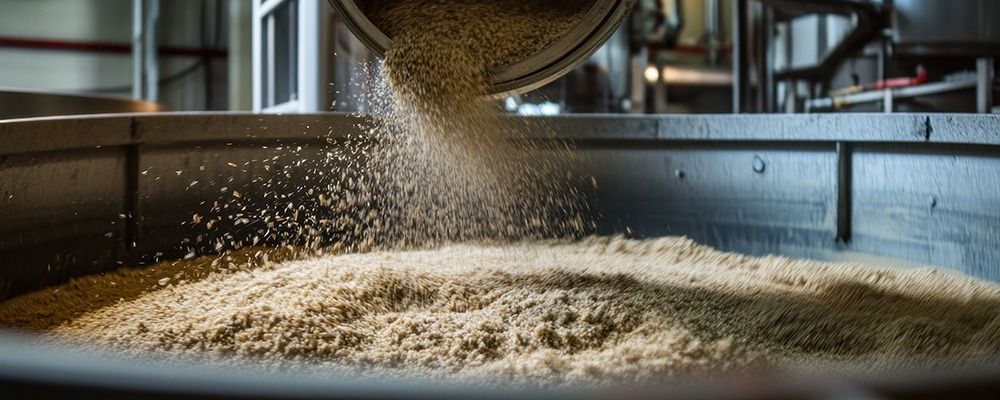
Several types of enzymes are employed at different stages of starch processing to maximise conversion efficiency and minimise waste:
- Alpha-amylase breaks down long starch chains into smaller dextrins, making it a cornerstone enzyme in liquefaction. It helps in converting raw starch into soluble sugars while preventing undesirable by-products.
- Glucoamylase further hydrolyses dextrins into glucose, ensuring near-complete utilisation of the starch content.
- Pullulanase and isoamylase are used for debranching amylopectin, improving the fermentability of starch-derived sugars and aiding in bioethanol production.
- Proteases and cellulases play supporting roles in breaking down associated protein and fibre residues, allowing their recovery for animal feed or other value-added uses.
Together, these enzymatic processes make it possible to extract, convert, and repurpose nearly every fraction of the raw starch source, significantly reducing solid and liquid waste.
Turning Waste Streams into Value Streams
One of the most remarkable aspects of enzyme-based starch processing is its ability to convert by-products into valuable co-products. The fibrous residues from starch extraction, for instance, can be enzymatically hydrolysed to release fermentable sugars, which serve as feedstock for bioethanol or biogas production. This not only diverts waste from disposal but also generates renewable energy.
Similarly, protein fractions separated during processing can be enzymatically modified to produce functional peptides with applications in animal nutrition or health supplements. Even process water, often rich in soluble organic matter, can be treated using enzymatic or microbial systems to recover nutrients or produce secondary metabolites.
This closed-loop approach ensures that every element of the starch processing chain contributes meaningfully to the final output, aligning industrial performance with environmental responsibility.
Reducing Environmental Impact
Traditional chemical-based starch modification methods often rely on strong acids, alkalis, or oxidising agents, which result in high chemical consumption, effluent toxicity, and energy-intensive operations. Enzyme-based processing, on the other hand, functions under controlled pH and moderate temperatures, drastically cutting down on chemical inputs and energy use.
Moreover, enzymatic processes generate biodegradable effluents that are easier to treat, reducing the overall carbon footprint of starch-based industries. This not only improves compliance with environmental regulations but also strengthens a company’s reputation as a sustainable manufacturer.
Supporting the Bioeconomy
Enzyme-assisted starch processing fits seamlessly within the broader framework of the bioeconomy, a model focused on using renewable biological resources to produce energy, materials, and chemicals. By enabling the efficient conversion of starch and its by-products into diverse bio-based products, enzymes help drive industrial innovation and resilience.
For instance, the glucose derived from starch hydrolysis serves as a fundamental raw material for producing bioplastics, biodegradable surfactants, and other green chemicals. This expansion into bioproduct manufacturing ensures that starch industries are no longer limited to food or fuel production but are vital contributors to the global transition toward sustainable industrial systems.
Continuous Improvement Through Innovation
The development of tailored enzyme formulations has further enhanced the potential for zero-waste starch ecosystems. Advanced enzyme blends, engineered for specific raw materials and process conditions, allow for better control over conversion rates, product quality, and yield. Modern biotechnological innovations, such as immobilised enzymes, have also made it possible to reuse catalysts multiple times, further improving process efficiency and cost-effectiveness.
Research continues to explore ways to combine enzyme systems for multi-step conversions, creating integrated biorefineries where starch, cellulose, and other biomass components are simultaneously processed into fuels, feed, and functional ingredients. Such innovations bring the industry closer to achieving a fully circular production model.
The Road Ahead: Building Resilient Starch Ecosystems
Creating a zero-waste starch ecosystem requires more than just the adoption of enzymatic solutions; it demands a shift in mindset. Industries must view every by-product not as waste but as a potential resource. The integration of enzymatic technologies, waste valorisation systems, and energy recovery methods can help build starch-based industries that are efficient, profitable, and environmentally responsible.
As global attention continues to focus on sustainability, the industries that adapt quickly to this shift will hold a distinct competitive advantage. Enzyme-driven systems not only make it possible to close the loop within starch processing but also offer a roadmap for how other resource-intensive sectors can transition to circular models.
Conclusion
The journey toward zero-waste starch ecosystems is a testament to how biology and technology can work together to solve industrial challenges. By replacing resource-heavy chemical processes with precise, efficient, and eco-friendly enzymatic methods, starch-based industries can achieve a delicate balance between productivity and sustainability. This transformation not only reduces waste and pollution but also unlocks new opportunities for value creation across sectors.
With its deep scientific and engineering expertise, Biolaxi Enzymes Pvt Ltd is at the forefront of this transformation. Through its innovative enzyme formulations and customised solutions, Biolaxi empowers industries to embrace sustainable practices, optimise production, and move confidently towards building a truly circular starch ecosystem, one where nothing is wasted, and everything contributes to progress.