
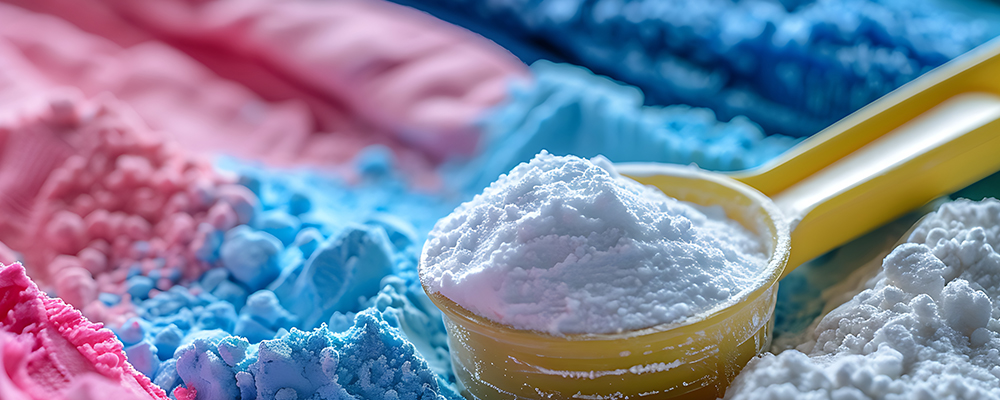
Modern cleaning products are expected to deliver strong stain removal while also meeting growing expectations for environmental responsibility. Traditional detergent formulations often rely on high levels of chemical builders, bleaching agents and surfactants to achieve effective cleaning performance. While these ingredients can remove stains, their excessive use may increase environmental impact and raise concerns about sustainability.
Targeted enzyme systems have emerged as an effective way to reduce the overall chemical load in detergent formulations. By accelerating natural biochemical reactions that break down common stains, enzymes allow detergents to clean efficiently with fewer harsh chemicals. This approach supports improved cleaning performance while enabling more balanced and sustainable formulations.
How Enzymes Work in Detergent Formulations
Enzymes are biological catalysts that accelerate the breakdown of complex organic substances. In laundry applications, they target specific stain components such as proteins, starches and fats. Instead of relying solely on strong chemicals to remove these materials, enzymes break them into smaller soluble molecules that can be washed away easily.
Different enzyme types address different stain categories:
- Proteases break down protein based stains such as blood, sweat and food residues
- Amylases degrade starch based stains from sauces, grains and processed foods
- Lipases target oils and greasy deposits that cling to fabrics
Through these focused reactions, enzymes support efficient stain removal even at lower chemical concentrations.
Reducing Dependence on Harsh Chemicals

Traditional detergents often depend on high chemical intensity to break down stubborn stains. Large amounts of surfactants, bleaching agents and alkaline builders are typically used to loosen and dissolve contaminants from fabrics.
When enzymes are integrated into the formulation, they begin degrading stains at a molecular level before heavy chemical action becomes necessary. This early breakdown of stain components allows the formulation to perform effectively with reduced chemical input.
Lower chemical load can contribute to milder detergent compositions that remain effective while being less aggressive toward fabrics and the environment.
Improving Cleaning Efficiency at Lower Temperatures
Another advantage of enzymatic systems is their ability to function efficiently at moderate washing temperatures. Many conventional detergents rely on high heat to activate chemical reactions that remove stains.
Enzymes can perform catalytic reactions at lower temperatures, allowing stains to break down without the need for excessive thermal energy. This improves cleaning performance during cold or warm wash cycles, which are increasingly preferred in modern laundry routines.
By enabling effective cleaning at reduced temperatures, enzyme systems support both energy efficiency and reduced chemical reliance.
Enhancing Fabric Care and Longevity
High chemical concentrations in detergents may gradually weaken fabric fibres or cause colour fading over repeated washes. Enzymes help address this issue by targeting only the unwanted stain components rather than aggressively attacking the fabric itself.
Because enzymatic reactions are selective, they focus on breaking down organic residues without damaging textile fibres. This selective action helps maintain the original appearance, softness and durability of fabrics.
As a result, detergents formulated with targeted enzyme systems can deliver strong cleaning while preserving garment quality over time.
Supporting Sustainable Cleaning Solutions
Sustainability has become an important consideration in cleaning product development. Reducing chemical load in detergent formulations is a key step toward minimising environmental impact.
Enzymes support this objective in several ways:
- Lower chemical requirements in detergent formulations
- Reduced energy consumption through effective low temperature washing
- Improved biodegradability of cleaning systems
- Lower environmental residue after washing cycles
These benefits align well with growing demand for environmentally responsible cleaning products.
Adapting to Modern Laundry Needs

Today’s laundry habits are changing as consumers wash clothes more frequently and often at lower temperatures. Detergent formulations must therefore perform efficiently under a wide range of conditions.
Targeted enzyme systems provide the flexibility required to meet these evolving needs. By focusing on the biochemical breakdown of stains, enzymes maintain cleaning performance even when wash conditions vary.
This adaptability makes enzymatic solutions highly valuable in the development of advanced detergent formulations designed for modern households.
Conclusion
Reducing chemical load in detergent formulations is an important step toward creating effective and environmentally responsible cleaning solutions. Targeted enzyme systems support this goal by breaking down organic stains through precise biochemical reactions. Their selective action improves stain removal efficiency while reducing reliance on harsh chemicals and high washing temperatures.
Biolaxi Enzymes develops advanced enzyme technologies that support modern detergent formulations by enhancing stain breakdown and improving cleaning performance. Through targeted enzymatic systems, detergent formulations can achieve efficient cleaning, reduced chemical dependence and greater sustainability in everyday laundry applications.