
Introduction
Fruit processing has evolved significantly over the past few decades, driven by increasing demand for premium-quality juices, concentrates, purees, and fruit-based ingredients. Manufacturers today are expected to maximise extraction efficiency while maintaining flavour, colour, nutritional value, and consistency across production batches. At the same time, they face ongoing challenges related to raw material variability, production costs, energy consumption, and sustainability targets.
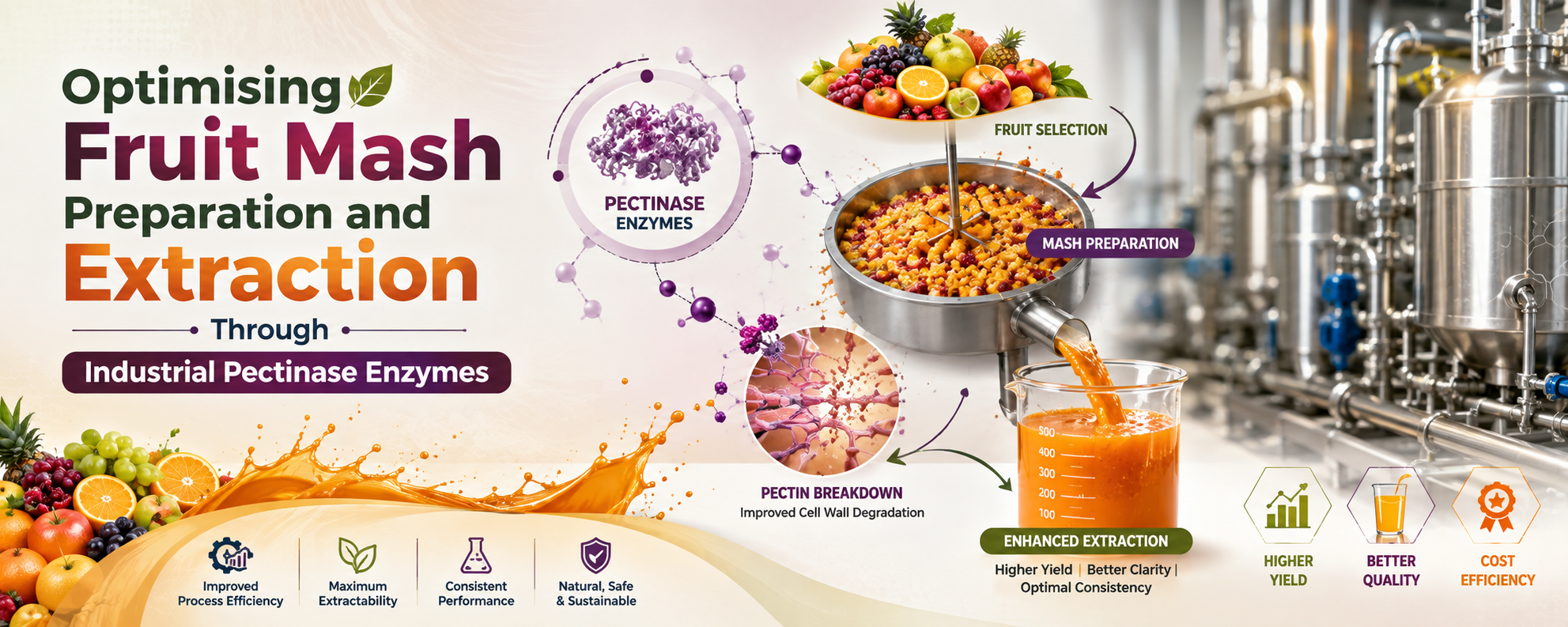
One of the most effective technological advancements supporting modern fruit processing is the application of industrial pectinase enzymes. These specialised biocatalysts enable processors to improve fruit mash preparation, enhance juice recovery, reduce viscosity, and simplify downstream clarification processes. Unlike conventional mechanical or chemical methods, enzyme-assisted processing provides greater precision while preserving the natural characteristics of the fruit.
Pectinase technology has become an essential component of industrial fruit processing because it helps manufacturers extract greater value from raw materials while improving process efficiency. Similar enzyme technologies are also widely adopted across food manufacturing, dairy, baking, textiles, detergents, animal nutrition, sugar production, and environmental applications, demonstrating the versatility of industrial biotechnology in modern manufacturing.
This article explores the science behind pectinase enzymes, their role in fruit mash optimisation, the operational benefits they provide, and the broader contribution of industrial enzymes across multiple industries.
Understanding the Role of Pectin in Fruit Processing
Pectin is a naturally occurring structural polysaccharide found within the cell walls of fruits and vegetables. It acts as a binding material that provides firmness and structural integrity to plant tissues.
High concentrations of pectin are commonly found in:
- Apples
- Citrus fruits
- Mangoes
- Guavas
- Berries
- Peaches
- Pears
- Grapes
While pectin contributes positively to fruit texture before processing, it presents several challenges during industrial extraction.
These include:
- High mash viscosity
- Poor juice release
- Difficult pressing
- Slow filtration
- Increased turbidity
- Lower extraction yields
Without appropriate treatment, processors often experience reduced operational efficiency and inconsistent product quality.
What Are Industrial Pectinase Enzymes
Pectinase refers to a group of enzymes capable of breaking down complex pectin molecules into smaller, more manageable components.
Rather than functioning as a single enzyme, commercial pectinase preparations generally contain multiple enzyme activities, including:
- Polygalacturonase
- Pectin lyase
- Pectin methylesterase
Each enzyme targets specific chemical bonds within the pectin structure, enabling controlled degradation throughout the processing cycle.
This enzymatic breakdown facilitates the release of intracellular juice while improving the overall handling characteristics of fruit mash.
The Science Behind Enzymatic Fruit Mash Preparation
The effectiveness of pectinase lies in its ability to modify plant cell wall structures without damaging valuable fruit components.
The process typically involves several stages.
1. Fruit Preparation
Fresh fruit is:
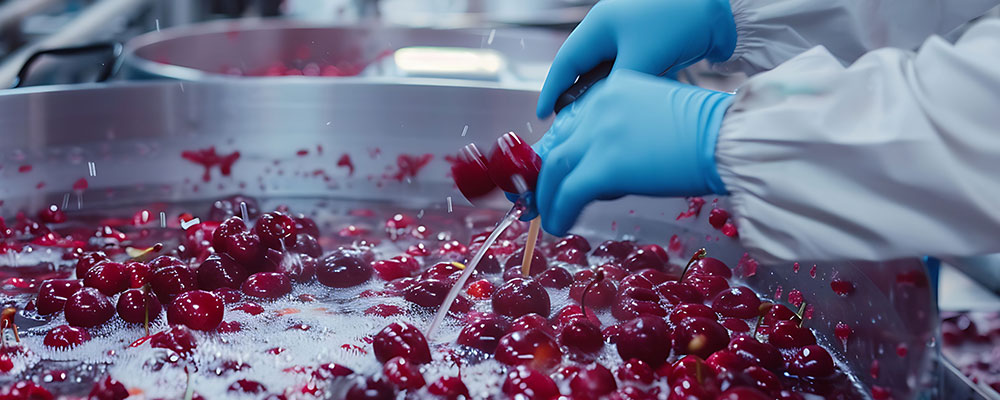
- Washed
- Sorted
- Crushed
- Converted into mash or pulp
At this stage, much of the juice remains trapped within intact plant cells and pectin-rich tissues.
2. Enzyme Addition
Pectinase is added under carefully controlled processing conditions.
Critical operating parameters include:
- Temperature
- pH
- Enzyme dosage
- Residence time
- Fruit variety
Maintaining optimal conditions allows enzymes to perform efficiently while protecting natural fruit characteristics.
3. Cell Wall Breakdown
Once activated, pectinase begins degrading the pectin network surrounding plant cells.
This process results in:
- Reduced cell wall integrity
- Improved cell separation
- Enhanced juice release
- Lower mash viscosity
The gradual breakdown of pectin allows valuable liquid components to flow more freely during extraction.
4. Improved Juice Recovery
As viscosity decreases, pressing equipment operates more efficiently.
Benefits include:
- Higher juice yield
- Faster pressing cycles
- Reduced equipment loading
- Better solids separation
These improvements contribute directly to increased plant productivity.
Why Pectinase Improves Extraction Efficiency
Fruit processors continuously seek opportunities to maximise recovery from every tonne of raw material.
Pectinase contributes to improved efficiency through several mechanisms.
1. Increased Juice Yield
Breaking down pectin enables more liquid to be extracted from fruit tissues.
Higher yields improve:
- Raw material utilisation
- Production economics
- Process consistency
2. Reduced Mash Viscosity
Lower viscosity offers significant operational advantages.
These include:
- Easier pumping
- Improved mixing
- Better heat transfer
- Faster filtration
- Reduced mechanical stress on equipment
3. Improved Clarification
Pectin is a major contributor to haze formation in fruit juices.
Enzymatic degradation helps produce:
- Clearer juice
- Faster clarification
- Improved filtration performance
- Reduced processing time
4. Enhanced Press Performance
Presses operate more efficiently when fruit mash flows freely.
This results in:
- Improved throughput
- Lower residual moisture in pomace
- Better extraction efficiency
- Reduced downtime
Maintaining Product Quality Through Controlled Enzyme Use
Industrial enzyme applications are carefully designed to preserve the natural qualities of fruit products.
Proper process optimisation helps maintain:
- Natural flavour
- Colour stability
- Aroma compounds
- Nutritional value
- Product consistency
Unlike aggressive chemical treatments, enzymes perform highly selective reactions that minimise unwanted side effects.
Key Processing Parameters for Successful Enzyme Performance
Achieving consistent results requires careful management of several operating variables.
1. Temperature
Each enzyme preparation has an optimum operating temperature.
Excessive heat may reduce enzyme activity, while insufficient temperatures slow reaction rates.
2. pH
Pectinase functions most effectively within defined pH ranges depending on the fruit being processed.
Accurate pH control improves enzyme efficiency and process consistency.
3. Enzyme Concentration
Selecting the appropriate enzyme dosage is essential.
Insufficient dosage may reduce extraction efficiency, while excessive use may increase processing costs without additional benefits.
4. Processing Time
Residence time must be carefully balanced to achieve complete pectin degradation while maintaining production efficiency.
Applications Across Fruit Processing Industries
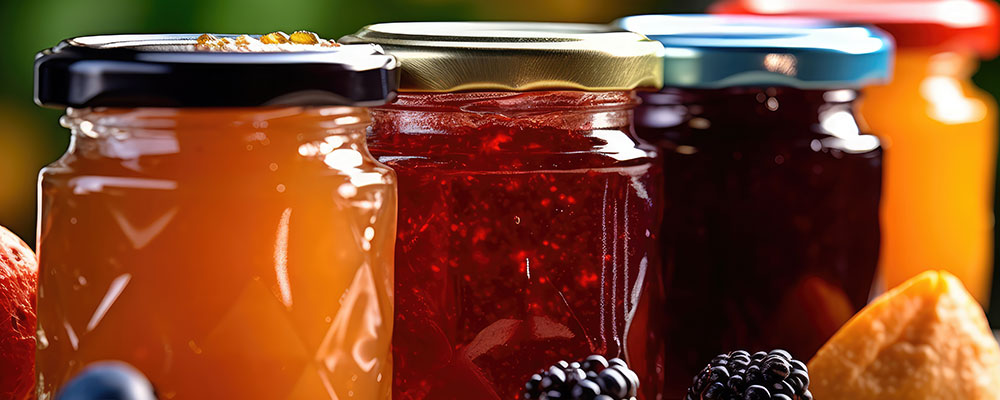
Pectinase enzymes support numerous commercial fruit processing operations.
These include:
- Fruit juice manufacturing
- Juice concentrates
- Fruit purees
- Baby foods
- Wine production
- Cider manufacturing
- Fruit beverages
- Tropical fruit processing
Their flexibility allows processors to optimise extraction across a wide range of fruit varieties and production systems.
Economic Benefits for Industrial Processors
For large-scale manufacturers, enzyme technology contributes to improved operational performance beyond simply increasing juice yield.
Potential advantages include:
- Reduced processing costs
- Improved equipment utilisation
- Lower waste generation
- Better raw material recovery
- Reduced energy consumption
- Higher production capacity
- Improved process consistency
Collectively, these improvements strengthen manufacturing efficiency while supporting profitability.
Industrial Enzymes Beyond Fruit Processing
The success of pectinase demonstrates the broader value of industrial enzyme technology across diverse manufacturing sectors.
Modern enzyme solutions continue to improve productivity, product quality, and sustainability in numerous industries.
1. Enzymes for Tea Processing
Tea manufacturing depends upon carefully managed biochemical transformations.
Enzymes support:
- Flavour development
- Colour formation
- Aroma enhancement
- Controlled oxidation
- Consistent processing performance
By improving process control, enzyme technology assists manufacturers in delivering uniform tea quality across production batches.
2. Enzymes for Baking
The baking industry relies extensively on specialised enzyme systems.
Applications include:
- Dough conditioning
- Improved loaf volume
- Better crumb texture
- Extended product freshness
- Improved machinability
- Reduced reliance on chemical additives
Enzyme technology enables greater consistency while meeting evolving consumer expectations.
3. Enzymes for Dairy Processing
The dairy sector employs enzymes across numerous production stages.
Applications include:
- Cheese manufacture
- Lactose reduction
- Protein modification
- Flavour enhancement
- Texture optimisation
- Yield improvement
These technologies help dairy manufacturers improve product quality while increasing operational efficiency.
4. Enzymes for the Detergent Industry
Modern detergent formulations incorporate multiple enzyme classes to improve cleaning performance.
Common enzymes include:
- Proteases
- Lipases
- Amylases
- Cellulases
Together, these enzymes effectively remove:
- Protein stains
- Oils and grease
- Food residues
- Starch deposits
Enzyme-based detergents also perform efficiently at lower washing temperatures, supporting reduced energy consumption.
5. Enzymes for the Textile Industry
Textile manufacturers increasingly utilise enzyme technology to replace traditional chemical treatments.
Applications include:
- Desizing
- Bio-polishing
- Denim finishing
- Fabric softening
- Fibre surface modification
These processes often improve fabric quality while reducing chemical use and wastewater generation.
6. Enzymes for the Feed Industry
Animal feed enzymes improve nutrient utilisation by breaking down otherwise indigestible feed components.
Benefits include:
- Improved digestibility
- Better nutrient absorption
- Enhanced feed conversion ratios
- Reduced nutrient losses
- Improved livestock productivity
Feed enzymes have become essential tools in sustainable animal nutrition programmes.
7. Enzymes for Water Treatment
Biological wastewater treatment increasingly incorporates enzyme technologies.
Applications include:
- Organic matter degradation
- Biofilm control
- Sludge reduction
- Odour management
- Improved wastewater treatment efficiency
These solutions support more sustainable industrial water management.
8. Enzymes for Sugar Mills
Sugar manufacturing also benefits significantly from enzyme technology.
Applications include:
- Juice clarification
- Reduced viscosity
- Improved extraction efficiency
- Better filtration
- Increased sugar recovery
- Enhanced processing stability
These improvements contribute to higher operational efficiency throughout sugar production.
Sustainability Through Enzyme Innovation
Across industries, sustainability has become a strategic business priority rather than simply a regulatory requirement.
Enzymes contribute by supporting:
- Lower energy consumption
- Reduced chemical usage
- Improved raw material utilisation
- Lower greenhouse gas emissions
- Reduced wastewater generation
- Higher process efficiency
- Improved resource conservation
By enabling biological rather than chemical processing, enzymes help industries align operational performance with long-term environmental objectives.
Future Trends in Industrial Enzyme Technology
Industrial biotechnology continues to advance through innovations in enzyme discovery, fermentation and formulation.
Future developments are expected to focus on:
- Improved enzyme stability
- Greater catalytic efficiency
- Enhanced tolerance to challenging process conditions
- Tailored enzyme blends for specific industries
- Digital process optimisation through enzyme performance monitoring
- Sustainable manufacturing practices
As production systems become increasingly automated and data-driven, enzymes will continue to play an important role in improving manufacturing reliability and competitiveness.
Conclusion
Industrial pectinase enzymes have transformed modern fruit processing by enabling more efficient mash preparation, improved juice extraction, faster clarification and enhanced utilisation of valuable raw materials. Their highly selective mode of action allows processors to achieve greater yields while maintaining the natural flavour, colour and nutritional integrity of fruit products. As manufacturers continue to focus on operational efficiency, product consistency and sustainability, enzyme-assisted processing has become an integral part of contemporary fruit processing operations.
The impact of industrial enzymes extends well beyond fruit extraction. Similar technologies are helping manufacturers optimise tea processing, baking, dairy production, detergent formulation, textile finishing, animal nutrition, water treatment and sugar manufacturing. Across these sectors, enzymes improve productivity, reduce resource consumption and support environmentally responsible manufacturing practices.
Biolaxi Enzymes supports these evolving industrial requirements by developing specialised enzyme solutions for diverse processing applications. Through technical expertise, consistent product quality and a focus on process optimisation, Biolaxi Enzymes helps manufacturers address operational challenges, improve efficiency and achieve reliable production outcomes across a broad range of industries.