The global leather industry continues to evolve in response to increasing demands for superior product quality, greater process efficiency, and more sustainable manufacturing practices. Consumers and industrial buyers alike expect leather products that are soft, durable, uniform in appearance, and produced through environmentally responsible processes. At the same time, manufacturers face mounting pressure to reduce chemical consumption, minimise wastewater loads, improve operational efficiency, and comply with increasingly stringent environmental regulations.
Among the innovations transforming leather processing, industrial protease enzymes have emerged as an effective biological alternative to conventional chemical-intensive methods. These specialised enzymes enable tanneries to soften hides, remove unwanted proteins, and prepare leather for subsequent processing stages with greater precision and consistency. By replacing or reducing the use of aggressive chemicals, protease-based treatments contribute to improved leather quality while supporting cleaner and more sustainable manufacturing operations.
The success of protease technology in leather manufacturing also reflects the wider adoption of industrial enzymes across multiple sectors. Similar enzyme solutions are extensively used in food processing, dairy, baking, textiles, detergents, animal nutrition, sugar production and water treatment, where they improve productivity, optimise resource utilisation and enhance process sustainability.
Understanding the Structure of Leather

Leather originates from animal hides and skins, which consist primarily of collagen fibres supported by a complex network of proteins, fats, hair follicles and connective tissues.
Before leather can be converted into high-quality finished products, these unwanted components must be carefully removed while preserving the integrity of the collagen matrix.
Typical processing objectives include:
- Hair removal
- Protein degradation
- Fibre opening
- Controlled softening
- Improved chemical penetration
- Uniform leather texture
Achieving these objectives efficiently is essential for producing leather with consistent strength, flexibility and appearance.
What Are Protease Enzymes
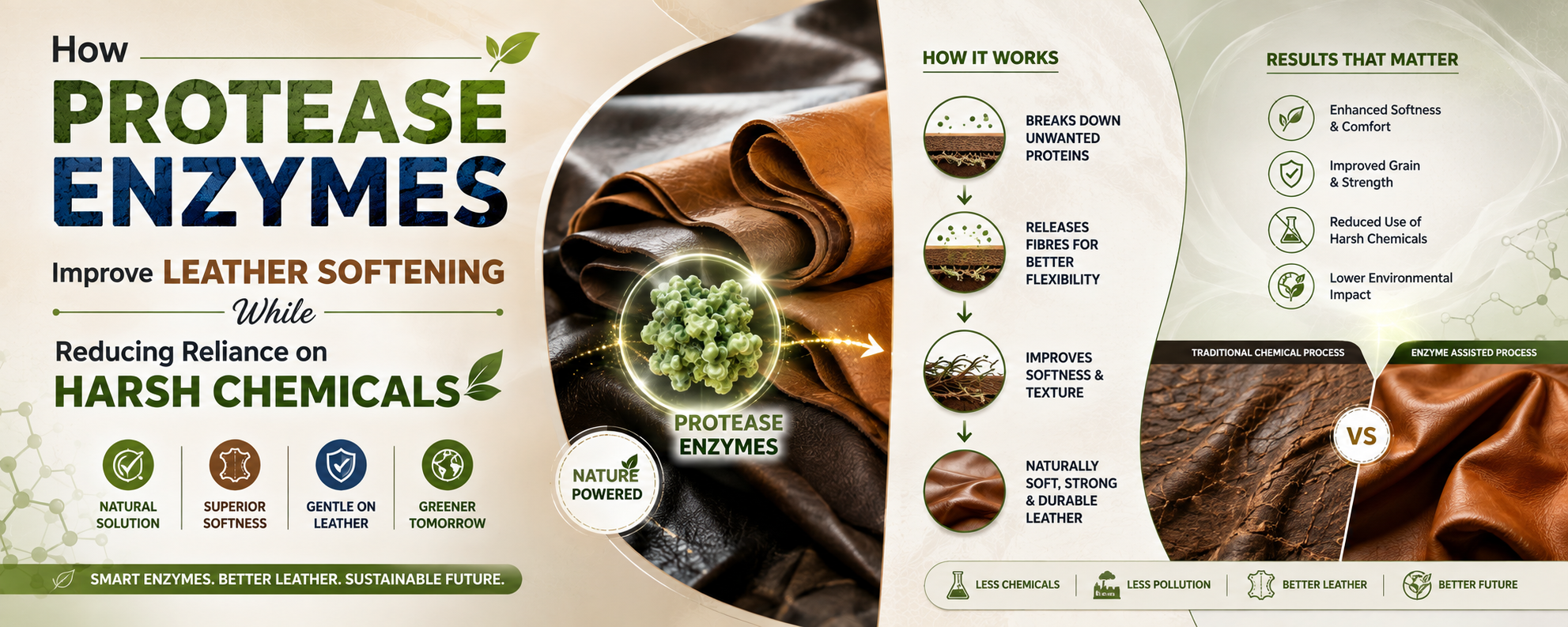
Proteases are biological catalysts that hydrolyse proteins by breaking peptide bonds into smaller peptides and amino acids.
Industrial protease preparations are carefully selected to target non-collagenous proteins without causing significant damage to the collagen fibres that provide leather with its strength and durability.
Their highly selective mode of action allows manufacturers to perform controlled biological processing rather than relying solely on harsh chemical treatments.
The Role of Protease Enzymes in Leather Processing
Proteases are incorporated into several stages of leather manufacture, particularly during soaking, dehairing, bating and fibre preparation.
Each application contributes to improved processing efficiency while enhancing the quality of the finished leather.
1. Soaking
Fresh or preserved hides often contain:
- Dirt
- Blood residues
- Soluble proteins
- Natural contaminants
Protease enzymes assist in removing these unwanted materials, allowing hides to regain moisture more effectively before further processing.
Benefits include:
- Faster rehydration
- Improved cleanliness
- Better preparation for downstream operations
2. Assisted Dehairing
Traditional dehairing often depends heavily on alkaline chemicals and sulphides.
Protease enzymes help weaken the protein structures surrounding hair follicles, allowing hair removal to occur more efficiently while reducing dependence on aggressive chemicals.
Potential advantages include:
- Lower chemical consumption
- Improved process control
- Reduced environmental burden
- Better preservation of hide quality
3. Bating
Bating represents one of the most important enzyme-assisted stages in leather manufacture.
During this process, proteases selectively remove residual proteins that remain after liming and dehairing.
Proper bating contributes to:
- Improved softness
- Enhanced flexibility
- Better grain smoothness
- Uniform fibre structure
- Improved dye penetration
This stage plays a critical role in determining the final characteristics of finished leather.
The Science Behind Enzymatic Leather Softening
Unlike conventional chemical treatments that may affect multiple hide components simultaneously, proteases perform highly selective reactions.
The enzymatic process generally involves several stages.
1. Protein Recognition
Protease molecules identify susceptible non-collagen proteins present within the hide.
2. Controlled Hydrolysis
The enzyme breaks peptide bonds, converting larger protein molecules into smaller fragments that can be removed during washing.
3. Fibre Opening
As unwanted proteins are eliminated, collagen fibres become more open and evenly distributed.
This allows:
- Better flexibility
- Improved softness
- Greater chemical accessibility
- More uniform processing
4. Preservation of Collagen
A major advantage of carefully selected industrial proteases is their ability to minimise damage to structural collagen while effectively removing unwanted protein materials.
Benefits of Protease Enzymes in Leather Manufacturing
The adoption of enzyme technology provides manufacturers with numerous operational and commercial advantages.
1. Improved Leather Quality
Protease treatment contributes to:
- Softer leather
- Better handle
- Uniform grain
- Improved elasticity
- Enhanced finishing performance
These characteristics are highly valued across footwear, automotive, upholstery and fashion applications.
2. Reduced Chemical Dependency
Replacing part of the conventional chemical treatment with enzyme-assisted processing can help reduce the use of:
- Sulphides
- Harsh alkaline chemicals
- Certain auxiliary chemicals
This supports cleaner production practices while improving workplace safety.
3. Improved Process Consistency
Industrial enzymes provide predictable performance when operated under controlled conditions.
This contributes to:
- Batch-to-batch consistency
- Improved quality control
- Reduced process variation
- Greater manufacturing reliability
4. Lower Environmental Impact
Reduced chemical consumption often leads to:
- Lower wastewater pollution
- Reduced sludge generation
- Improved effluent quality
- Easier wastewater treatment
These improvements assist manufacturers in meeting environmental compliance objectives.
Process Parameters Influencing Enzyme Performance
Successful enzyme-assisted leather processing depends upon careful control of operating conditions.
1. Temperature
Protease activity is closely linked to temperature.
Maintaining optimum conditions ensures efficient protein hydrolysis without reducing enzyme stability.
2. pH
Each protease formulation performs within a defined pH range.
Careful pH control improves enzyme efficiency while protecting hide quality.
3. Treatment Time
Adequate processing time is essential to achieve complete protein removal without overprocessing the hide.
4. Enzyme Dosage
Correct dosage ensures efficient performance while maintaining economic operation.
Sustainability Through Biological Leather Processing
Environmental sustainability has become an increasingly important consideration for leather manufacturers worldwide.
Enzyme-assisted processing contributes towards sustainability by supporting:
- Lower chemical usage
- Reduced water pollution
- Improved energy efficiency
- Better raw material utilisation
- Lower environmental footprint
- Safer working conditions
These advantages align with broader corporate sustainability strategies and evolving regulatory expectations.
Quality Considerations in Modern Leather Manufacturing
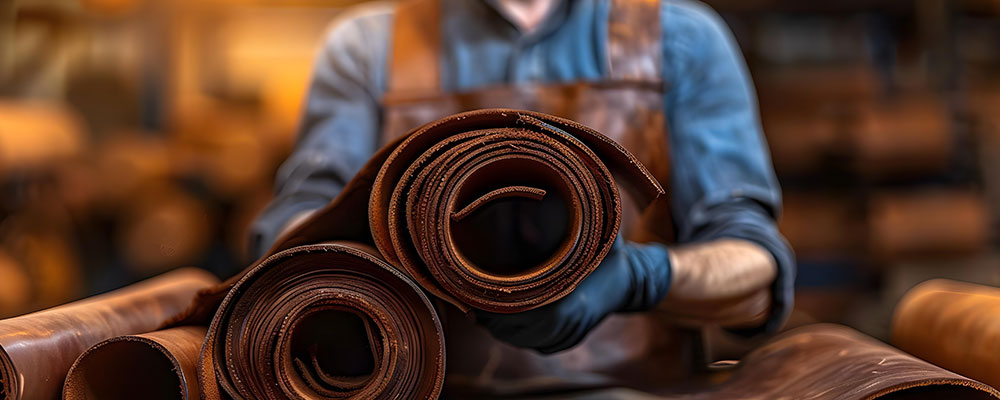
Today’s leather producers must balance multiple quality requirements simultaneously.
Manufacturers seek to achieve:
- Consistent softness
- High tensile strength
- Uniform thickness
- Smooth grain appearance
- Excellent dye uptake
- Long-term durability
Protease enzymes support these objectives by improving fibre preparation while preserving the natural structure of collagen.
Industrial Enzymes Beyond Leather Processing
The effectiveness of protease enzymes illustrates the broader contribution of industrial biotechnology across modern manufacturing sectors.
Today, specialised enzymes are essential tools in numerous industries.
1. Enzymes for Tea Processing
Tea production relies on carefully managed biochemical reactions that influence flavour, aroma and colour.
Industrial enzymes support:
- Controlled oxidation
- Flavour enhancement
- Colour development
- Improved processing consistency
- Better product uniformity
These improvements help tea manufacturers maintain consistent quality across production batches.
2. Enzymes for Baking
Enzymes have become indispensable in commercial baking operations.
Their applications include:
- Dough conditioning
- Improved loaf volume
- Enhanced crumb softness
- Better dough handling
- Extended freshness
- Reduced need for chemical improvers
Enzyme technology enables bakers to achieve consistent product quality while improving manufacturing efficiency.
3. Enzymes for Dairy Processing
The dairy industry uses specialised enzymes throughout multiple production stages.
Applications include:
- Cheese manufacture
- Lactose hydrolysis
- Protein modification
- Texture enhancement
- Yield optimisation
- Flavour development
Enzymes support efficient production while maintaining product quality and consistency.
4. Enzymes for the Detergent Industry
Proteases are among the most important enzymes used in modern detergent formulations.
Alongside lipases, amylases and cellulases, they assist in removing:
- Protein stains
- Food residues
- Blood stains
- Dairy deposits
- Sweat residues
Enzyme-based detergents achieve excellent cleaning performance while supporting effective washing at lower temperatures.
5. Enzymes for the Textile Industry
Textile manufacturers increasingly replace conventional chemical treatments with enzyme-assisted processes.
Common applications include:
- Desizing
- Bio-polishing
- Denim finishing
- Fabric softening
- Fibre preparation
Enzyme technology improves fabric quality while reducing chemical usage and environmental impact.
6. Enzymes for the Feed Industry
Feed enzymes enhance the nutritional value of animal feed by improving the digestion of complex feed ingredients.
Benefits include:
- Improved nutrient absorption
- Better feed conversion efficiency
- Enhanced livestock productivity
- Reduced nutrient waste
- Improved overall feed utilisation
These advantages contribute to more efficient and sustainable livestock production.
7. Enzymes for Water Treatment
Water treatment facilities increasingly incorporate enzyme technology to improve biological treatment processes.
Applications include:
- Organic waste degradation
- Biofilm management
- Sludge reduction
- Wastewater treatment
- Odour control
These biological solutions improve operational efficiency while supporting environmental compliance.
8. Enzymes for Sugar Mills
The sugar industry also benefits from specialised enzyme applications.
Enzymes assist with:
- Juice clarification
- Reduced viscosity
- Improved sugar recovery
- Enhanced filtration
- Increased extraction efficiency
- Improved process stability
These improvements help maximise production efficiency while reducing operational losses.
Emerging Trends in Industrial Enzyme Technology
Industrial biotechnology continues to advance through ongoing innovation in enzyme discovery, production and formulation.
Future developments are expected to include:
- Improved enzyme stability
- Higher catalytic efficiency
- Broader operating conditions
- Tailor-made enzyme formulations
- Enhanced sustainability performance
- Greater process automation compatibility
These innovations will further strengthen the role of enzymes in supporting efficient and environmentally responsible manufacturing.
Conclusion
Protease enzymes have become an integral part of modern leather manufacturing by enabling controlled softening, effective protein removal and improved fibre preparation while reducing reliance on harsh chemical treatments. Their highly selective biological action helps manufacturers achieve superior leather quality, greater process consistency and improved operational efficiency without compromising the integrity of the collagen structure. As sustainability and regulatory compliance become increasingly important across the leather industry, enzyme-assisted processing offers a practical pathway towards cleaner, safer and more resource-efficient production.
The value of industrial enzymes extends well beyond leather processing. Similar technologies continue to transform tea processing, baking, dairy manufacturing, detergent formulation, textile finishing, animal nutrition, water treatment and sugar milling by improving product quality, increasing operational efficiency and supporting more sustainable manufacturing practices.
Biolaxi Enzymes supports these evolving industrial requirements through a comprehensive portfolio of enzyme solutions designed for diverse processing applications. By combining technical expertise, application-focused innovation and consistent product quality, Biolaxi Enzymes helps manufacturers optimise production processes, address operational challenges and achieve reliable performance while advancing their sustainability objectives across multiple industries.