Introduction
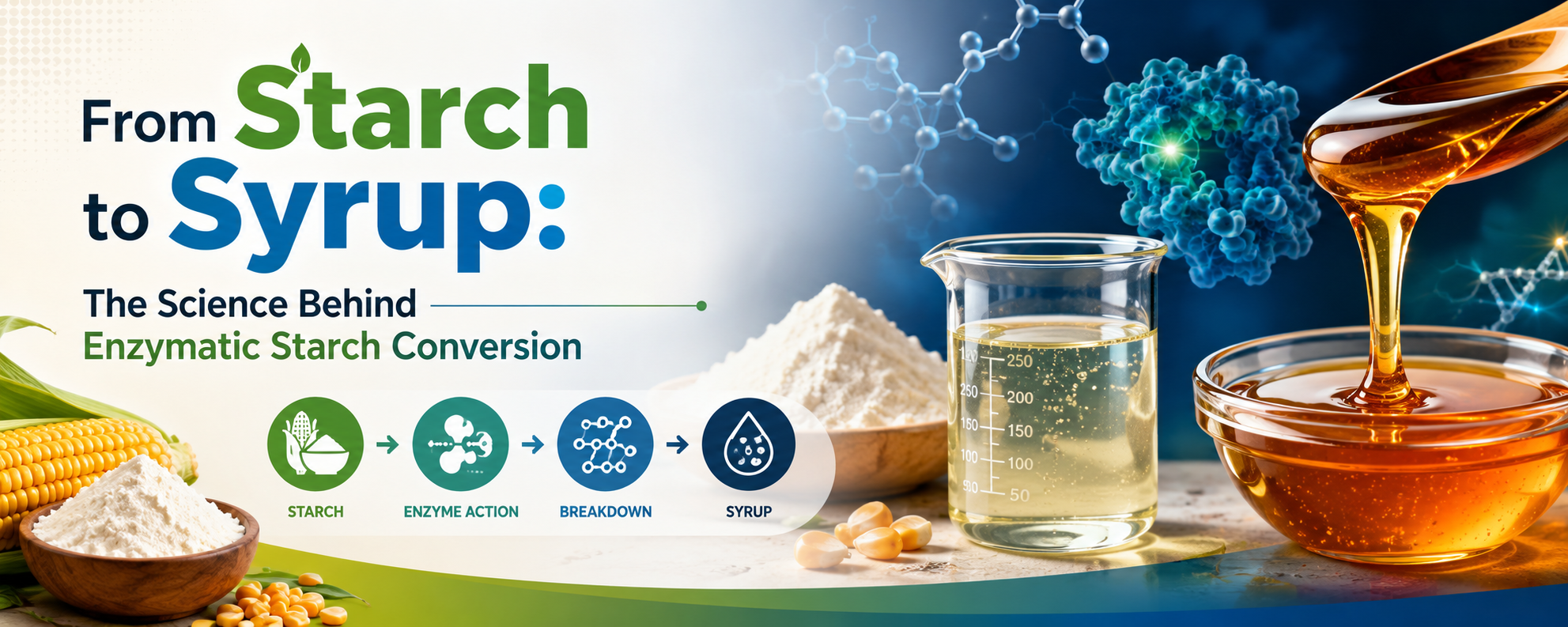
Starch is one of the world’s most abundant natural carbohydrates, serving as a key raw material for industries ranging from food and beverages to pharmaceuticals and bio-based manufacturing. However, in its native form, starch has limited functionality for many industrial applications. Through carefully controlled enzymatic processes, this complex carbohydrate can be transformed into valuable sugar syrups with specific sweetness profiles, viscosity characteristics, and functional properties.
Enzymatic starch conversion has revolutionised industrial processing by replacing harsher chemical methods with highly selective biological catalysts. Modern enzyme technology enables manufacturers to achieve greater efficiency, improved product consistency, lower energy consumption, and enhanced sustainability while maintaining precise control over production outcomes.
Beyond starch processing, enzyme technology has become an essential component across numerous industries, where specialised enzymes improve manufacturing efficiency, product quality, and environmental performance. From food processing and textiles to detergents, animal nutrition, water treatment, and sugar manufacturing, enzymes continue to support innovation in industrial operations.
This article explores the science behind enzymatic starch conversion, the stages involved in producing starch-based syrups, and the wider role of industrial enzymes across multiple sectors.
Understanding the Nature of Starch
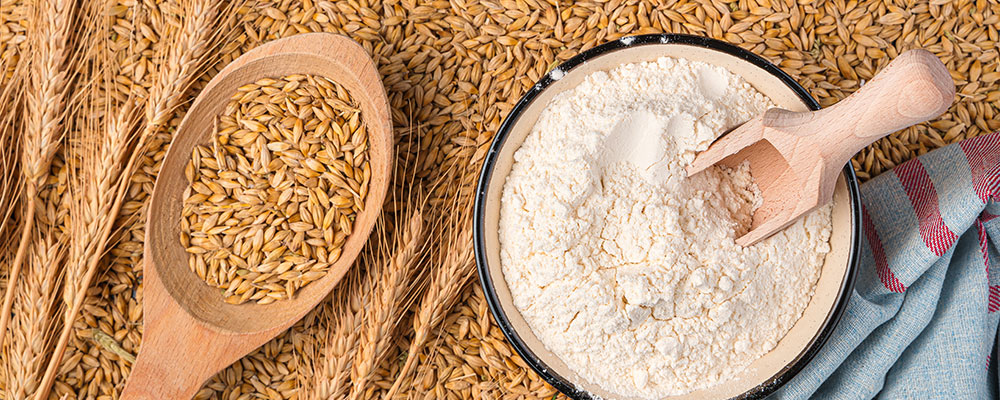
Starch is a naturally occurring polysaccharide produced by plants as an energy reserve. Commercial starch is commonly extracted from sources such as:
- Maize
- Wheat
- Rice
- Potato
- Tapioca (cassava)
Structurally, starch consists of two glucose polymers:
- Amylose – primarily linear chains of glucose molecules.
- Amylopectin – highly branched glucose chains that provide unique functional characteristics.
The complexity of these molecular structures makes starch unsuitable for many industrial applications unless it is converted into smaller carbohydrate molecules. This conversion is achieved through enzymes that selectively hydrolyse starch into dextrins, maltose, glucose, or customised sugar syrups.
The Science Behind Enzymatic Starch Conversion
Unlike chemical hydrolysis, enzymatic conversion relies on biological catalysts that target specific chemical bonds without generating undesirable by-products.
The process generally consists of several carefully controlled stages.
1. Gelatinisation
Native starch granules are insoluble in water. During gelatinisation:
- Starch is mixed with water.
- Heat causes granules to swell.
- Molecular structures become more accessible.
- Viscosity increases significantly.
This prepares the starch for enzymatic action.
2. Liquefaction
Liquefaction is typically performed using alpha-amylase.
The enzyme:
- Breaks internal alpha-1,4 glycosidic bonds.
- Reduces viscosity.
- Produces shorter dextrin chains.
- Creates a pumpable starch solution.
Precise control of:
- Temperature
- pH
- Residence time
- Enzyme dosage
ensures consistent liquefaction while preventing excessive degradation.
3. Saccharification
Once liquefaction is complete, additional enzymes convert dextrins into desired sugars.
Depending on the intended syrup, enzymes may include:
- Glucoamylase
- Pullulanase
- Maltogenic enzymes
These enzymes convert dextrins into:
- Glucose syrup
- Maltose syrup
- High glucose syrup
- Fermentation feedstocks
Manufacturers can tailor syrup composition according to downstream applications.
4. Purification and Refinement
Following enzymatic conversion, the syrup undergoes purification through several operations such as:
- Filtration
- Activated carbon treatment
- Ion exchange
- Concentration
- Quality testing
The result is a stable syrup suitable for food, beverage, pharmaceutical, and industrial use.
Why Enzymes Have Become the Preferred Industrial Solution
Modern industries increasingly favour enzymes because they offer a combination of operational efficiency and environmental responsibility.
Major advantages include:
- High reaction specificity
- Improved product consistency
- Lower processing temperatures
- Reduced chemical consumption
- Lower energy requirements
- Reduced waste generation
- Improved process economics
- Better sustainability performance
These benefits have positioned enzyme technology as a critical component of modern manufacturing.
Process Parameters That Influence Conversion Efficiency
Successful starch conversion depends upon maintaining optimal operating conditions.
Important factors include:
1. Temperature
Each enzyme functions within a defined temperature range. Excessive temperatures may denature enzymes, while insufficient temperatures reduce catalytic activity.
2. pH Control
Industrial enzymes exhibit peak performance within narrow pH ranges. Accurate pH management ensures maximum conversion efficiency.
3. Substrate Concentration
The concentration of starch influences:
- Conversion rate
- Reaction time
- Syrup quality
- Equipment performance
4. Enzyme Dosage
Appropriate enzyme selection and dosage help manufacturers balance productivity with operating costs.
5. Reaction Time
Insufficient reaction time may result in incomplete hydrolysis, whereas excessive processing can reduce process efficiency.
Industrial Applications of Enzymatic Starch Conversion
Converted starch syrups serve numerous industries.
Applications include:
- Food manufacturing
- Beverage production
- Confectionery
- Brewing
- Pharmaceutical formulations
- Fermentation industries
- Bio-based chemicals
- Nutraceutical products
The ability to customise syrup composition allows manufacturers to meet precise formulation requirements.
Expanding the Role of Industrial Enzymes Beyond Starch Processing
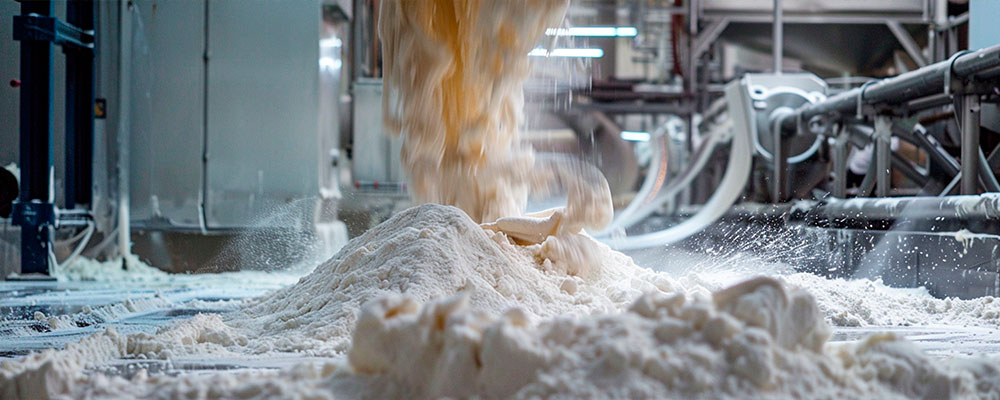
Although starch conversion remains one of the most established enzyme applications, industrial biotechnology has expanded significantly. Today, enzymes support manufacturing improvements across numerous sectors.
1. Enzymes for Tea Processing
Tea quality depends heavily on carefully controlled biochemical reactions during manufacturing.
Specialised enzymes contribute to:
- Enhanced flavour development
- Improved colour formation
- Better aroma generation
- Controlled oxidation
- Greater processing consistency
Enzyme-assisted processing enables manufacturers to achieve uniform quality while optimising production efficiency.
2. Enzymes for Baking
The baking industry relies extensively on enzymes to improve dough handling and finished product quality.
Common benefits include:
- Improved dough stability
- Increased loaf volume
- Better crumb structure
- Extended freshness
- Enhanced texture
- Reduced dependence on chemical additives
Different enzyme combinations can be tailored for bread, cakes, biscuits and speciality baked products.
3. Enzymes for Dairy Processing
The dairy industry utilises enzyme technology throughout multiple production stages.
Applications include:
- Lactose hydrolysis
- Cheese production
- Protein modification
- Flavour development
- Yield improvement
- Texture optimisation
Enzymes also support the production of lactose-reduced dairy products while maintaining nutritional value.
4. Enzymes for the Detergent Industry
Modern detergents rely heavily on enzyme formulations to improve cleaning performance.
Typical enzyme classes include:
- Proteases
- Amylases
- Lipases
- Cellulases
These enzymes help remove:
- Protein stains
- Starch residues
- Oils and fats
- Food deposits
- Fabric fuzz
The use of enzymes allows effective cleaning at lower washing temperatures, reducing household energy consumption while maintaining cleaning performance.
5. Enzymes for the Textile Industry
Textile manufacturing increasingly depends on enzyme-based processing to improve quality while reducing environmental impact.
Applications include:
- Desizing
- Bio-polishing
- Denim finishing
- Fabric softening
- Surface modification
- Fibre preparation
Compared with conventional chemical treatments, enzymatic processes often reduce water usage, chemical consumption and fabric damage.
6. Enzymes for the Feed Industry
Animal nutrition has benefited significantly from advances in enzyme technology.
Feed enzymes improve nutrient availability by breaking down complex feed components.
Benefits include:
- Improved feed digestibility
- Better nutrient absorption
- Enhanced feed conversion efficiency
- Reduced nutrient losses
- Improved livestock performance
Enzyme supplementation supports efficient utilisation of plant-based feed ingredients across poultry, swine, aquaculture and ruminant nutrition.
7. Enzymes for Water Treatment
Industrial and municipal water treatment increasingly incorporates enzyme-based solutions.
Applications include:
- Organic matter degradation
- Biofilm management
- Wastewater treatment
- Odour control
- Sludge reduction
Enzymatic treatment supports biological processes while contributing to more sustainable water management practices.
8. Enzymes for Sugar Mills
Sugar manufacturing is another sector where enzymes contribute significantly to operational efficiency.
Specialised enzymes assist in:
- Juice clarification
- Improved extraction efficiency
- Reduced viscosity
- Enhanced filtration
- Increased sugar recovery
- Better process stability
The use of enzymes helps sugar mills improve throughput while supporting efficient utilisation of raw materials.
Sustainability Through Enzyme Technology
Industrial sustainability has become a strategic priority across manufacturing sectors.
Enzymes contribute towards sustainability objectives by enabling:
- Lower greenhouse gas emissions
- Reduced energy consumption
- Lower water usage
- Reduced chemical dependency
- Improved resource efficiency
- Reduced waste generation
- Enhanced process optimisation
As industries pursue environmental targets alongside operational excellence, enzyme technology continues to support more sustainable manufacturing practices.
Future Developments in Industrial Enzymes
Advances in biotechnology continue to expand the capabilities of industrial enzymes.
Current research focuses on:
- Improved enzyme stability
- Higher catalytic efficiency
- Broader operating ranges
- Enhanced substrate specificity
- Greater tolerance to industrial conditions
- Sustainable production methods
These developments are expected to further improve manufacturing efficiency across food, agriculture, chemicals, textiles and environmental applications.
As industrial processes become increasingly automated and data-driven, enzyme technologies will continue to play a vital role in improving productivity while supporting responsible manufacturing.
Conclusion
Enzymatic starch conversion represents one of the most significant advancements in modern industrial biotechnology, enabling manufacturers to transform naturally occurring starch into high-value syrups through efficient, highly controlled biological processes. The precision offered by enzymes not only improves product quality and process consistency but also supports reduced energy consumption, lower chemical usage and more sustainable manufacturing practices.
The importance of industrial enzymes extends well beyond starch processing. Whether enhancing tea processing, improving bakery performance, supporting dairy production, increasing detergent efficiency, refining textile operations, optimising animal nutrition, improving water treatment systems or enhancing sugar mill productivity, enzyme technology continues to deliver measurable operational and environmental benefits across diverse industries.
As industrial requirements evolve, manufacturers increasingly require enzyme solutions that combine technical performance with process reliability and regulatory compliance. Biolaxi Enzymes supports these evolving needs by developing enzyme solutions designed for a broad range of industrial applications, including food processing, feed, textiles, detergents, water treatment and sugar manufacturing. Through a focus on innovation, quality and application expertise, the company helps industries address process challenges, improve operational efficiency and support sustainable manufacturing objectives in an increasingly competitive global market.