
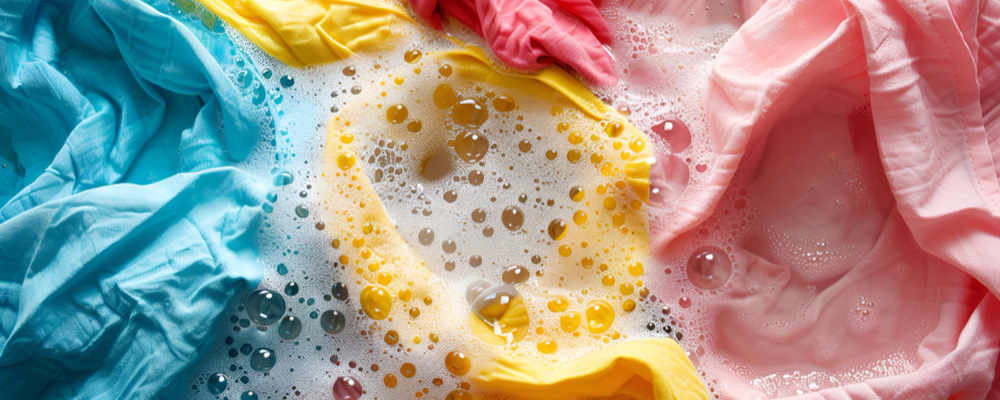
Laundry technology has evolved rapidly over the past decade, driven by the need to conserve water, reduce energy consumption and improve fabric care. Modern washing machines now use significantly less water than their predecessors, relying on concentrated detergents and shorter wash cycles. While these advancements support sustainability goals, they have introduced a new challenge: residue build-up on fabrics and within washing machines.
Residue accumulation affects fabric softness, appearance and hygiene, while also reducing machine efficiency and lifespan. As the laundry industry searches for effective and environmentally responsible solutions, enzymes have emerged as a critical tool in addressing residue issues in low-water laundry systems.
Understanding Residue Build-Up in Low-Water Washing
Traditional washing systems relied on abundant water to dissolve detergents, suspend soil and rinse away residues. In contrast, low-water systems operate with minimal dilution, which increases the concentration of surfactants, builders and soil particles during the wash cycle.
When detergents are not fully broken down or rinsed away, residues can adhere to fabric fibres and internal machine components. Over time, this leads to fabric stiffness, dull colours, odour retention and skin irritation. In machines, residue build-up promotes biofilm formation, unpleasant smells and reduced washing performance.
The challenge is compounded by modern laundry habits, including cold water washing and quick cycles, which further limit detergent solubility and soil removal.
Limitations of Conventional Detergent Chemistry
Conventional detergent formulations rely heavily on surfactants and chemical builders to remove stains and suspend dirt. In low-water conditions, these ingredients may not fully disperse or rinse out, increasing the risk of deposition.
Simply increasing surfactant concentration is not a viable solution, as it worsens residue issues and raises environmental concerns. Consumers are also increasingly sensitive to harsh chemicals, especially those with skin sensitivities or allergies. This has created a demand for smarter, more targeted cleaning solutions that work efficiently under water constrained conditions.
The Role of Enzymes in Residue Prevention
Enzymes offer a fundamentally different approach to laundry cleaning. Rather than relying solely on mechanical action and surfactants, enzymes break down specific types of stains and soils at a molecular level. This targeted action reduces the need for excessive detergent components that contribute to residue formation.
By converting complex soils into smaller, water soluble molecules, enzymes enable easier removal during rinsing, even with limited water. This makes them particularly well suited for modern low-water laundry systems.
Key Enzymes Addressing Residue Build-Up
Different classes of enzymes play distinct roles in preventing residue accumulation. Proteases break down protein based stains such as sweat and food residues, which are a major contributor to fabric stiffness and odour. Amylases target starch based soils that can cause greying and fabric dullness. Lipases degrade fats and oils that tend to cling to fibres and attract further dirt.
Cellulases, often associated with fabric care, help remove microfibrils from cotton fibres. This not only improves fabric softness and colour brightness but also reduces sites where detergent residues and soils can accumulate. Together, these enzymes create a balanced cleaning system that minimises deposition while enhancing fabric appearance.
Supporting Effective Cleaning at Lower Temperatures
Low-water washing is often paired with low-temperature cycles to reduce energy consumption. However, many traditional cleaning agents perform poorly in cold conditions. Enzymes are uniquely suited to function effectively at lower temperatures, maintaining cleaning efficiency without requiring thermal energy.
This capability is critical for preventing residue build-up, as incomplete soil removal at low temperatures is a common cause of detergent and dirt accumulation. Enzymes ensure that soils are fully degraded, even in cold washes, supporting both sustainability and cleaning performance.
Improving Machine Hygiene and Longevity
Residue build-up is not limited to fabrics. Detergent deposits, soil residues and biofilms can accumulate inside washing machines, particularly in low-water systems where flushing action is reduced. Enzymes help prevent this by breaking down organic matter that feeds microbial growth.
Regular use of enzyme enhanced detergents contributes to cleaner internal surfaces, reduced odours and improved machine efficiency. This not only enhances user experience but also extends the operational life of washing machines, aligning with sustainability goals by reducing appliance replacement rates.
Environmental Benefits of Enzyme-Based Solutions
From an environmental perspective, enzymes support multiple sustainability objectives. Their high efficiency allows for lower detergent dosages, reducing chemical load in wastewater. Enzymes are biodegradable and operate under mild conditions, minimising ecological impact.
By enabling effective cleaning with less water, lower temperatures and reduced chemical intensity, enzymes align perfectly with the principles of sustainable laundry care. This makes them a preferred choice for detergent producers and consumers seeking environmentally responsible solutions.
Meeting Consumer Expectations in Modern Laundry Care
Today’s consumers expect detergents to deliver cleanliness, fabric care and sustainability without compromise. Residue build-up directly undermines these expectations by affecting comfort, appearance and hygiene. Enzymes address these concerns holistically by enhancing cleaning performance while reducing unwanted deposits.
As awareness of low-water washing challenges grows, enzyme based formulations are becoming a defining feature of high performance modern detergents.
Conclusion
Residue build-up in low-water laundry systems is a complex challenge driven by reduced water usage, concentrated detergents and evolving washing habits. Enzymes offer a precise, efficient and sustainable solution by breaking down soils at the molecular level, improving rinse efficiency and maintaining both fabric and machine hygiene. Their role in modern laundry care is no longer supplementary but essential.
In this context, Biolaxi Enzymes supports the development of advanced enzyme solutions tailored for contemporary laundry formulations, combining technical expertise and application focused innovation to help detergent producers deliver residue free performance in modern low-water washing systems.