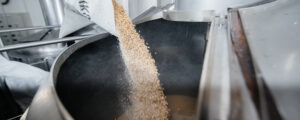

Malting is a vital preparatory step in brewing, distilling, and food manufacturing, involving the controlled germination of cereal grains, typically barley. The goal of malting is to activate the grain’s natural enzymes, which convert starches and proteins into forms suitable for fermentation and further processing.
While traditional malting relies on endogenous enzyme activity within the grain, modern malting processes increasingly incorporate externally added (exogenous) enzymes. These help overcome natural limitations, enhance yield, and optimize performance.
This blog explores the critical role enzymes play in malting, the problems faced by the industry, and how enzymes serve as powerful tools for process improvement.
What Is Malting?
Malting involves three primary stages: steeping, germination, and kilning. During germination, naturally occurring enzymes in the grain begin to break down starches, proteins, and cell wall materials to prepare the grain for brewing or food production. Kilning then halts enzyme activity while preserving beneficial biochemical changes.
The enzymes produced or added during this process directly affect the quality of the malt and, subsequently, the final product, be it beer, spirits, malt extract, or food-grade malted ingredients.
Key Enzymes in Malting
A variety of enzymes are crucial during the malting process. Each has a specific function in transforming the grain’s complex biopolymers into more accessible and useful forms.
- Alpha-Amylase (α-Amylase)
-
- Function: Breaks internal α-1,4-glycosidic bonds in starch chains, producing dextrins and maltose.
- Role: Increases fermentable sugar availability during mashing and improves extract yield.
- Optimal Conditions: pH 5.3–6.0, 65–75°C.
- Beta-Amylase (β-Amylase)
-
- Function: Cleaves maltose units from the non-reducing ends of starch molecules.
- Role: Enhances wort fermentability and final alcohol content.
- Optimal Conditions: pH 5.0–5.5, 55–65°C. Thermolabile and sensitive to high mash temperatures.
- Limit Dextrinase
-
- Function: Hydrolyzes α-1,6-glycosidic branch points in amylopectin.
- Role: Complements alpha- and beta-amylase for complete starch degradation.
- Optimal Conditions: pH 4.8–5.2, 55–60°C.
- Proteases (Endoproteases and Exoproteases)
-
- Function: Degrade storage proteins into peptides and free amino acids.
- Role: Produce FAN (Free Amino Nitrogen) for yeast nutrition; improve malt solubility and beer flavor stability.
- Optimal Conditions: pH 4.0–6.0, 35–55°C.
- Beta-Glucanase
-
- Function: Breaks down β-glucans in barley cell walls by cleaving β-1,3 and β-1,4 bonds.
- Role: Reduces wort viscosity and improves mash filtration. Prevents haze and filtration problems.
- Optimal Conditions: pH 4.5–5.5, 40–50°C.
- Arabinoxylanase / Hemicellulase
-
- Function: Degrades hemicelluloses like arabinoxylans in plant cell walls.
- Role: Improves grain modification and extract efficiency by reducing cell wall resistance.
- Optimal Conditions: pH 4.5–6.0, 45–55°C.
- Lipase
-
- Function: Hydrolyzes lipids into fatty acids and glycerol.
- Role: Can influence beer flavor or foam stability if present in excess; not commonly added intentionally.
Summary Table
| Enzyme | Main Substrate | Product Formed | Key Benefit |
| Alpha-Amylase | Starch (internal) | Dextrins, Maltose | Boosts extract and sugar yield |
| Beta-Amylase | Starch (ends) | Maltose | Enhances wort fermentability |
| Limit Dextrinase | Branched starch | Glucose, Maltose | Completes starch breakdown |
| Proteases | Storage proteins | Peptides, Amino acids | Produces FAN, improves solubility |
| Beta-Glucanase | β-glucans | Oligosaccharides | Reduces viscosity, improves clarity |
| Hemicellulase | Arabinoxylans | Pentoses, Oligosaccharides | Enhances grain modification |
| Lipase | Lipids | Fatty acids, Glycerol | Affects flavor and foam |
What Problems Does the Industry Face, and How Do Enzymes Help?
The malting industry, especially in brewing and food applications, encounters several operational and quality-related challenges. Enzymes offer powerful solutions to many of these problems:
- Grain Quality Variability
-
- Problem: Natural enzyme levels vary due to genetics, climate, and storage conditions.
- Solution: Exogenous enzymes ensure consistent performance across different grain batches, standardizing output quality.
- Incomplete Modification
-
- Problem: Under-modified malt results in poor starch access, high viscosity, and filtration issues.
- Solution: Enzyme addition enhances breakdown of starch, proteins, and cell walls, ensuring full modification and better extract yield.
- High Mash Viscosity and Poor Filtration
-
- Problem: Undegraded β-glucans and hemicellulose increase viscosity, causing lautering problems.
- Solution: β-Glucanases and hemicellulases reduce viscosity, improve filtration, and lower energy consumption.
- Low Extract Yield
-
- Problem: Incomplete starch conversion reduces fermentable sugar and overall profitability.
- Solution: Amylases and debranching enzymes ensure full starch breakdown and higher sugar availability.
- Environmental and Cost Concerns
-
- Problem: Energy-intensive kilning and processing increase operational costs.
- Solution: Faster and more efficient enzymatic modification reduces germination time, water, and energy requirements.
Benefits of Enzyme Use in Malting
- Enhanced Extract Yield – Maximized sugar and amino acid release from grain.
- Improved Fermentation – Better yeast health due to higher FAN levels.
- Faster Processing – Shorter malting cycles without sacrificing quality.
- Superior Filtration – Reduced viscosity and improved clarity in the wort.
- Consistency – Uniform malt quality regardless of raw material variation.
- Sustainability – Lower energy, water, and raw material wastage.
Applications Across Industries
Enzyme-assisted malting isn’t limited to brewing. Its benefits extend to:
- Brewing: Improves beer yield, clarity, and stability.
- Distilling: Enhances alcohol output and fermentation efficiency.
- Food Industry: Provides enzyme-enriched malt flours and extracts for baking, infant foods, and health products.
- Malt Extracts: Used in nutrition bars, confectionery, and flavor enhancers.
Conclusion
Enzymes are indispensable to modern malting. They not only enhance efficiency and output but also solve longstanding industry problems such as grain inconsistency, poor extract yield, and filtration issues. Whether you’re brewing craft beer, producing spirits, or manufacturing malt-based food ingredients, enzyme solutions offer a way to improve both process economics and product quality.
As demand for high-performance, sustainable processes continues to grow, the role of enzymes in malting is set to become even more central.