Tea, one of the world’s most beloved beverages, has fascinated humankind for centuries with its delicate aroma and layered flavour. From the refreshing briskness of green tea to the deep malty tones of Assam, the journey of tea is as much a scientific marvel as it is a cultural ritual. Behind every nuanced sip lies a complex interplay of biochemical processes, many of which are influenced by enzymesnature’s own catalysts. Enzymes are central to transforming simple tea leaves into flavourful infusions that captivate the senses. Their subtle, precise actions unlock the aromatic molecules responsible for the tea’s signature taste and scent, shaping the sensory experience we so cherish.
The Biochemistry of Tea Aroma
Tea flavour is primarily derived from the leaves of Camellia sinensis. While climate, soil, and processing techniques certainly contribute to its profile, the true magic happens at the molecular level. Enzymes within the leaf, as well as those introduced during processing, orchestrate biochemical transformations that define the final aroma and taste. The moment a tea leaf is plucked, enzymatic reactions begin setting off a cascade that determines whether the final cup will carry floral notes, fruity undertones, or earthy depth.
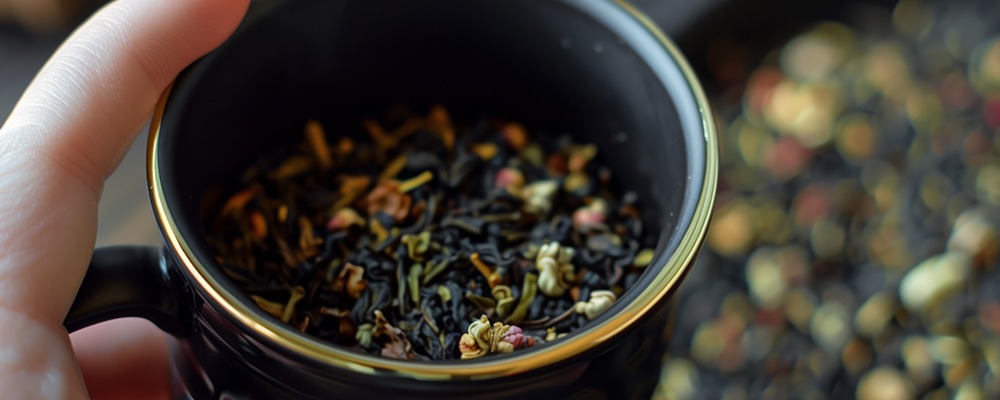
One of the most crucial groups of enzymes in tea processing are the oxidases, such as polyphenol oxidase (PPO) and peroxidase (POD). These are responsible for oxidising catechins (natural polyphenols) into theaflavins and thearubigins, compounds that give black tea its characteristic colour, briskness, and body. In contrast, green tea processing halts these enzymatic actions early through steaming or pan-firing, preserving its grassy aroma and fresh flavour. Thus, the degree to which enzymes are allowed to act determines whether tea becomes green, oolong, or black a testament to their power in defining the sensory outcome.
Enzymes as Nature’s Aroma Modifiers
Beyond oxidation, a host of other enzymatic pathways influence the aromatic complexity of tea. Glycosidases, for instance, play a pivotal role in releasing bound aroma precursors. Many aromatic compounds in tea leaves exist in glycosidic form attached to sugar molecules that render them inactive. When glycosidase enzymes break these bonds, volatile aroma compounds such as linalool, geraniol, and benzyl alcohol are released, creating the floral and fruity notes typical of high-quality teas.
Similarly, lipoxygenase (LOX) catalyses the oxidation of unsaturated fatty acids, generating volatile compounds like hexanal and (E)-2-hexenal. These molecules contribute to the fresh, grassy fragrance found in green and oolong teas. Enzymes also influence amino acid and carbohydrate metabolism, producing secondary metabolites that lend savoury, sweet, or roasted notes. In essence, enzymes serve as flavour architects, fine-tuning the balance between aroma precursors, bitterness, and sweetness.
Enzymatic Control in Modern Tea Processing

While traditional tea making relied on ambient enzyme activity and manual craftsmanship, modern tea production integrates controlled enzymatic techniques to achieve consistency and precision. By manipulating enzyme activity through temperature, pH, moisture, or timemanufacturers can influence specific flavour outcomes. For example, extending the period of enzymatic oxidation enhances the development of complex polyphenolic compounds, resulting in a stronger, more robust tea. Conversely, limiting enzyme exposure retains the delicate vegetal and floral notes valued in green teas.
Emerging biotechnological innovations have taken this one step further. Enzyme-assisted fermentation and enzymatic flavour enhancement technologies are now being explored to create signature tea blends with tailored flavour profiles. By introducing specific enzymes, tea producers can selectively release desirable aroma compounds or reduce bitterness, crafting a more refined sensory experience.
The Art and Science of Aroma Unlocking
Understanding the enzymatic foundation of tea flavour not only deepens appreciation for this ancient beverage but also opens new possibilities for innovation. In many ways, enzymes act as ‘aroma unlockers’, liberating the compounds that define the tea’s identity. Without them, even the finest leaves would remain chemically dormant, incapable of revealing their full potential.
During withering and fermentation the most enzyme-intensive stagescomplex transformations occur. Polyphenol oxidase catalyses oxidation, creating the reddish hue and brisk taste of black tea. Concurrently, hydrolytic enzymes like glycosidases and esterases act on glycosides and lipids, generating aromatic volatiles that shape the tea’s bouquet. The synergy between these enzymes results in a balance of body, aroma, and flavour that distinguishes a Darjeeling from a Ceylon, or a delicate white tea from a bold Assam.
Interestingly, research has shown that enzyme activity can also be influenced by external conditions such as altitude, temperature, and humidity. High-altitude teas, for example, often develop enhanced flavour complexity due to slower enzymatic oxidation and unique precursor accumulation. This interplay between nature and enzymatic biochemistry creates the diverse palette of flavours we associate with global tea varieties.
Future Pathways: Enzyme Innovation in Tea
The tea industry stands on the cusp of a scientific evolution, with enzymes leading the charge. Advancements in enzyme technology are enabling greater precision in processing, allowing manufacturers to replicate traditional flavour profiles with improved efficiency and sustainability. Customised enzyme formulations are being developed to optimise specific stages such as aroma release, fermentation, and even post-processing aroma retention.
Moreover, the growing demand for natural and clean-label beverages aligns perfectly with enzyme-based solutions. Since enzymes are naturally occurring and biodegradable, they offer an eco-friendly approach to flavour enhancement without chemical additives. The use of immobilised enzymes fixed on solid supports for reuse further improves process efficiency while minimising waste. Such innovations are paving the way for greener, more sustainable tea manufacturing practices that respect both the planet and the product.
Conclusion
The essence of tea lies not just in its leaves but in the invisible enzymatic forces that bring those leaves to life. Every sip reflects a harmonious dialogue between nature and science, between the intrinsic chemistry of the leaf and the catalytic precision of enzymes. As research continues to uncover the mechanisms behind flavour development, the future of tea may be shaped as much by enzymology as by tradition.
At Biolaxi Enzymes Pvt. Ltd., this synergy between innovation and nature is at the heart of what we do. With over 14 years of expertise in developing high-quality, eco-safe, and customised enzyme formulations, Biolaxi provides dependable enzymatic solutions to diverse industries worldwide. Through advanced R&D, scientific precision, and a commitment to sustainable manufacturing, Biolaxi continues to empower food and beverage producers to craft excellence unlocking nature’s finest aromas, one enzyme at a time.