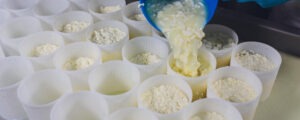

The dairy industry transforms raw milk into diverse products such as cheese, yogurt, whey protein, and lactose-free milk through complex biochemical processes. Enzymes are indispensable in this transformation. They enable controlled reactions that improve process efficiency, product quality, flavor, texture, and nutritional value. Their specificity, speed, and mild operating conditions make them ideal for dairy processing, aligning with both traditional practices and modern industrial demands.
What Problems Does the Industry Face, and How Do Enzymes Help?
The dairy industry faces challenges related to product yield, digestibility, consistency, and sustainability. Issues such as weak curd formation, lactose intolerance, whey protein loss, and inconsistent flavor development affect both quality and efficiency. Enzymes help optimize these processes by improving protein structure, enhancing digestibility, recovering nutrients, and supporting flavor development. They also assist in maintaining safety standards and restoring texture in low-fat products. By enabling more precise and efficient processing, enzymes support innovation, reduce waste, and meet evolving consumer demands.
Types of Enzymes Used in the Dairy Industry
- Chymosin (Rennet Enzyme)
Chymosin is an aspartic protease responsible for cleaving κ-casein at a specific peptide bond (Phe105–Met106) in milk. This cleavage destabilizes the casein micelle structure, triggering coagulation. It results in the formation of a para-κ-casein curd that traps fat and calcium, leading to gel formation. Recombinant microbial sources of chymosin (e.g., Aspergillus niger var. awamori) have replaced animal-derived rennet in many commercial applications due to ethical, regulatory, and consistency advantages.
- Lactase (β-Galactosidase)
Lactase is a hydrolase enzyme that catalyzes the hydrolysis of β-1,4 glycosidic bonds in lactose, splitting it into glucose and galactose. These monosaccharides are more easily absorbed by the human intestine, especially for individuals with lactase deficiency. Optimal activity occurs in acidic to neutral pH ranges, and the enzyme is typically sourced from microbes such as Kluyveromyces lactis, Aspergillus oryzae, and Bacillus licheniformis for different processing needs.
- Lipase
Lipases catalyze the hydrolysis of ester bonds in triglycerides, converting them into free fatty acids and glycerol. The degree of lipolysis and the specificity toward certain fatty acid positions (sn-1, sn-2, sn-3) varies with enzyme origin. This selective activity is crucial for controlling flavor intensity and character in ripened dairy products. Lipases from Rhizomucor miehei and Candida rugosa are common due to their well-characterized substrate preferences.
- Protease
Proteases hydrolyze peptide bonds in milk proteins such as casein and whey proteins. Depending on their specificity (endopeptidase vs. exopeptidase) and origin (acidic, neutral, or alkaline protease), they can generate peptides with improved solubility, emulsification, or bioactivity. Microbial proteases from Aspergillus and Bacillus species are widely used in dairy to enhance protein digestibility and reduce allergenic potential.
- Transglutaminase
Transglutaminase catalyzes acyl transfer reactions between γ-carboxamide groups of glutamine and ε-amino groups of lysine residues in proteins, forming covalent ε-(γ-glutamyl)lysine bonds. This cross-linking strengthens the protein network, increases viscosity, and improves water-holding capacity. Microbial transglutaminase from Streptomyces mobaraensis is used due to its high activity and safety profile.
- Catalase
Catalase facilitates the decomposition of hydrogen peroxide (H₂O₂) into water (H₂O) and oxygen (O₂). It operates as a detoxification enzyme to eliminate residual H₂O₂ after cold sterilization of milk and dairy equipment. Microbial catalase from Micrococcus luteus or Aspergillus niger offers high turnover rates and operates effectively at moderate temperatures.
- Esterase
Esterases catalyze the hydrolysis of ester bonds in lipid-derived compounds, releasing alcohols and carboxylic acids. This contributes to the formation of volatile flavor esters and other aroma precursors in fermented dairy. Esterase activity is often integrated with lipase activity in enzyme preparations derived from fungi and bacteria, adding complexity to flavor profiles.
Applications of Enzymes in the Dairy Industry
- Cheese Manufacturing
Chymosin initiates casein coagulation, leading to curd formation, a critical first step in cheese production. Lipase is later used during cheese ripening to break down milk fats into free fatty acids, which react further to generate ketones, esters, and lactones, giving rise to sharp, tangy, or nutty flavors depending on the cheese type. Proteases are also involved in casein degradation during aging, influencing cheese texture, body, and flavor development.
- Production of Lactose-Free and Low-Lactose Products
Lactase is added to milk or yogurt during or after pasteurization. It hydrolyzes lactose, making the product digestible for lactose-intolerant consumers. This hydrolysis also increases sweetness naturally, reducing the need for added sugars in flavored dairy drinks and infant formulas.
- Yogurt and Fermented Dairy Products
Transglutaminase enhances gel strength and viscosity in yogurt by cross-linking milk proteins, improving water retention and texture. This is especially important in high-protein yogurts or those with reduced-fat content. Protease is used to soften casein structure, which facilitates better fermentation and smoother textures.
- Whey Protein Processing and Recovery
Proteolytic enzymes break down large whey proteins (e.g., β-lactoglobulin, α-lactalbumin) into smaller peptides. This improves solubility, reduces allergenicity, and enhances bioavailability. These peptides are then concentrated into functional protein ingredients used in sports nutrition, infant foods, and clinical diets.
- Flavor Development in Ripened Cheeses and Cultured Products
Lipases and esterases catalyze fat and ester breakdown during the aging process. These reactions lead to the formation of short-chain fatty acids, esters, and alcohols that give distinct sensory profiles to cheeses like Blue, Camembert, and Parmesan. Proper enzyme selection allows manufacturers to control ripening speed and flavor balance.
- Milk Sterilization and Residue Removal
Catalase is used post-pasteurization to eliminate hydrogen peroxide residues from sterilized milk or dairy packaging. This prevents chemical contamination while maintaining the sensory quality and nutritional value of the final product. The use of catalase ensures compliance with food safety regulations without needing additional heat treatment.
Conclusion
Enzymes have redefined dairy processing by enabling precision, enhancing sensory attributes, improving nutritional profiles, and ensuring safety and sustainability. From coagulation to flavor maturation and lactose reduction, each enzyme brings targeted functionality to the production process. As the industry moves toward cleaner labels, better digestibility, and innovative dairy formats, enzyme technology will continue to play a central role in shaping the next generation of dairy products.